
Caustic Soda in Ceramics: Enhancing Production, Glazing, and Purification
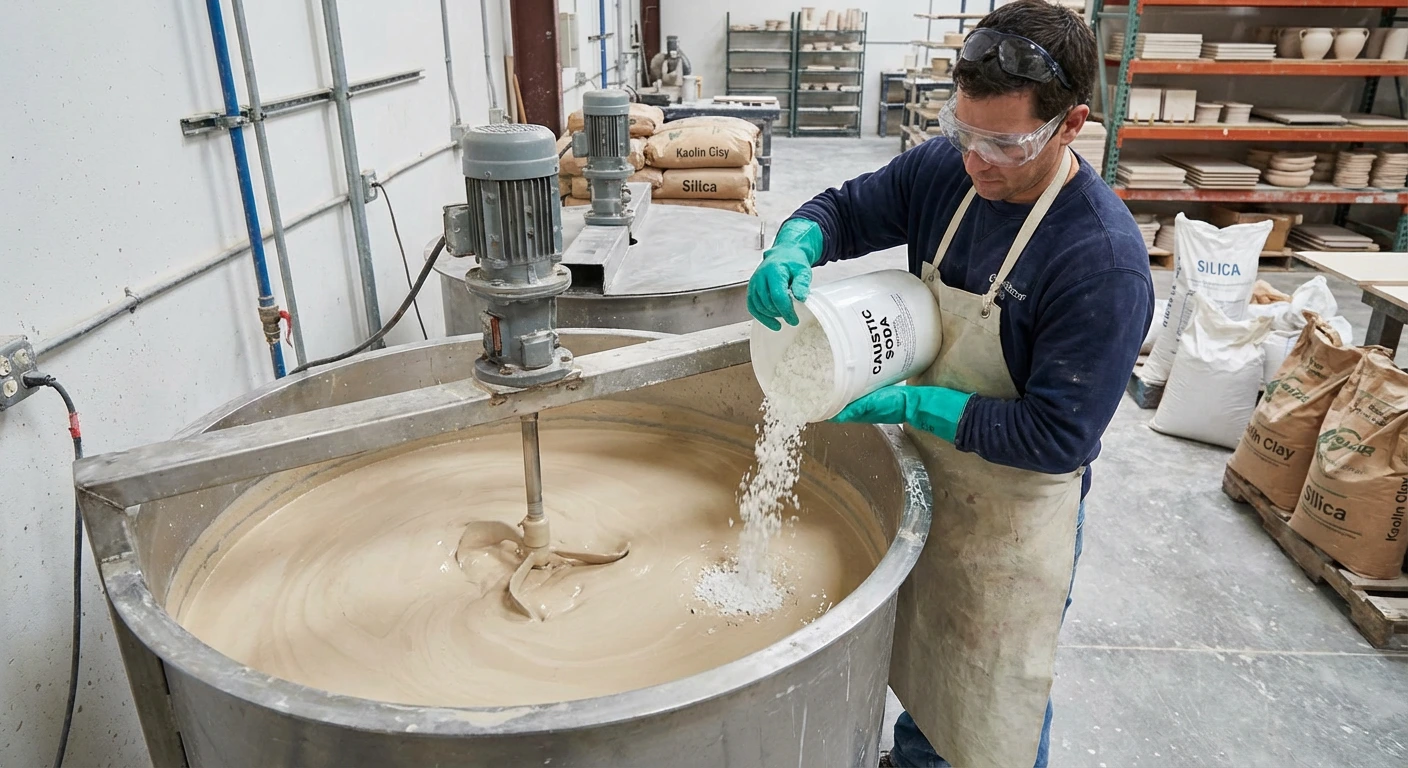
Descriptions of caustic soda in Ceramics
Caustic soda, scientifically known as sodium hydroxide (NaOH), plays a pivotal role in the ceramics industry. From refining raw materials to stabilizing complex glazes, this powerful alkaline compound is essential for modern ceramic manufacturing.
By acting as a robust deflocculant, pH regulator, and purification agent, caustic soda allows manufacturers to produce high-quality sanitary ware, porcelain tiles, and advanced technical ceramics. This guide explores the multifaceted applications of sodium hydroxide in ceramics, detailing its benefits, technical functions, and safety protocols.
Understanding Caustic Soda and Its Chemical Properties
Caustic soda is a highly soluble, strong base available commercially in Caustic Soda flakes, Caustic Soda pellets, or liquid Caustic Soda solutions. While it shares some similarities with soda ash, sodium hydroxide offers a more aggressive alkalinity, making it indispensable for specific chemical reactions in ceramic processing.
Its primary function is to modify the chemical environment of clay slurries and glazes. By interacting with materials like silica, feldspar, and kaolin, caustic soda addresses two of the most critical challenges in production: impurity removal and rheology control (flow stability).
Primary Applications in Ceramics Manufacturing
1. Raw Material Purification
The quality of the final ceramic product is dictated by the purity of its raw ingredients. Natural clays often contain contaminants—such as iron oxides, carbonates, and organic matter—that cause discoloration and structural defects.
Caustic soda is used to wash and leach these impurities before the forming process begins. For example, in high-end silica processing, treating the material with a dilute NaOH solution dissolves iron oxides. This step is crucial for manufacturing translucent porcelain and white-body ceramics, where even trace impurities can ruin the aesthetic finish.
2. Deflocculation and Plasticity Enhancement
One of the most vital uses of caustic soda is as a deflocculant in clay slurries and casting slips. In processes like slip casting, the clay mixture must remain liquid enough to pour into molds but dense enough to form a solid shape.
Sodium hydroxide works by altering the electrical charge on clay particles, causing them to repel each other. This dispersion prevents clumping (flocculation) and reduces the viscosity of the slip without the need for excess water. The result is a smooth, highly plastic slurry that fills intricate molds perfectly, reducing the risk of cracking during drying.
3. pH Adjustment for Glaze Stability
Controlling the pH level is essential for maintaining the stability of ceramic glazes. If a glaze slurry becomes too acidic, particles can settle into a hard mass (sedimentation) or behave unpredictably during application.
Manufacturers add caustic soda to elevate the pH to an optimal range (typically 7–10). This adjustment:
- Stabilizes the suspension, keeping particles evenly distributed.
- Optimizes viscosity, ensuring the glaze coats the ware smoothly.
- Prevents defects, such as pinholes or crawling, which occur when the glaze pulls away from the ceramic body during firing.
4. Kiln Firing and Surface Treatment
During the firing phase, sodium hydroxide can act as a secondary flux, helping materials fuse at lower temperatures. Post-production, it serves as an effective surface treatment agent, used to chemically polish rough edges or remove minor surface imperfections.
Additionally, caustic soda is the industry standard for cleaning ceramic molds and machinery. It effectively dissolves dried glaze residues, mineral oils, and dust, preventing cross-contamination between batches and extending the lifespan of manufacturing equipment.
Key Advantages of Using Caustic Soda
- Superior Product Consistency: By removing impurities and controlling slip rheology, manufacturers achieve uniform strength and color in every batch.
- Operational Efficiency: Improved deflocculation means less water is needed in slurries, leading to faster drying times and reduced energy consumption in the kiln.
- Versatility: It is effective across a wide range of products, from rustic pottery to aerospace-grade technical ceramics.
- Sustainability: Caustic soda aids in recycling ceramic waste by stripping away contaminants, allowing defective pieces to be re-processed rather than discarded.
Safety and Handling Best Practices
Sodium hydroxide is highly corrosive and must be handled with strict adherence to safety protocols. Over-dosing can lead to “over-deflocculation,” causing glazes to become runny or clay bodies to become brittle.
Essential Safety Measures:
- Personal Protective Equipment (PPE): Always wear chemical-resistant gloves, splash goggles, and aprons.
- Controlled Dosing: Use precise metering when adding NaOH to slurries to avoid pH spikes.
- Ventilation: Ensure working areas are well-ventilated to prevent the inhalation of alkaline dust or fumes.
- Neutralization: Wastewater containing caustic soda must be neutralized before disposal to comply with environmental regulations.
Frequently Asked Questions (FAQ)
What is the difference between caustic soda and soda ash in ceramics?
While both are sources of sodium oxide, caustic soda (NaOH) is a much stronger base than soda ash (sodium carbonate). Caustic soda is preferred when a more powerful deflocculant is needed or when processing clays with high soluble salt content.
Can caustic soda damage ceramic molds?
If used in highly concentrated solutions, it can degrade plaster molds over time. However, when used correctly as a dilute cleaning agent or slurry additive, it is safe and extends mold life by preventing residue buildup.
How does caustic soda improve ceramic whiteness?
It improves whiteness primarily through purification. By leaching out iron and titanium oxides from the raw clay and silica, caustic soda removes the contaminants that typically cause yellowing or dark spots after firing.
Conclusion
Caustic soda is a cornerstone of modern ceramic technology. Its ability to purify raw materials, stabilize complex slips, and ensure flawless glazing makes it an invaluable asset for manufacturers. By integrating sodium hydroxide into the production line—and adhering to best safety practices—ceramic producers can achieve higher efficiency, lower costs, and superior product quality that meets the demands of today’s market.