
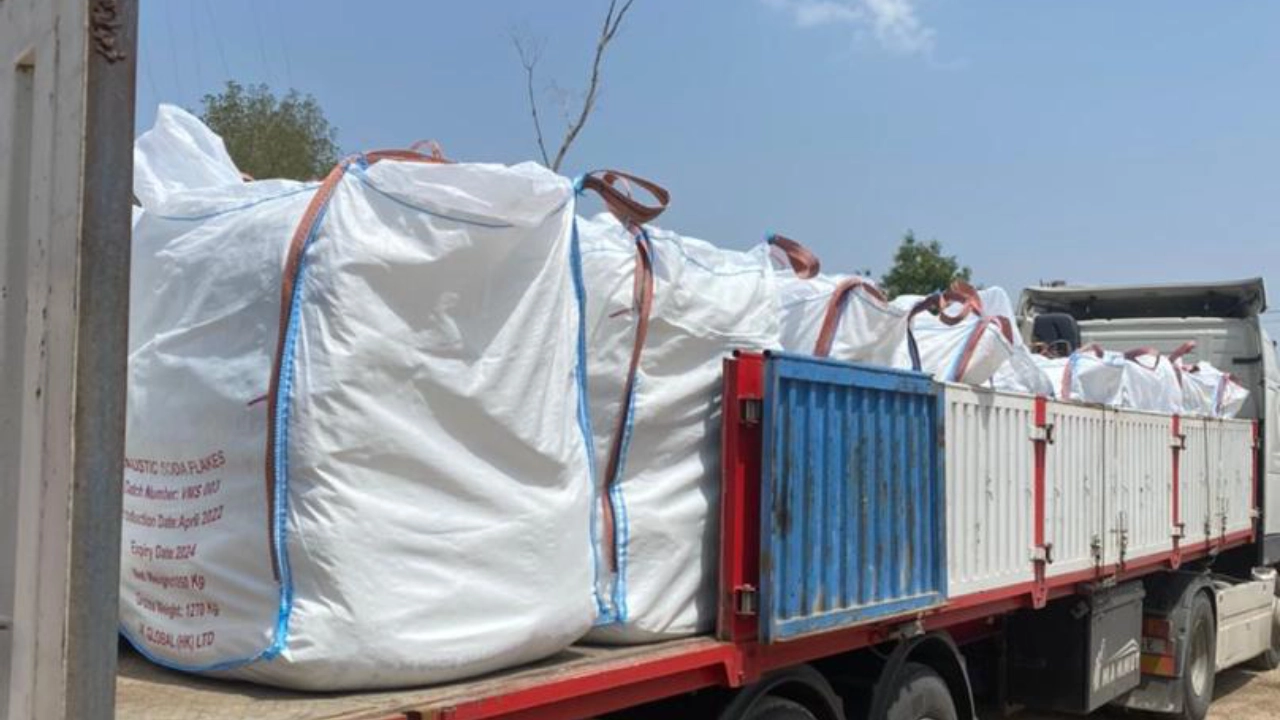
- Supplier of Caustic Soda (Sodium Hydroxide 98-99%) from Turkey and Dubai-UAE
- Caustic soda (sodium hydroxide, NaOH) at a glance
- What Is Caustic Soda? Sodium Hydroxide (NaOH) Properties, CAS and HS Code
- Caustic Soda Grades: Flakes 98–99%, Pearls 99% and Liquid 32–50%
- Caustic Soda Flakes vs Pearls vs Liquid: Which Grade Should You Buy?
- Caustic Soda Specification and TDS: Purity, Carbonate, Chloride and Iron
- How Is Caustic Soda Made? The Chlor-Alkali Process Explained
- What Is Caustic Soda Used For? 8 Industrial Applications by Sector
- Caustic Soda Packaging: 25 kg Bags, FIBC, IBC and ISO Tank per 20′ Container
- Caustic Soda Export: Incoterms, Loading Ports, MOQ and Lead Time
- Caustic Soda Price per Ton and per Kg: What Drives the Quote
- Get a Firm Caustic Soda Quote Within 24 Hours
- Where to Buy Caustic Soda in Bulk: Manufacturer, Supplier or Distributor?
- Why Buy Caustic Soda From SUHA International
- How to Order Bulk Caustic Soda: Five Steps and an RFQ Checklist
- Caustic Soda Safety: Hazards, PPE, Storage and Exposure Limits
- Speak With the Caustic Soda Export Desk
- Caustic Soda FAQ: Grades, Price, MOQ, Shipping and Safety
- Related caustic soda products and technical guides
Caustic Soda Supplier & Exporter — Bulk Sodium Hydroxide (NaOH)
PREVIEW ONLY. This H1 and the
block exist so the page can be viewed and resized standalone. On the live site Avada outputs the H1 and Rank Math outputs the head tags — paste only the fragment file into the page body.- Stock: all grades — Türkiye & UAE
- Export: FOB, CFR, CIF, DAP, DDP
- MOQ: 25 MT (1 × 20′ FCL)
- Reviewed:
Caustic soda (sodium hydroxide, NaOH) at a glance
Caustic soda is the industrial trade name for sodium hydroxide (NaOH), also sold as lye, white caustic or sodium hydrate. It is a strong inorganic alkali (CAS 1310-73-2) produced by chlor-alkali electrolysis of brine, and it is traded in three forms: flakes 98–99%, pearls (prills) 99% and liquid 32–50%.
SUHA International Trading L.L.C. is a bulk caustic soda supplier and exporter — not a producer. We buy from ISO-certified membrane-cell and diaphragm-cell plants, load from Mersin (Türkiye) and Jebel Ali (UAE), issue a Certificate of Analysis per production lot, and return a firm FOB or CIF offer within 24 hours.
- Formula: NaOH, 40.00 g/mol
- CAS: 1310-73-2
- HS Code: 2815.11 / 2815.12
- UN No.: 1823 solid / 1824 solution
- Hazard: Class 8, PG II
- MOQ: 25 MT (one 20′ FCL)
What Is Caustic Soda? Sodium Hydroxide (NaOH) Properties, CAS and HS Code
Caustic soda — chemically sodium hydroxide (NaOH) — is one of the highest-volume inorganic chemicals in world trade. Buyers search for the same material under several names: caustic soda, sodium hydroxide, NaOH, lye, white caustic and sodium hydrate. All describe one substance, CAS 1310-73-2.
Pure sodium hydroxide is a white, odourless solid with a strongly alkaline character (pH ≈ 13.4 in a 1% solution). It is hygroscopic, absorbs carbon dioxide from air to form sodium carbonate, and dissolves with a strongly exothermic reaction — roughly 44 kJ released per mole — which is why dilution tanks need cooling and controlled addition. Its reactivity toward fats, oils, proteins, silica and amphoteric metals such as aluminium is exactly what makes it indispensable in alumina refining, pulping, water treatment, textiles, soap making and refinery caustic washing.
Commercially the product reaches the buyer in three forms: solid caustic soda flakes at 98–99% NaOH, low-dust caustic soda pearls (also called prills, beads or micropearls) at 99% NaOH, and liquid caustic soda at 32%, 46%, 48% or 50% NaOH by mass. Briquettes and cast blocks exist but are rarely traded in export volumes. SUHA International supplies all three mainstream forms from two loading origins, so a single buyer keeps supply continuity without opening a second vendor account.
Caustic soda chemical properties, CAS number and classification
Swipe the table sideways on a phone.
| Parameter | Data | Note / reference |
|---|---|---|
| IUPAC name | Sodium hydroxide | — |
| Other names | Caustic soda · lye · white caustic · sodium hydrate | All one substance |
| Formula / molar mass | NaOH — 40.00 g/mol | 39.997 g/mol exact |
| CAS number | 1310-73-2 | EC / EINECS 215-185-5 |
| Commercial grades | Flakes 98–99% · pearls 99% · liquid 32–50% | COA per production lot |
| Appearance | White opaque solid; colourless to pale-yellow solution | Hygroscopic |
| Melting point | 318 °C (604 °F) | Anhydrous solid |
| Boiling point | 1,388 °C (2,530 °F) | Anhydrous solid |
| Density | 2.13 g/cm³ solid · ≈ 1.53 g/cm³ at 50% | At 20 °C |
| Bulk density | ≈ 1.0–1.2 g/cm³ | Poured flakes or pearls |
| Solubility in water | ≈ 111 g / 100 mL at 20 °C | Dissolution is exothermic |
| pH (1% solution) | ≈ 13.4 | Strongly alkaline |
| HS code | 2815.11 solid · 2815.12 solution | Customs classification |
| UN number / PG | UN 1823 solid · UN 1824 solution — PG II | Dangerous goods |
| Hazard class | 8 — corrosive | IMDG Code / ADR |
| GHS / CLP | GHS05 — Skin Corr. 1A (H314); H290 for solutions | EU CLP Regulation (EC) No 1272/2008 |
| Shelf life | ≈ 24 months solid · ≈ 12 months liquid | Sealed, dry storage |
| Food additive number | E 524 | Acidity regulator, food-grade material only |
Market context, 2026. Caustic soda and chlorine are co-products of the same cell, so the two markets move together rather than independently. Industry trackers put global caustic soda volume at roughly 84–85 million metric tonnes in 2025, rising to the mid-90s by the mid-2030s, with membrane-cell technology now around 82% of installed capacity and China alone holding about 51 million tonnes of it. Demand is led by alumina refining, pulp and paper, chemical manufacture and water treatment.
Order-of-magnitude industry figures for orientation only — not a price, capacity or volume guarantee. Confirm current market data with a subscription price service before contracting.Caustic Soda Grades: Flakes 98–99%, Pearls 99% and Liquid 32–50%
The three forms are chemically the same alkali but are not commercially interchangeable: the right one cuts handling cost, dosing error and off-spec risk. Pick from the cards below, or send your process description to our technical desk before you commit to an order.
Caustic Soda Flakes
98–99% NaOH · HS 2815.11 · UN 1823
- Standard export grade, lowest cost per tonne of NaOH
- White irregular chips, roughly 0.3–1 cm²
- NaCl ≤ 0.02% (typ. 0.009%); Fe ≤ 15 ppm (typ. 10 ppm)
- 25 kg PP/PE bags or 500–1,000 kg FIBC jumbo bags
- 25 MT per 20′ container — best freight economics
Best for: alumina and metallurgy, soap and detergent saponification, cotton mercerising, pulp digestion, general chemical make-up.
Caustic soda flakes — full specification →Caustic Soda Pearls
99% NaOH · HS 2815.11 · UN 1823
- Prilled micropearls — virtually dust-free, free-flowing
- 99.0% min; Na₂CO₃ ≤ 0.8%; NaCl ≤ 0.05%
- Repeatable volumetric and automated dosing
- Food-grade (E524) option on request
- 25 kg PP bags with PE liner, palletised
Best for: pharmaceutical and cosmetic formulation, food processing and CIP, laboratory and specialty chemistry, plants where dust exposure is the constraint.
Caustic soda pearls — full specification →Liquid Caustic Soda
32 / 46 / 48 / 50% NaOH · HS 2815.12 · UN 1824
- Ready to dose — no dissolving step, no dust exposure
- 50% grade: NaOH 48–50% w/w; Fe ≤ 10 ppm; Hg ≤ 0.1 ppm
- Membrane-cell grade for low-chloride duties
- 200 L drums, 1,000 L IBC, road tanker or 20′ ISO tank
- 32% is the winter grade — stays liquid in cold climates
Best for: municipal and industrial water treatment, refinery and petrochemical caustic washing, pulp mill alkaline stages, high-volume continuous plants.
Liquid caustic soda — full specification →- ISO 9001:2015
- ISO 14001
- REACH registered substance
- EU CLP
- COA per lot
- SDS / MSDS
- IMDG Class 8
- E524 food grade
- L/C accepted
These are the standards our partner producers operate to. Mill and management-system certificates covering your specific consignment are issued with the shipping documents on request — ask for them at the quotation stage rather than after loading.
Caustic Soda Flakes vs Pearls vs Liquid: Which Grade Should You Buy?
One table, three grades, the criteria procurement actually decides on: purity, dust, dosing accuracy, freight efficiency and landed cost per tonne of contained NaOH.
| Criterion | Flakes | Pearls | Liquid |
|---|---|---|---|
| NaOH content | 98–99% w/w | 99% w/w min | 32 / 46 / 48 / 50% w/w |
| Physical form | Irregular chips 0.3–1 cm² | Uniform prilled micropearls | Aqueous solution |
| Dust generation | Moderate | Very low | None |
| Dosing accuracy | Good — batch | Excellent — automated | Excellent — metering pump |
| Dissolving on site | Yes — exothermic | Yes — exothermic, faster | No |
| Contained NaOH per 20′ | ≈ 25 MT product = 25 MT NaOH | ≈ 25 MT product = 25 MT NaOH | ≈ 22 MT solution = ≈ 11 MT NaOH at 50% |
| Freight efficiency | High | High | Low — you also pay to ship the water |
| Price position | Lowest per MT of solid | Premium over flakes | Lowest per MT of product, highest per MT of contained NaOH |
| Cold weather | Cakes if damp | Minimal caking | 50% crystallises below ≈ 12 °C; 32% stays liquid far colder |
| Food / pharma grade | Limited | Yes — E524 option | Yes — membrane-cell |
| Typical duty | Metallurgy, soap, textiles, pulp | Pharma, cosmetics, food, precision dosing | Water treatment, refineries, continuous plants |
| Packaging | 25 kg bag · 500–1,000 kg FIBC | 25 kg PP bag, palletised | 200 L drum · 1,000 L IBC · road tanker · ISO tank |
The comparison that decides most tenders is cost per tonne of contained NaOH delivered, not price per tonne of product. A 50% liquid at half the headline price of flakes carries half the alkali and the same freight, so for any destination beyond a short truck run from the plant, solid grades usually win unless the receiving plant is built around bulk liquid storage.
Caustic Soda Specification and TDS: Purity, Carbonate, Chloride and Iron
Representative analytical data for each grade is shown below. The signed Certificate of Analysis issued for your specific production lot is the document that governs — request the full TDS and SDS before you order, by email or WhatsApp.
Caustic soda flakes 98–99% — typical technical data sheet
| Parameter | Typical | Unit | Specification |
|---|---|---|---|
| NaOH purity | 98.5 | % w/w | min 98.0 |
| Sodium carbonate (Na₂CO₃) | 0.43 | % w/w | max 1.0 |
| Sodium chloride (NaCl) | 0.0085 | % w/w | max 0.02 |
| Sodium sulfate (Na₂SO₄) | 0.0047 | % w/w | max 0.01 |
| Silicon dioxide (SiO₂) | 0.0019 | % w/w | max 0.005 |
| Iron (Fe) | 10 | ppm | max 15 |
| Aluminium oxide (Al₂O₃) | < 3 | ppm | max 5 |
| Heavy metals (as Pb) | < 2 | ppm | max 5 |
| Water-insoluble matter | Nil | % w/w | Nil |
| Shape / size | Irregular white chips | 0.3–1 cm² | Free-flowing |
Full caustic soda flakes page — packaging, applications and export terms →
Caustic soda pearls 99% — physical and chemical data
| Physical property | Value | Unit |
|---|---|---|
| Melting point | 318 | °C |
| Boiling point | ≈ 1,388 | °C |
| True density at 20 °C | 2.13 | g/cm³ |
| Poured bulk density | ≈ 1.0–1.2 | g/cm³ |
| Dissolution, 50 g in 100 mL at 25 °C | ≈ 22 | seconds |
| Specific heat capacity at 25 °C | ≈ 1.49 | J/g·K |
| Enthalpy of formation at 25 °C | −10.64 | kJ/g (= −425.6 kJ/mol) |
| Enthalpy of solution | ≈ −44 | kJ/mol (exothermic) |
| Chemical parameter | Specification | Unit |
|---|---|---|
| NaOH purity | 99.0 min | % w/w |
| Sodium carbonate (Na₂CO₃) | 0.8 max | % w/w |
| Sodium chloride (NaCl) | 0.05 max | % w/w |
| Iron as Fe₂O₃ | 50 max | ppm |
Full caustic soda pearls page — food grade, dosing and packaging →
Liquid caustic soda 50% — technical data sheet
| Parameter | Unit | Limit | Typical COA | Method |
|---|---|---|---|---|
| NaOH content | % mass | min 48 | 50 | ASTM E291 |
| Sodium carbonate (Na₂CO₃) | % mass | max 0.5 | 0.2 | ASTM E291 |
| Sodium chloride (NaCl) | % mass | max 0.03 | 0.01 | ASTM E291 |
| Sodium sulfate (Na₂SO₄) | % mass | max 0.007 | 0.001 | ASTM E291 |
| Silicon dioxide (SiO₂) | % mass | max 0.01 | 0.001 | ASTM E291 |
| Iron (Fe) | ppm | max 10 | 3 | ASTM E291 |
| Aluminium oxide (Al₂O₃) | ppm | max 10 | < 1 | ICP-OES |
| Mercury (Hg) | ppm | max 0.1 | 0.01 | ISO 12846 / CVAAS |
| Arsenic (as As₂O₃) | ppm | max 1 | < 0.02 | ICP-OES |
Full liquid caustic soda page — 32%, 46%, 48% and 50% grades →
How Is Caustic Soda Made? The Chlor-Alkali Process Explained
Production route matters commercially, not just technically: it sets chloride and mercury levels, and therefore whether a lot is acceptable for food, pharmaceutical, rayon or membrane-sensitive duties.
All commercial sodium hydroxide comes from the electrolysis of saturated brine — sodium chloride dissolved in water — in the chlor-alkali process, which produces chlorine gas at the anode and caustic soda plus hydrogen at the cathode. The three cell technologies differ in how the product is kept apart from the chlorine:
- Membrane cell — the dominant route, roughly 82% of world capacity. An ion-exchange membrane separates the compartments and yields high-purity, low-chloride, mercury-free caustic. This is the grade required for food, pharmaceutical and most high-purity chemical work.
- Diaphragm cell. A polymer-modified or, in some older US plants, asbestos diaphragm separates the compartments. Cell liquor leaves at lower concentration with higher salt content and needs more evaporation energy. Acceptable for metallurgy, pulp, textiles and general industrial duties.
- Mercury cell — effectively history. The EU closed its mercury cells under Regulation (EC) No 1102/2008, and the Minamata Convention set a global phase-out deadline of the end of 2025, with only registered exemptions running beyond it. Specifications written in 2026 should simply exclude mercury-cell origin.
After electrolysis the cell liquor is evaporated to the commercial liquid strengths of 32–50%. Solid grades take one more step: concentration to a near-anhydrous melt, then flaking on a chilled drum or prilling into pearls. SUHA International buys only from membrane-cell and diaphragm-cell producers, so every lot we ship meets EU mercury expectations for caustic soda.
| Cell technology | NaOH quality | Status 2026 | Suitable for |
|---|---|---|---|
| Membrane | Low chloride, mercury-free, highest purity | ≈ 82% of world capacity, all new build | Food (E524), pharma, rayon, electronics, general use |
| Diaphragm | Higher NaCl, more evaporation energy | Legacy capacity, mainly North America | Metallurgy, pulp, textiles, general industry |
| Mercury | High purity but mercury-contaminated plant | Phase-out deadline end of 2025 (Minamata) | Exclude from new specifications |
What Is Caustic Soda Used For? 8 Industrial Applications by Sector
Sodium hydroxide appears somewhere in almost every heavy industry. Each box below states what NaOH actually does in that sector, which grade fits and at what working strength, and links to the full guide.
Alumina, Mining & Metallurgy
Hot caustic liquor digests bauxite to dissolve alumina, which is precipitated as Al(OH)₃ and calcined to Al₂O₃. Also used for flotation pH control, base-metal hydrometallurgy, surface etching and effluent neutralisation.
- Grade
- Flakes 98–99%
- Strength
- 20–30% liquor
Water & Wastewater Treatment
The standard reagent for pH elevation, alkalinity and corrosion-index control, softening, and precipitation of heavy metals as hydroxides in both potable and effluent plants. Liquid grade doses straight from the tank.
- Grade
- Liquid 32–50%
- Strength
- As received or diluted
Pulp & Paper
White liquor (NaOH plus Na₂S) dissolves lignin and frees the cellulose fibre. NaOH also drives the alkaline extraction stages of bleaching and the deinking of recovered fibre in OCC and DIP lines.
- Grade
- Liquid or flakes
- Strength
- ≈ 100 g/L as NaOH
Petrochemicals & Refining
Strips H₂S and mercaptans from LPG, naphtha and gas streams. Also used in ethylene oxide and glycol production, biodiesel transesterification catalysis and neutralisation of acidic refinery streams.
- Grade
- Liquid 32–50%
- Strength
- 10–20% w/w
Soap & Detergent
Saponification of vegetable oils and tallow gives solid sodium soap; in liquid detergents NaOH neutralises LABSA and other acid-form surfactants. Flakes and pearls suit batch kettles and neutralisation loops.
- Grade
- Flakes or pearls
- Strength
- Neat or 30–50% lye
Textile Processing
Mercerising cotton in concentrated NaOH raises tensile strength, lustre and dye uptake; scouring removes natural waxes and pectins before dyeing. Flakes 98–99% are the working standard in mills.
- Grade
- Flakes 98–99%
- Strength
- 200–300 g/L
Food Processing & CIP
Food-grade sodium hydroxide is used for pretzel and bakery lye baths, olive curing, cocoa alkalising, noodle production and clean-in-place sanitation. Food-grade pearls or membrane-cell liquid only.
- Grade
- Food-grade pearls
- Strength
- 1–5%; ≈ 2% CIP
Chemicals & Pharmaceuticals
A workhorse reagent for pH control, neutralisation, ester and amide hydrolysis and base catalysis, and a feedstock for sodium hypochlorite, sodium phenolate and many sodium salts. Pharma duty needs membrane-cell origin.
- Grade
- Pearls 99% or liquid
- Strength
- Process-specific
Caustic soda application matrix — industry, function and recommended grade
| Industry | Function of NaOH | Recommended grade | Typical strength |
|---|---|---|---|
| Alumina / mining | Bayer digestion, pH control | Flakes 98–99% | 20–30% w/w liquor |
| Water treatment | pH lift, softening, metal precipitation | Liquid 32–50% | As received or diluted |
| Pulp and paper | Kraft cooking, extraction, deinking | Liquid or flakes | White liquor ≈ 100 g/L |
| Petrochemicals | Caustic wash, desulfurisation, biodiesel | Liquid 32–50% | 10–20% w/w |
| Soap and detergent | Saponification, surfactant neutralisation | Flakes or pearls | Neat or 30–50% solution |
| Textiles | Mercerising, scouring | Flakes 98–99% | 200–300 g/L |
| Food processing | Lye bath, CIP, cocoa alkalising | Food-grade pearls or liquid | 1–5%; ≈ 2% CIP |
| Chemical synthesis | pH adjustment, neutralisation, reagent | Pearls 99% or liquid | Application-specific |
Caustic Soda Packaging: 25 kg Bags, FIBC, IBC and ISO Tank per 20′ Container
Packaging is the first line of defence for NaOH quality in transit. Every consignment ships in moisture-resistant, IMDG-compliant packaging carrying batch ID, production date and shelf-life marking on each unit.
| Grade | Format | Net weight | Per 20′ container |
|---|---|---|---|
| Flakes / pearls | PP woven bag with PE inner liner | 25 kg | 1,000 bags = 25 MT |
| Flakes / pearls | FIBC jumbo bag, palletised | 500–1,000 kg | 25 × 1,000 kg = 25 MT |
| Liquid NaOH | HDPE drum | 200 L ≈ 305 kg at 50% | ≈ 80 drums ≈ 24 MT solution |
| Liquid NaOH | IBC | 1,000 L ≈ 1.53 MT at 50% | ≈ 10 IBC ≈ 15 MT solution |
| Liquid NaOH | Road tanker, lined | 20–25 MT | Full truck, direct delivery |
| Liquid NaOH | 20′ ISO tank container | 20–23 MT | 1 ISO tank = one 20′ slot |
Order calculator — tonnes, bags, containers and price per kg
Enter your volume and, if you already hold a quotation, its unit price. Everything is calculated in your browser; nothing is sent anywhere. Prices are not published on this page — see the caustic soda price page or request a firm offer.
- Packaging units
- 1,00025 kg bags
- 20′ containers
- 1at 25 MT per FCL
- Price per kg
- USD 0.80from USD 800/MT
- Order value
- USD 20,000goods only
Caustic soda shelf life and storage conditions
Solid grades keep for approximately 24 months from production when stored sealed in the original packaging in a cool (≤ 30 °C), dry, ventilated warehouse away from moisture, CO₂ and acids. Liquid NaOH keeps for approximately 12 months in sealed HDPE or lined-steel containers. Because sodium hydroxide slowly absorbs atmospheric CO₂ and converts to sodium carbonate, opened units should be resealed immediately. Material that still meets specification on reanalysis may be used beyond these dates. Full guidance: how to store caustic soda safely.
Cold-climate note for liquid grade. A 50% solution begins to crystallise at around 12 °C, so tanks and lines in cold regions need trace heating or must be held above about 15 °C to avoid blockages. The 32% grade remains liquid far below freezing, which is why it is the standard winter specification in northern Europe and Central Asia despite the extra freight per tonne of contained alkali.
Caustic Soda Export: Incoterms, Loading Ports, MOQ and Lead Time
We load from two origins — Türkiye and the UAE — so buyers get the shorter lane for their destination and a working alternative if one corridor is disrupted.
| Parameter | Detail |
|---|---|
| Loading ports — Türkiye | Mersin · Izmir · Istanbul · Derince · Samsun |
| Loading ports — UAE | Jebel Ali (Dubai) · Khalifa Port (Abu Dhabi) |
| Incoterms | FOB · CFR · CIF · CPT · DAP · DDP (Incoterms® 2020) |
| Destinations served | Europe · Balkans · CIS · Middle East · Africa · Asia · Americas |
| Equipment | 20′ dry FCL for solids · 20′ ISO tank for liquid · FTL road tanker |
| Indicative transit | 5–7 days SE Europe · 10–14 days Mediterranean · 20–28 days Far East |
| Lead time from stock | 5–10 days packed goods · 7–14 days bulk liquid |
| MOQ — packed solids | 25 MT — one 20′ FCL of flakes or pearls |
| MOQ — bulk liquid | One ISO tank or road tanker (≈ 22 MT solution) |
| Samples | From one pallet, for qualification before a commercial order |
| Payment terms | T/T in advance · T/T against documents · L/C at sight · D/P |
| Dangerous goods | IMDG Class 8, PG II — UN 1823 / UN 1824, full DG pack included |
Landlocked and Balkan destinations. Cargo moves regularly to Serbia, Bosnia, North Macedonia, Albania and Kosovo through Bar, Koper, Thessaloniki and Constanța, then onward by rail or road; Danube river transport into Serbia is available for bulk liquid. See the dedicated page on caustic soda supply to Serbia.
Freight risk, 2026. Red Sea and Gulf of Aden routings have been unsettled through this year, and rerouting decisions move CIF and DDP numbers more than the commodity itself does. We quote the routing actually available on the day of the offer and flag any Cape of Good Hope diversion in writing rather than leaving it to surface at the invoice stage.
Caustic Soda Price per Ton and per Kg: What Drives the Quote
Caustic soda trades in USD per metric tonne (USD/MT) on an Incoterm basis, and there is no fixed list price. Anyone publishing a single global "caustic soda price per kg" is quoting a snapshot of one grade, one origin and one week. For a current indicative level see the caustic soda price page, or ask for a firm offer valid for a stated period.
Converting per tonne to per kg is a matter of dividing by 1,000: USD 800/MT is USD 0.80/kg, and a 25 kg bag at that level carries USD 20 of material before packaging, freight, duty and local margin. Retail bag prices in any import market sit well above the FOB level for exactly those reasons, so compare quotations only on the same Incoterm, grade and payment terms.
| Price driver | Direction | Why |
|---|---|---|
| Electricity cost | Higher power cost → higher NaOH price | Electrolysis is among the most power-intensive industrial processes |
| Chlorine and PVC demand | Strong chlorine demand → softer NaOH price | Co-product economics: cells run for chlorine, caustic clears at what the market pays |
| Alumina and pulp output | Higher demand → firmer NaOH price | The two largest consuming sectors |
| Freight and routing | Higher freight → higher CFR/CIF/DDP price | Container and ISO-tank rates vary sharply by lane and security situation |
| Grade and form | Solid above liquid, per tonne of product | Extra evaporation, flaking or prilling and packaging cost |
| Order volume | Larger volume → lower unit price | Full-container and multi-container economics |
| Incoterm | DDP > CIF > CFR > FOB | Each step adds services, insurance and risk to the seller |
| Payment terms | Deferred payment → higher price | Credit and L/C confirmation costs are priced in |
Related: caustic soda flakes price for the flake grade specifically, and caustic soda price for the full range.
Get a Firm Caustic Soda Quote Within 24 Hours
Send grade, volume, delivery point and Incoterm. You receive a bankable FOB or CIF offer with unit price, container value, payment terms and a loading schedule — not a ballpark figure.
Where to Buy Caustic Soda in Bulk: Manufacturer, Supplier or Distributor?
"Caustic soda manufacturer", "sodium hydroxide supplier near me" and "caustic soda wholesale distributor" are three different commercial routes, not three words for the same thing. Which one fits depends on your annual tonnage and how much documentation work you want to carry yourself.
| Route | Works well when | Trade-off |
|---|---|---|
| Chlor-alkali producer | You buy several thousand tonnes a year on annual contract and can take plant-direct logistics | Volume commitments, limited grade flexibility, no consolidation with other chemicals |
| Export supplier (SUHA) | You import 25 MT to a few thousand tonnes a year and need documents, DG handling and several grades managed for you | A trading margin, in exchange for supply redundancy and paperwork that clears customs first time |
| Local distributor | You need drums or a few pallets quickly, with domestic delivery | Highest unit price — you pay for imported stock plus local storage and handling |
| B2B marketplace | Price discovery only | Specifications and stock often unverified; the COA and DG pack are where those deals fail |
SUHA International sits in the second row: we are an exporter and supplier, not a producer. That distinction is worth stating plainly, because it determines what we can genuinely promise — grade selection across several mills, container-level order sizes, a complete export document pack and continuity from a second origin — rather than plant ownership we do not have.
Why Buy Caustic Soda From SUHA International
Procurement teams rarely lose sleep over a price list. They lose it over stockouts, off-spec lots and a document that stops a container at the port. The offer below is built around those three failure points.
How to Order Bulk Caustic Soda: Five Steps and an RFQ Checklist
Send your inquiry
Grade (flakes, pearls or liquid), purity, volume per order and per year, delivery point, packaging and preferred Incoterm. Use the contact form, WhatsApp or email.
Receive a firm export quote within 24 hours
A written offer covering unit price in USD/MT, total container value, payment terms, loading port, available shipment dates and an indicative transit time, valid for a stated period.
Confirm the order and terms
Minimum order is 25 MT — one 20′ FCL of packed goods, or one ISO tank or road tanker for bulk liquid. Sign the proforma invoice and arrange payment by T/T, L/C at sight or D/P; we confirm the production slot or stock immediately.
Quality control and documentation
Lot analysis and COA issued, then the full export pack prepared. Third-party inspection by SGS, Bureau Veritas or Intertek can be arranged at the buyer's cost before loading.
Shipment and delivery
Cargo loaded, vessel or truck booked, tracking and a B/L copy shared on departure. Lead time from stock is typically 5–10 days for packed goods and 7–14 days for bulk liquid, depending on destination and routing.
RFQ checklist — the eight lines that get a same-day answer
- Grade and purity: flakes 98–99%, pearls 99%, or liquid 32 / 46 / 48 / 50%
- Quantity per shipment and estimated annual volume, in metric tonnes
- Packaging: 25 kg bags, FIBC, drums, IBC, road tanker or ISO tank
- Delivery point: port or door address, and country
- Incoterm: FOB, CFR, CIF, DAP or DDP
- Application: so we can confirm the grade actually suits the process
- Payment terms: T/T, L/C at sight or D/P
- Special requirements: food grade, membrane-cell origin, low mercury, SGS inspection, language of documents
Caustic Soda Safety: Hazards, PPE, Storage and Exposure Limits
Caustic soda is a strong corrosive alkali shipped as dangerous goods. Every consignment carries a full SDS prepared to GHS/CLP standards. Authoritative hazard data: PubChem — sodium hydroxide and the ECHA substance record.
Hazard classification
GHS05 corrosion — Skin Corr. 1A (H314, severe skin burns and eye damage); H290 for solutions corrosive to metals. UN 1823 solid / UN 1824 solution, IMDG and ADR Class 8, packing group II. Keep away from acids, oxidisers and aluminium or zinc, which evolve hydrogen on contact.
Personal protective equipment
Chemical-resistant gloves (nitrile or neoprene), splash goggles rather than safety glasses, a face shield for transfer and dilution work, alkali-resistant apron or suit and boots. Emergency eyewash and a safety shower must be reachable within about ten seconds of any handling point.
Occupational exposure limits
The OSHA PEL is 2 mg/m³ as an 8-hour TWA; the NIOSH REL and ACGIH TLV are 2 mg/m³ as a ceiling value, and the NIOSH IDLH is 10 mg/m³. Control dust at flake and pearl transfer points and mist at liquid loading points accordingly.
Storage and dilution
Cool (≤ 30 °C), dry, ventilated store; containers sealed against CO₂ and moisture; alkali-resistant flooring with bunded secondary containment; segregation from acids and organics. Always add caustic to water, never water to caustic — the reverse can boil and spatter.
Regulatory framework
EU CLP Regulation (EC) No 1272/2008 and REACH Regulation (EC) No 1907/2006; the IMO IMDG Code for sea transport and ADR for European road transport; plus national chemical regimes at destination, including Türkiye's KKDİK.
Exposure first response
Skin or eye contact: flush with running water for at least 15 minutes, removing contaminated clothing, and seek medical attention — alkali burns progress after the initial contact. Do not attempt to neutralise a burn with acid; spill response uses containment and dilution.
This page is commercial and technical information, not a Safety Data Sheet. Read the current SDS supplied with your consignment before handling, storing or diluting sodium hydroxide, and follow your own site risk assessment.
Speak With the Caustic Soda Export Desk
We answer caustic soda inquiries within 24 business hours, usually the same day. For urgent or large-volume requirements WhatsApp is the fastest channel.
💬WhatsApp — fastest response+971 50 720 9246 📞Phone — export desk+971 50 720 9246 ✉Email — inquiries and quotesinfo@causticsodaco.comInclude these details for the fastest quote
- Grade: flakes 98–99% / pearls 99% / liquid 32–50%
- Volume: metric tonnes per order and per year
- Delivery point: city, port and country
- Incoterm: FOB / CFR / CIF / DAP / DDP
- Packaging: 25 kg bags / FIBC / IBC / ISO tank
- Application: metallurgy / water / pulp / food / textile / chemical
- Payment: T/T / L/C at sight / D/P
- Special: food grade, membrane-cell, low mercury, SGS inspection
Caustic Soda FAQ: Grades, Price, MOQ, Shipping and Safety
What is caustic soda and what is its chemical name?
Is caustic soda the same thing as lye and sodium hydroxide?
What is the difference between caustic soda and soda ash?
What grades of caustic soda does SUHA International supply?
What is the difference between caustic soda flakes and pearls?
Are caustic soda prills, beads and pearls the same product?
What are the main industrial uses of caustic soda?
Which caustic soda grade should I use for water treatment?
What is the HS Code and UN number for caustic soda?
What is the minimum order quantity for bulk caustic soda?
How much does caustic soda cost per tonne, and what is that per kg?
Where can I buy caustic soda in bulk, and should I buy from a manufacturer or a supplier?
How is caustic soda produced, and is mercury-cell material still on the market?
How much caustic soda fits in a 20-foot container?
How long does delivery take after the order is confirmed?
What documents are included with each caustic soda shipment?
What is the shelf life of caustic soda and how should it be stored?
Is food-grade caustic soda available, and what does E524 mean?
Related caustic soda products and technical guides
- Caustic soda flakes 98–99%
- Caustic soda pearls 99%
- Liquid caustic soda 32–50%
- Caustic soda price per tonne
- Caustic soda flakes price
- Types and grades of caustic soda
- How is caustic soda made?
- How to store caustic soda safely
- Caustic soda in metal processing
- Caustic soda for water treatment
- Caustic soda in pulp and paper
- Caustic soda for textile processing
- Caustic soda in soap and detergent
- Caustic soda in the petroleum industry
- Caustic soda supplier — Serbia
- Soda ash (Na₂CO₃)
- Sodium hypochlorite
- Request a quote — contact us
External references
Page last reviewed by the SUHA International export desk. Technical data is representative; the Certificate of Analysis issued with your consignment governs.