
Soda Ash Light Supplier – Bulk Sodium Carbonate (Na₂CO₃) with 99.2% Purity for Detergents, Glass & Textiles
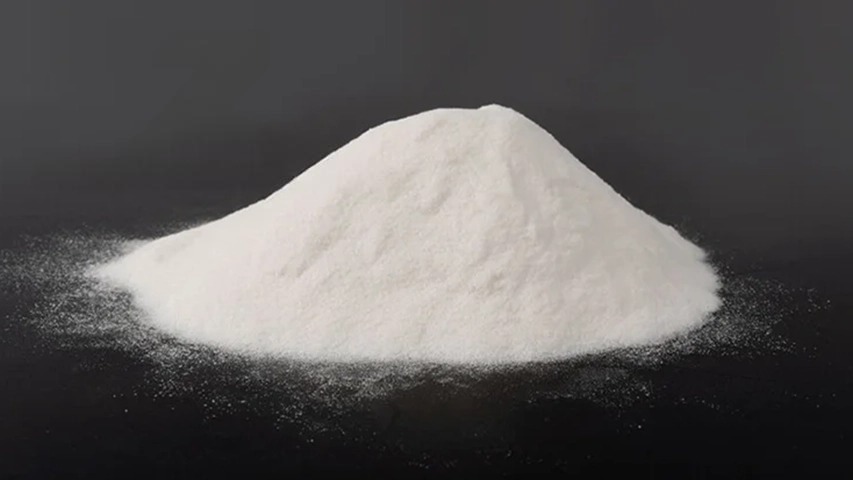
Soda Ash Light Supplier — Bulk Sodium Carbonate (Na₂CO₃) 99.2% min
Fine-powder light sodium carbonate at 99.2% minimum purity and 0.5–0.6 g/cm³ bulk density, shipped from ISO-certified plants in Türkiye and our Dubai export hub. Built for detergent builders, water-treatment dosing, textile dyeing and chemical synthesis — with a Certificate of Analysis on every production lot and a firm FOB/CIF price within 24 hours.
- COA per production lot
- Not a dangerous good — no IMDG surcharge
- Türkiye & UAE dual origin
- 25 kg bags to 1,250 kg FIBC
- L/C at sight accepted
- 99.2%Na₂CO₃ min
- 0.5–0.6Bulk density g/cm³
- ≤0.4%NaCl max
- 20–22 MTPer 20′ FCL
- 24 hFirm quote
- ISO9001 · 14001
📦 Stock: Light grade available — Türkiye & UAE ✈ Terms: FOB · CFR · CIF · DAP · DDP 🗓 Last reviewed: — SUHA export desk
Soda ash light at a glance
Soda ash light is the trade name for light sodium carbonate (Na₂CO₃), a white free-flowing fine powder with a bulk density of 0.5–0.6 g/cm³ that dissolves far faster than the dense grade. SUHA International supplies it at 99.2% minimum purity from Türkiye and the UAE for detergent builders, water treatment, textile dyeing, glass, ceramics and sodium-chemical synthesis — with a Certificate of Analysis on every lot and a firm FOB/CIF quote within 24 hours.
- Chemical: Na₂CO₃, disodium carbonate
- CAS: 497-19-8 · EC 207-838-8
- HS Code: 2836.20
- Transport: Not a dangerous good
- CLP: Eye Irrit. 2 · H319
- MOQ: 1 × 20′ FCL (≈ 20–22 MT)
What Is Soda Ash Light? Light Sodium Carbonate Explained
Soda ash light — also traded as light soda ash, light sodium carbonate, disodium carbonate or, in its hydrated household form, washing soda — is a white, odourless, strongly alkaline powder. It shares its formula and purity with the dense grade; what separates them is bulk density and particle size, and that single difference decides which grade your process needs.
The light grade leaves the calciner as a fine, low-density powder of roughly 0.5–0.6 g/cm³. Its high specific surface area is why it goes into solution quickly and completely — the property that makes it the default choice wherever sodium carbonate has to react in a liquid phase: detergent slurries, dosing tanks in water treatment, reactive-dye baths in textile mills, and feedstock for sodium silicate, sodium bicarbonate and sodium phosphates.
In water it hydrolyses to give a strongly alkaline solution of about pH 11.5 at 1%, providing buffered alkalinity without the corrosivity of caustic soda. That combination — strong alkalinity, fast dissolution, non-hazardous transport classification — is why buyers who could technically use caustic soda for pH control often choose soda ash light instead: no IMDG Class 8 paperwork, no corrosive-goods surcharge, and far simpler on-site handling.
Chemical Identity & Classification — Na₂CO₃ Light Grade
| Parameter | Data | Notes / Regulatory Reference |
|---|---|---|
| IUPAC name | Disodium carbonate | — |
| Trade names | Soda ash light · Light soda ash · Light sodium carbonate · Washing soda | All refer to Na₂CO₃ |
| Chemical formula | Na₂CO₃ | Molar mass 105.99 g/mol |
| CAS number | 497-19-8 | EC / EINECS 207-838-8 · EC Index 011-005-00-2 |
| Grades available | Light (fine powder) · Dense (granular) | Identical chemistry, different bulk density |
| Appearance | White free-flowing crystalline powder, odourless | — |
| Bulk density | 0.5 – 0.6 g/cm³ | Dense grade is 0.9 – 1.1 g/cm³ |
| True density | 2.53 g/cm³ at 20 °C | Anhydrous solid |
| Solubility in water | ≈ 215 g/L at 20 °C | Rises sharply with temperature |
| pH (1% solution) | ≈ 11.5 | Strongly alkaline, buffered |
| Melting point | 851 °C | Decomposes above ≈ 1,000 °C |
| HS code | 2836.20 | Disodium carbonate — both grades |
| Transport classification | Not regulated — no UN number | Not an IMDG / ADR / IATA dangerous good |
| CLP / GHS classification | Eye Irrit. 2 — H319 · Signal word: Warning · GHS07 | EU CLP Regulation (EC) No 1272/2008, harmonised entry 011-005-00-2 |
| Shelf life | ≈ 24 – 36 months | Sealed, dry storage |
| E-number (food) | E 500(i) | Permitted acidity regulator / raising agent |
Correction worth knowing: soda ash is frequently — and wrongly — described online as "not classified as hazardous". It is exempt from dangerous-goods transport rules, which is a different thing. Under CLP it carries a harmonised classification of Eye Irrit. 2 (H319) with the GHS07 pictogram, so an SDS, eye protection and dust control remain mandatory.
Soda Ash Light vs Dense — Which Grade Does Your Process Need?
Both grades are sodium carbonate at effectively the same purity. Buying the wrong one does not contaminate your product — it wrecks your handling. Light powder in a glass batch segregates and dusts away; dense granules in a dosing tank sit at the bottom undissolved. Here is the decision in one table.
| Criterion | Soda Ash Light | Soda Ash Dense |
|---|---|---|
| Bulk density | 0.5 – 0.6 g/cm³ | 0.9 – 1.1 g/cm³ |
| Particle form | Fine powder | Granular / densified |
| Dissolution rate | Very fast | Moderate to slow |
| Dust behaviour | Dusts readily — needs extraction | Low dust, free-flowing |
| Mechanical conveying | Prone to bridging and aeration | Excellent flow, good for silos |
| Payload per 20′ container | ≈ 20 – 22 MT (volume-limited) | ≈ 25 – 27 MT (weight-limited) |
| Freight per tonne of product | Higher — same box, less cargo | Lower |
| Typical purity | 99.2% min | 99.0 – 99.2% min |
| Best-fit industries | Detergents, water treatment, textiles, sodium chemicals, food | Container & flat glass, metallurgy, large silo plants |
Choose Soda Ash Light
0.5–0.6 g/cm³ · fine powder
Pick light if you answer yes to any of these
- The carbonate must dissolve in a batch or dosing tank
- You blend it into a detergent slurry or spray-dried powder
- You dose it into water or effluent for pH and alkalinity
- You feed a reactive-dye or scouring bath in a textile mill
- It is a reactant for silicate, bicarbonate or phosphate synthesis
- You need food grade E500(i)
Choose Soda Ash Dense
0.9–1.1 g/cm³ · granular
Pick dense if any of these apply
- It goes into a glass batch with silica sand and limestone
- It is conveyed pneumatically or stored in silos
- Dust control on the plant floor is a hard constraint
- You are freight-sensitive over long ocean routes
- It is used dry at high temperature as a flux
Soda Ash Light Specification & COA Parameters
Typical analytical data for our light grade is below. A signed Certificate of Analysis for your specific production lot ships with every consignment — the COA, not this table, is the contractual specification.
📄 Download Full Specification (PDF)
| Parameter | Unit | Specification | Typical |
|---|---|---|---|
| Sodium carbonate (Na₂CO₃) | % w/w | 99.2 min | 99.4 |
| Sodium chloride (NaCl) | % w/w | 0.4 max | 0.35 |
| Sodium bicarbonate (NaHCO₃) | % w/w | 0.1 max | 0.05 |
| Sodium sulfate (Na₂SO₄) | % w/w | 0.05 max | 0.02 |
| Iron (Fe) | ppm | 40 max | 35 |
| Water-insoluble matter | % w/w | 0.03 max | 0.01 |
| Loss on heating (250 °C) | % w/w | 0.2 max | 0.15 |
| Moisture (H₂O) | % w/w | 0.2 max | 0.10 |
| Nickel (Ni) | ppm | 30 max | 10 |
| Copper (Cu) | ppm | 30 max | 8 |
| Chromium (Cr) | ppm | 10 max | 3 |
| Manganese (Mn) | ppm | 10 max | 2 |
| Bulk density | g/cm³ | 0.5 – 0.6 | 0.55 |
Note on the table above: impurities carry a maximum limit only. The previous version of this specification listed a minimum for NaCl and Fe, which is meaningless for a contaminant — a lower iron figure is always better, never out of spec. Typical values are indicative of recent production; your batch COA governs.
Container Loading & Landed Cost — Why Light Grade Ships Differently
This is the single most misunderstood point in soda ash procurement, and it costs importers real money. Soda ash light is volume-limited, not weight-limited. You will not fit the same tonnage in a box as you would with the dense grade — so an FOB price comparison between the two is meaningless until you convert it to landed cost per tonne.
A standard 20-foot dry container has roughly 33 m³ of usable internal volume and a payload limit around 28 MT. With dense soda ash at 0.9–1.1 g/cm³ you hit the weight limit first and load about 25–27 MT. With light grade at 0.5–0.6 g/cm³ you run out of cubic metres long before you run out of payload, and a realistic load is 20–22 MT in 25 kg bags or FIBC.
Ocean freight is charged per container, not per tonne. So the same freight bill is spread over fewer tonnes of light grade. On a long route this can add 15–25% to the freight component of your landed cost versus dense — which is exactly why a light-grade offer that looks cheaper at FOB can end up more expensive at your gate.
| Basis | Soda Ash Light | Soda Ash Dense |
|---|---|---|
| Bulk density | 0.5 – 0.6 g/cm³ | 0.9 – 1.1 g/cm³ |
| Payload per 20′ dry container | ≈ 20 – 22 MT | ≈ 25 – 27 MT |
| Limiting factor | Volume | Weight |
| Relative freight per tonne | Baseline + ≈ 20% | Baseline |
| 40′ container | ≈ 24 – 26 MT | Payload-capped, rarely economic |
Industrial Uses of Light Sodium Carbonate — Sector by Sector
Where the light grade earns its premium over dense: every one of these applications depends on fast, complete dissolution or intimate powder blending.
Detergents & Cleaning
The primary builder in laundry powders, auto-dish and industrial cleaners. Sequesters calcium and magnesium to soften wash water, boosts surfactant efficiency and holds the wash liquor alkaline. Also the carrier base in spray-dried powder formulations.
Function: builder · water softener · alkalinity sourceSodium Chemicals
Feedstock for sodium silicate, sodium bicarbonate, sodium phosphates, sodium percarbonate and sodium chromate. Also used for acid neutralisation and alkalinity adjustment across fine and heavy chemical synthesis.
Function: reactant · neutralising agentWater & Wastewater Treatment
Raises pH and total alkalinity in municipal and industrial systems, stabilising water against corrosion of distribution pipework. Preferred over caustic soda where a buffered, non-corrosive, easier-to-handle reagent is wanted.
Function: pH & alkalinity control · softeningTextile Processing
Fixes reactive dyes on cotton by maintaining the alkaline pH the dye–fibre bond needs, and removes natural waxes and oils during scouring. Consistent alkalinity batch to batch is what keeps shade reproducibility in tolerance.
Function: dye fixation · scouring · pH bufferGlass Manufacturing
Acts as a flux, lowering the melting point of silica sand and cutting furnace energy. Container, flat and fibreglass plants normally specify the dense grade for batch handling, but smaller specialty and laboratory glass operations use light.
Function: flux — dense grade usually preferredCeramics & Glazes
A deflocculant in casting slips and a flux in glazes, reducing porosity and improving fired strength and surface finish on tiles, sanitaryware and tableware. Fine powder disperses evenly into the slip.
Function: deflocculant · fluxFood & Beverage
Food-grade material approved as E500(i) — acidity regulator, raising agent in baking, anti-caking agent, and alkaliser in noodle and cocoa processing. Requires food-grade certification and FCC, USP, BP or EP compliance.
Function: E500(i) acidity regulator · raising agentMining & Metallurgy
pH modifier in froth flotation of copper, zinc and lead ores, improving selectivity between valuable minerals and gangue. Also used as a desulfurising and slag-forming agent in ferrous metallurgy.
Function: flotation pH modifier · desulfuriserOil, Gas & Environmental
Neutralises acidic components in crude processing and refinery effluent, and is used in flue-gas desulfurisation to scrub SO₂ from stack emissions. Also used for pH correction in drilling fluids and to precipitate calcium hardness.
Function: neutraliser · FGD scrubbingLeather & Pulp
Controls pH through liming and deliming in leather tanning, and supports pulping, bleaching and deinking of recycled fibre in paper mills — raising brightness while keeping the liquor alkaline.
Function: pH control · deinking aidSugar Refining
Used in juice clarification and decolourisation, precipitating impurities and colour bodies so they can be filtered out ahead of crystallisation.
Function: clarifier · decolouriserLaboratory & Analytical
A primary standard for acid–base titration, a fusion flux for silicate and refractory sample digestion, and a general alkaline reagent in analytical chemistry.
Function: primary standard · fusion fluxApplication Matrix — Industry · Function · Recommended Grade
| Industry | Function of Na₂CO₃ | Recommended Grade |
|---|---|---|
| Detergents & soaps | Builder, water softening, alkalinity | Light |
| Sodium chemicals | Reactant for silicate, bicarbonate, phosphates | Light |
| Water & wastewater | pH elevation, alkalinity, softening | Light |
| Textile dyeing & finishing | Reactive-dye fixation, scouring | Light |
| Ceramics & glazes | Deflocculant, flux | Light |
| Food processing | E500(i) acidity regulator, raising agent | Light — food grade |
| Pulp, paper & leather | Alkalinity, deinking, liming | Light |
| Sugar refining | Clarification, decolourisation | Light |
| Mining & flotation | pH modifier, depressant | Light or Dense |
| Container & flat glass | Flux, lowers silica melting point | Dense |
| Ferrous metallurgy | Desulfurisation, slag forming | Dense |
Packaging Formats, Storage & Shelf Life
Soda ash light is mildly hygroscopic and cakes if it meets humid air, so packaging is a quality control, not a cost line. Every consignment ships in moisture-barrier packaging with batch ID, production date and shelf-life marking on each unit.
| Packaging | Net weight | Per 20′ FCL | Best for |
|---|---|---|---|
| PP woven bag with PE liner | 25 kg | ≈ 800–880 bags ≈ 20–22 MT | Standard export, manual handling |
| PP woven bag with PE liner | 50 kg | ≈ 400–440 bags ≈ 20–22 MT | Lower packaging cost per tonne |
| FIBC jumbo bag, palletized | 500 kg | ≈ 40 bags ≈ 20 MT | Forklift handling, part-batching |
| FIBC jumbo bag, palletized | 1,000 kg | ≈ 20 bags ≈ 20 MT | High-volume industrial intake |
| FIBC jumbo bag, palletized | 1,250 kg | ≈ 16–17 bags ≈ 20–21 MT | Maximum container utilisation |
Loads shown are volume-limited, not weight-limited — see container loading. Private labelling and printed bags are available above certain volumes; ask the export desk.
Shelf life: approximately 24 to 36 months from production when stored sealed in original packaging in a cool (≤ 30 °C), dry, well-ventilated warehouse away from moisture and acids.
Why it cakes: sodium carbonate is mildly hygroscopic and slowly absorbs both water and atmospheric CO₂. Water causes lumping and loss of free flow; CO₂ absorption converts surface material to sodium bicarbonate, which quietly lowers the alkalinity you are paying for. Keep bags sealed, store on pallets rather than directly on concrete floors, and rotate stock first-in first-out. Material that still meets specification on reanalysis may be used beyond the nominal shelf life.
Global Logistics & Export Terms
Dual origin — Türkiye and the UAE — means you get the shorter lane for your destination and a fallback if one corridor is disrupted. Because the light grade is not a dangerous good, there is no IMDG declaration, no segregation requirement and no hazardous-cargo surcharge.
| Parameter | Details |
|---|---|
| Loading ports — Türkiye | Mersin · Izmir · Istanbul · Derince · Samsun |
| Loading ports — UAE | Jebel Ali (Dubai) · Khalifa Port (Abu Dhabi) |
| Incoterms available | FOB · CFR · CIF · CPT · DAP · DDP (Incoterms® 2020) |
| Destination regions | Europe · Balkans · Middle East · Africa · Asia · Americas |
| Container types | 20′ dry (standard for light grade) · 40′ dry · FTL road |
| Transit times (approx.) | 5–7 days SE Europe · 10–14 days Mediterranean · 20–28 days Far East |
| MOQ | 1 × 20′ FCL ≈ 20–22 MT (trial pallets on request) |
| Payment terms | T/T in advance · T/T against documents · L/C at sight · D/P |
| Dangerous goods | Not applicable — no UN number, no IMDG class, no DG surcharge |
| Lead time from stock | 5–10 days to loading, subject to routing |
Soda Ash Light Price — What Actually Moves It
Quoted in USD per metric tonne, FOB or CIF. There is no list price for a bulk commodity, but the drivers are predictable — and knowing them lets you time an order rather than react to one.
| Price driver | Direction of influence | Why |
|---|---|---|
| Natural gas & electricity | Higher energy → higher price | Calcination and evaporation are energy-intensive |
| Glass & construction demand | Stronger demand → higher price | Glass is the largest end-use for soda ash overall |
| Detergent & chemical demand | Stronger demand → higher price | The main pull specifically on light grade |
| Natural (trona) vs synthetic supply | More trona output → lower price | Natural soda ash has a lower production cost base |
| Ocean freight rates | Higher freight → higher CIF/CFR | Amplified for light grade — fewer tonnes per box |
| Order volume | Larger volume → lower unit price | FCL and multi-container economies |
| Packaging format | 25 kg bags cost more than FIBC per tonne | More bags, more labour, more material |
| Incoterm | DDP > CIF > CFR > FOB | More service bundled into the price |
Compare offers on landed cost per tonne, not FOB per tonne — see container loading for why that matters more with light grade than almost any other chemical.
Complete Export Document Pack With Every Shipment
For an importer, missing paperwork is more expensive than a bad price. Every consignment ships with a complete document set, checked before loading rather than after.
| Document | What it contains | Why you need it |
|---|---|---|
| Certificate of Analysis (COA) | Batch-specific Na₂CO₃ assay, chlorides, iron, heavy metals, moisture, bulk density | Contractual proof the lot meets your specification |
| Safety Data Sheet (SDS) | 16-section GHS/CLP format including Eye Irrit. 2 H319 classification | Legally required for workplace handling and customs |
| Technical Data Sheet (TDS) | Physical and chemical properties, handling and dissolution guidance | Reference for your QC and process engineering |
| Commercial Invoice | Product, quantity, unit price, total value, Incoterm | Customs valuation and duty calculation |
| Packing List | Bag count, net and gross weight, pallet and container details | Cargo inspection, warehousing, stock reconciliation |
| Bill of Lading / CMR | Carrier's transport document and title to the goods | Required to clear customs and take delivery |
| Certificate of Origin | Certified country of manufacture (EUR.1 / A.TR where applicable) | May unlock preferential duty under a trade agreement |
| Third-party inspection | SGS, Bureau Veritas or Intertek report — optional | Independent verification before payment release |
Get a Firm Soda Ash Light Quote — Within 24 Hours
Send your volume, destination port and Incoterm. You get back a bankable FOB or CIF offer with the unit price, the guaranteed loaded tonnage per container, payment terms and a loading schedule. No ballpark figures — a number you can take to budget approval.
Why Buyers Choose SUHA as Their Soda Ash Light Supplier
Procurement managers do not lose sleep over price lists. They lose sleep over stockouts, off-spec batches and documents rejected at the border. This is how we remove those three risks.
Ordering Soda Ash Light — Five Steps to First Delivery
Step 1 — Send your inquiry
State the grade, target purity, estimated volume (MT per order and per year), delivery port or city, packaging format and preferred Incoterm. Use the contact form, WhatsApp or email.
Step 2 — Receive a firm export quote (≤ 24 h)
A written offer covering unit price (USD/MT), guaranteed loaded tonnage, total container value, payment terms, loading port, shipment dates and transit estimate. Valid for a stated period.
Step 3 — Confirm order & terms
MOQ is one full 20-foot container (≈ 20–22 MT for light grade). Sign the proforma invoice and arrange payment — T/T, L/C at sight or D/P. We confirm stock or the production slot immediately.
Step 4 — Quality control & pre-shipment documents
In-house QC and a COA per lot. Full document pack issued before loading: COA, SDS, TDS, Commercial Invoice, Packing List, Bill of Lading, Certificate of Origin. Third-party inspection (SGS, Bureau Veritas, Intertek) available at buyer's cost.
Step 5 — Shipment & delivery
Cargo loaded and vessel booked. Tracking and a B/L copy shared on departure. Lead time from stock is typically 5–10 days to loading, subject to destination port and routing.
- ISO 9001:2015
- ISO 14001
- REACH Registered
- EU CLP / GHS SDS
- COA Per Lot
- E500(i) Food Grade
- Non-Hazardous Transport
- L/C Accepted
Safe Handling & Compliance — Sodium Carbonate
Soda ash is exempt from dangerous-goods transport rules — but it is not unclassified. Under CLP it carries a harmonised eye-irritation classification, and the fine light-grade powder brings its own dust-handling requirements. Authoritative data: PubChem — sodium carbonate and ECHA substance record.
⚠️
Hazard Classification
Eye Irrit. 2 — H319 (causes serious eye irritation). Signal word Warning, pictogram GHS07, EC Index 011-005-00-2. Not a dangerous good for transport — no UN number, no IMDG or ADR class.
🥽
Required PPE
Tight-fitting safety goggles (not open safety glasses — this is an eye-irritant powder), nitrile or rubber gloves, and a P2/N95 dust mask when decanting or bag-splitting. Provide local exhaust ventilation at transfer points.
🏭
Storage Requirements
Cool (≤ 30 °C), dry, well-ventilated warehouse on pallets. Keep sealed against moisture and CO₂ to prevent caking and alkalinity loss. Segregate from acids — contact evolves CO₂ vigorously — and from strong oxidisers.
📋
Regulatory Framework
EU CLP Regulation (EC) No 1272/2008; REACH (EC) No 1907/2006 registered. Food grade meets FCC, USP, BP and EP monographs and JECFA specifications; GRAS-listed by the US FDA as E500(i) equivalent.
Speak With Our Export Team
We answer soda ash inquiries within 24 business hours — usually the same day. For urgent or large-volume requirements, WhatsApp is the fastest channel.
WhatsApp — fastest response+971 50 720 9246 📞 Phone — export desk+971 50 720 9246 📧 Email — inquiries & quotesinfo@causticsodaco.comInclude these details for the fastest quote
●Grade: Light (powder) or dense (granular)
●Volume: MT per order and per month or year
●Delivery point: City / port / country
●Incoterm: FOB / CFR / CIF / DAP / DDP
●Packaging: 25 kg / 50 kg / 500 kg / 1,000 kg / 1,250 kg
●Application: Detergent / water / textile / chemical / glass / ceramic / food
●Payment: T/T / L/C at sight / D/P
●Special requirements: Food grade, halal, kosher, SGS, SONCAP / PVoC
FAQ — Soda Ash Light (Sodium Carbonate, Na₂CO₃)
What is soda ash light and what is its chemical formula?
Soda ash light is the trade name for light sodium carbonate (Na₂CO₃), a white, odourless, free-flowing fine powder with a bulk density of 0.5–0.6 g/cm³ and high solubility in water. It is also called light soda ash, disodium carbonate or washing soda. Its CAS number is 497-19-8 and it is supplied at 99.2% minimum purity for detergents, water treatment, textiles, glass, ceramics and chemical synthesis.
What is the difference between soda ash light and soda ash dense?
Chemically they are the same compound at similar purity; they differ in bulk density and particle size. Soda ash light is a fine powder at 0.5–0.6 g/cm³ that dissolves quickly, which suits detergents, water treatment, textile dyeing and chemical synthesis. Soda ash dense is granular at 0.9–1.1 g/cm³, dust-free and free-flowing, which suits glass furnaces, metallurgy and any process where dust control and mechanical conveying matter more than dissolution speed.
Can soda ash light be substituted for dense soda ash?
Chemically yes, since both are sodium carbonate at comparable purity, but mechanically often not. Substituting light for dense in a glass batch causes segregation, carry-over into the furnace and dusting losses because the light powder does not mix and flow like granular material. Substituting dense for light in a liquid dosing system slows dissolution and can leave undissolved material. Always confirm bulk density, angle of repose and particle size with your process engineer before switching grades.
How many tonnes of soda ash light fit in a 20-foot container?
Soda ash light is volume-limited rather than weight-limited. At a bulk density of 0.5–0.6 g/cm³ a standard 20-foot container (about 33 m³) typically holds 20–22 MT of light soda ash in 25 kg bags or FIBC, against 25–27 MT for dense soda ash in the same container. This matters for landed cost: compare offers on cost per delivered tonne, not on FOB price per tonne alone, because freight is charged per container.
What are the main industrial uses of soda ash light?
Soda ash light is used as a builder and water softener in detergents and cleaning products, a pH and alkalinity regulator in water and wastewater treatment, a dye-fixation and scouring aid in textile processing, a raw material for sodium silicate, sodium bicarbonate and sodium phosphates, a flux in glass and ceramic glazes, a liming agent in leather tanning, a neutralising agent in oil refining and flue-gas desulfurisation, a clarifier in sugar refining, and as food additive E500(i).
What is the minimum order quantity (MOQ) for bulk soda ash light?
The minimum order quantity is one full 20-foot container load, which for soda ash light is approximately 20–22 MT depending on packaging. Smaller trial quantities from one pallet can be arranged on request so your QC team can qualify the material before a commercial order.
What is the HS Code for soda ash light and is it a dangerous good?
Soda ash light is classified under HS Code 2836.20 (disodium carbonate). It is not regulated as a dangerous good for sea, road or air transport, so it carries no UN number and no IMDG or ADR class, which simplifies documentation and lowers freight cost compared with corrosive chemicals. It is, however, classified under CLP as Eye Irrit. 2, H319, so an SDS and eye protection are still required.
Is soda ash light hazardous, and what safety classification does it carry?
Soda ash light is not a dangerous good for transport, but it is not hazard-free. Under the EU CLP Regulation and GHS it is classified as Eye Irrit. 2 with hazard statement H319 (causes serious eye irritation), signal word Warning and the GHS07 exclamation-mark pictogram, under EC Index number 011-005-00-2. The fine powder can also mechanically irritate the skin and respiratory tract. Safety glasses, gloves and dust control are required when handling it.
What documents are included with each soda ash light shipment?
Every shipment includes a Certificate of Analysis (COA) with batch-specific purity and impurity data, a Safety Data Sheet (SDS) to GHS/CLP format, a Technical Data Sheet (TDS), Commercial Invoice, Packing List, Bill of Lading or CMR, and Certificate of Origin. Third-party inspection by SGS, Bureau Veritas or Intertek can be added on request at the buyer's cost.
How is soda ash light produced?
Most soda ash light is made by the Solvay (ammonia-soda) process, in which saturated brine is treated with ammonia and carbon dioxide to precipitate sodium bicarbonate, which is then calcined to sodium carbonate. The rest comes from natural trona ore, which is mined, dissolved, purified and crystallised. Türkiye is one of the world's largest sources of natural soda ash from the Beypazarı and Kazan trona deposits, which is why Turkish origin is competitive on both price and carbon footprint.
What is the shelf life of bulk soda ash light and how should it be stored?
Soda ash light stays within specification for approximately 24 to 36 months when stored sealed in its original packaging in a cool (≤30 °C), dry, well-ventilated warehouse away from moisture and acids. It is mildly hygroscopic: prolonged exposure to humid air causes caking and gradual conversion to sodium bicarbonate through CO₂ absorption, which lowers alkalinity. Store bags on pallets rather than directly on concrete floors.
How much does soda ash light cost per metric tonne?
Soda ash light is quoted in USD per metric tonne and has no fixed list price. It moves with energy and natural gas costs, which drive calcination, with glass and detergent demand, with freight rates, and with the balance between synthetic Solvay and natural trona supply. Because light grade is volume-limited in a container, always compare offers on landed cost per tonne rather than FOB price. SUHA International issues a firm FOB or CIF offer, valid for a stated period, within 24 hours of receiving your grade, volume, destination and Incoterm.