
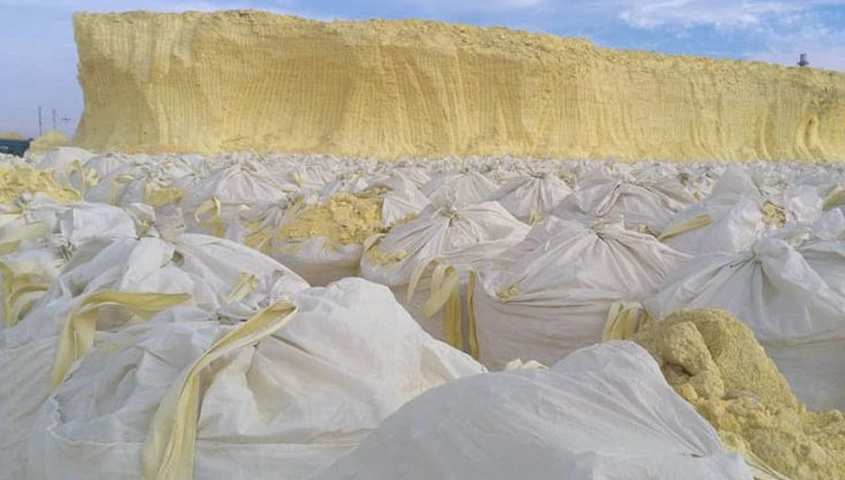
Sulfur Supplier for Granular, Lump and Pastille Sulfur in Bulk
SUHA International Trading L.L.C. exports industrial sulfur with 99.5% minimum purity to fertilizer producers, sulfuric acid plants, rubber manufacturers, mining operations and chemical distributors. We load from Jebel Ali Port (UAE) and Mersin Port (Turkey) and supply 500 to 10,000 MT per contract, delivered in scheduled partial shipments, with a Certificate of Analysis for every batch.
- 99.5%Min. purity (dry)
- 5Physical forms
- 2503.00HS code
- 7704-34-9CAS number
- 500 MTMinimum order
- 10,000 MTMax. per contract
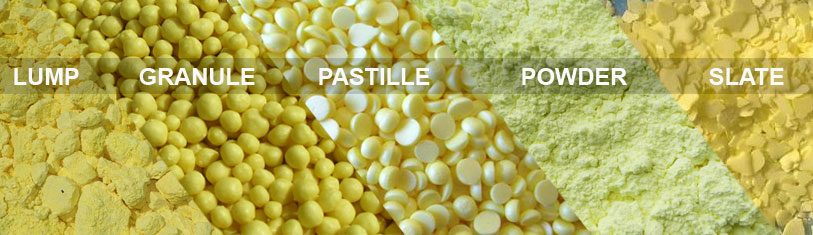
Bulk sulfur is supplied as granular (2–6 mm), pastille, lump, slate or powder sulfur, classified under HS 2503.00 (CAS 7704-34-9). SUHA International supplies 99.5% minimum purity sulfur FOB Jebel Ali or Mersin, or CFR/CIF to your port, from a minimum order of 500 MT up to 10,000 MT per contract, delivered in partial shipments, with a COA and SDS for every batch.
What Is Industrial Sulfur?
Sulfur (also spelled sulphur; chemical symbol S, atomic number 16) is a yellow, non-metallic element. Almost all of the sulfur traded today is recovered sulfur — a by-product of removing hydrogen sulfide from natural gas and crude oil at gas plants and refineries — which is why the Middle East is one of the world's largest exporting regions.
Around nine-tenths of the world's sulfur is burned to make sulfuric acid, the backbone of phosphate fertilizer and metal-leaching industries. The rest goes directly into rubber vulcanisation, agrochemicals and chemical synthesis.
Physical data: PubChem — Sulfur.
Sulfur Forms We Supply — Granular, Pastille, Lump, Slate and Powder
The right form depends on how your plant unloads, melts or doses sulfur. Formed shapes (granules and pastilles) flow freely and create very little dust, which also makes them easier to ship.
| Form | Size / shape | Dust | Handling | Typical use |
|---|---|---|---|---|
| Granular | 2–6 mm granules | Very low | Free-flowing; best for automated handling | Fertilizer & sulfuric acid plants |
| Pastille | Smooth hemispheres, ≈ 2–5 mm | Very low | Uniform size; precise dosing | Rubber compounding, chemicals |
| Lump | Irregular pieces | Medium | Lowest processing cost; melted on site | Sulfuric acid, mining |
| Slate | Flat, brittle sheets | Medium | Produced by cooling molten sulfur in layers | Acid plants, chemical feed |
| Powder | Fine, milled | High | Fast reaction; needs dust control | Agrochemicals, fungicides, rubber |
Sulfur Specifications and Properties
Guaranteed values for our standard granular grade, and the key identification data your customs broker and safety team will ask for.
Specification — granular sulfur 99.5%
| Parameter | Specification | Test method |
|---|---|---|
| Purity (dry basis) | ≥ 99.50 % | Gravimetric |
| Ash | ≤ 0.05 % | Gravimetric (ignition) |
| Moisture | ≤ 0.5 % | Oven drying |
| Hydrocarbons (organics) | ≤ 0.05 % | Combustion / gravimetric |
| Acidity (as H₂SO₄) | ≤ 0.02 % | Titrimetric |
| Bulk density | ≤ 1,240 kg/m³ | Loose bulk density |
| Particle size 2–6 mm | ≥ 90 % | Sieve analysis |
| Particle size > 6 mm | ≤ 10 % | Sieve analysis |
| Particle size < 2 mm | ≤ 10 % | Sieve analysis |
| Colour | Bright yellow | Visual |
Identification & physical properties
| Property | Value |
|---|---|
| Chemical name | Sulfur (sulphur), S₈ |
| CAS number | 7704-34-9 |
| HS code | 2503.00 |
| UN number / class | UN 1350 · Class 4.1 · PG III |
| Molecular weight (S₈) | 256.52 g/mol |
| Appearance | Yellow solid |
| Melting point | ≈ 115 °C (239 °F) |
| Boiling point | ≈ 445 °C (833 °F) |
| Density | ≈ 2.07 g/cm³ |
| Solubility | Insoluble in water; soluble in carbon disulfide |
Lump, pastille, slate and powder grades are quoted to the same chemical limits; particle-size limits differ by form. The Certificate of Analysis for your batch shows the actual results.
What Is Sulfur Used For?
These are the industries that buy bulk sulfur from us most often, and the form each one usually orders.
- ⚗️
Sulfuric acid production
The largest use of sulfur worldwide: sulfur is burned to SO₂ and converted to sulfuric acid in contact-process plants.
- Contact-process acid plants
- Oleum for sulfonation
- Acid for detergents and fibres
- 🌱
Fertilizers
Through sulfuric acid, sulfur makes phosphate and sulfate fertilizers; elemental sulfur is also blended in as a slow-release nutrient.
- Phosphoric acid, SSP and TSP
- Ammonium sulfate
- Sulfur-enhanced NPK and soil acidifiers
- ⛏️
Mining & metals
Acid made from sulfur leaches copper, nickel, uranium and other metals from ore.
- Copper heap and tank leaching
- Nickel and uranium processing
- pH control with caustic soda in mining
- Flotation reagents (via CS₂ and xanthates)
- 🚗
Rubber & tyres
Sulfur cross-links rubber chains during vulcanisation, giving tyres and rubber goods their strength and elasticity.
- Tyres
- Belts, hoses and seals
- Technical rubber goods
We also supply SBR, carbon black and stearic acid for the same rubber compound.
Usual form: pastille, powder - 🧪
Chemicals
Sulfur is the starting point for many sulfur chemicals and intermediates.
- Carbon disulfide (CS₂)
- Sodium sulfide and sodium hydrosulfide
- Thiochemicals and sulfonation agents
- 🌾
Agrochemicals
Finely ground sulfur is one of the oldest fungicides and miticides, and is used to lower the pH of alkaline soils.
- Wettable and dusting sulfur
- Vineyard and orchard fungicides
- Soil pH correction
- 📄
Pulp & paper
Sulfur compounds make up losses in the kraft and sulfite pulping cycles.
- Kraft liquor make-up, together with sodium sulfide
- Sulfite pulping (via SO₂)
- 🏗️
Construction materials
Molten sulfur binds aggregate into acid-resistant sulfur concrete and modifies asphalt binders.
- Sulfur concrete
- Sulfur-extended asphalt
Sulfur Packing, Container Loading and Minimum Order
We pack sulfur in 25–50 kg bags or 1-tonne jumbo bags (FIBC) and ship in 20ft or 40ft containers from Jebel Ali or Mersin. Our minimum order is 500 MT and our supply capacity is 500 to 10,000 MT per contract, delivered part by part in scheduled shipments so you receive sulfur as your plant needs it.
| Shipment | Typical load | Best for |
|---|---|---|
| 20ft container | 20–25 MT | Standard shipment unit for each partial delivery |
| 40ft container | 26–27 MT | Larger orders where the 40ft rate is better |
| Contract supply | 500–10,000 MT | Minimum order 500 MT; partial shipments on an agreed schedule |
- COA & SDS per batch
- Loading supervision
- SGS / BV / Intertek on request
- Certificate of Origin
- Marine insurance (CIF)
Sulfur Handling, Storage and Transport Classification
- 1Control dustFine sulfur dust can form explosive mixtures with air. Use granular or pastille forms where possible, keep floors clean and avoid dropping product from height.
- 2Remove ignition sourcesSulfur burns with a blue flame and gives off sulfur dioxide. Earth conveyors and equipment, ban hot work near stocks and keep extinguishing water or foam ready.
- 3Keep it dry and coveredWet sulfur slowly forms sulfuric acid that corrodes steel and concrete. Store under cover, on sealed floors, away from oxidisers.
- 4Ventilate melting areasMolten or heated sulfur can release hydrogen sulfide (H₂S). Melting pits and tanks need ventilation and gas monitoring.
Transport: sulfur is listed as UN 1350, Class 4.1, Packing Group III. Under the IMDG Code, sulfur formed to a specific shape — granules, prills, pellets, pastilles or flakes — is exempt, so these forms usually travel as non-dangerous cargo. Powder and lump may need DG documents; we confirm the classification for your form and route before booking.
How to Buy Bulk Sulfur from SUHA International
- Send your enquiryForm, quantity, packing, destination port and Incoterm — by WhatsApp or email.
- Receive a formal offer within 24 hoursPrice, loading port, payment terms, shipping schedule and offer validity.
- Confirm the contractSign the sales contract and open the L/C or send the T/T advance.
- Loading and inspectionTypically 7–10 working days to loading; optional SGS, BV or Intertek inspection.
- Documents and deliveryBill of Lading, Invoice, Packing List, COA, SDS and Certificate of Origin sent for customs clearance.
What to include in your request
- Form: granular, pastille, lump, slate or powder
- Purity and any special limits (ash, acidity, moisture)
- Contract quantity (500–10,000 MT) and shipment schedule
- Packing: 25–50 kg bags or 1 MT jumbo bags
- Destination port and preferred Incoterm
- End use (fertilizer, acid, rubber, chemicals…)
- Inspection requirement (SGS, BV, Intertek)
- Payment terms: T/T, L/C at sight or D/P
Why Buy Sulfur from SUHA International?
- 🔬
Batch COA, not a template
Every shipment comes with a Certificate of Analysis for that batch and an SDS, so your QC team checks real numbers.
- 🚢
Two loading ports
Jebel Ali and Mersin give you a second route to Africa, Asia, Europe and the Americas when one corridor is disrupted.
- 📦
500–10,000 MT capacity
Contract volumes delivered part by part on your schedule, in 25–50 kg bags or 1-tonne jumbo bags.
- ⏱️
Fast, firm quotes
A formal FOB, CFR or CIF offer within 24 hours, and term contracts for regular buyers.
- 🧾
Documents right first time
Complete export documents and the correct transport classification for your form — no delays at customs.
- 🧪
One supplier, more chemicals
Combine sulfur with sulfuric acid, caustic soda or sodium sulfide in one supply relationship.
Sulfur Supplier FAQ
Who is a reliable bulk sulfur supplier?
SUHA International Trading L.L.C. supplies bulk sulfur with 99.5% minimum purity (dry basis) in granular, lump, pastille, powder and slate form. We load from Jebel Ali Port (UAE) and Mersin Port (Turkey), quote FOB, CFR or CIF, and ship every batch with a Certificate of Analysis and a Safety Data Sheet.
What is sulfur used for?
Most sulfur is burned to make sulfuric acid, which goes into phosphate and sulfate fertilizers, metal leaching and chemical processing. Sulfur is also used directly to vulcanise rubber, as a fungicide and soil acidifier in agriculture, and as a feedstock for chemicals such as carbon disulfide.
What forms of sulfur do you supply?
We supply granular sulfur (2–6 mm), lump sulfur, pastille sulfur, sulfur powder and slate sulfur. Granular and pastille forms are the most common for export because they flow well and create little dust.
What is the difference between granular and pastille sulfur?
Both are formed, low-dust shapes made from molten sulfur. Granules are built up in a granulator and are typically 2–6 mm; pastilles are drops solidified on a cooled steel belt, giving smooth, uniform hemispheres. Granular is the usual choice for fertilizer and acid plants; pastilles are preferred where precise dosing or very low dust is needed, such as rubber compounding.
What is the purity of your sulfur?
Our standard grade is 99.5% minimum purity on a dry basis, with ash and hydrocarbons each at 0.05% maximum, moisture at 0.5% maximum and acidity (as H₂SO₄) at 0.02% maximum. The actual results for your batch are shown on the Certificate of Analysis.
What is the HS code and CAS number for sulfur?
Bulk sulfur (granular, lump, pastille, powder and slate) is classified under HS 2503.00 — sulphur of all kinds other than sublimed, precipitated and colloidal sulphur, which fall under HS 2802.00. The CAS number of sulfur is 7704-34-9.
Is sulfur classed as dangerous goods for shipping?
Sulfur is listed as UN 1350, Class 4.1 (flammable solid), Packing Group III. Under the IMDG Code, sulfur formed to a specific shape such as granules, prills, pellets, pastilles or flakes is exempt, so these forms usually ship as non-dangerous cargo, while powder and lump may need DG documents. We confirm the classification for your form and route before booking.
Is sulfur flammable?
Yes. Solid sulfur burns with a blue flame and releases sulfur dioxide, and fine sulfur dust can form explosive mixtures with air. That is why we recommend low-dust granular or pastille forms, earthed handling equipment and no open flames near storage.
What is your minimum order quantity for sulfur?
The minimum order for sulfur is 500 MT per contract. The contract can be delivered part by part — for example in 20ft containers of about 20–25 MT each — on a schedule that matches your consumption.
How much sulfur can you supply?
Our supply capacity is 500 to 10,000 MT per contract. Larger contracts are delivered part by part in scheduled shipments, so you receive sulfur in step with your production and storage capacity.
Do you offer FOB, CFR or CIF terms?
Yes. We quote FOB Jebel Ali or FOB Mersin, and CFR or CIF to your destination port. Payment terms are T/T, L/C at sight or D/P.
What is the current price of sulfur?
Sulfur prices change every month. Middle East producers publish monthly official selling prices that set the tone for the market, and freight, form and packing are added on top. Send us your form, quantity, packing and destination and we will reply within 24 hours with a firm FOB or CIF offer.
How should sulfur be stored?
Store sulfur dry, covered and away from oxidisers, heat and ignition sources. Wet sulfur slowly forms sulfuric acid that corrodes steel and concrete, and molten or heated sulfur can release hydrogen sulfide, so storage areas need good ventilation and dust control.
Request a Bulk Sulfur Quote
Tell us the form, quantity, packing and destination. Our export team replies within 24 hours with a formal FOB, CFR or CIF offer.