
Difference Between Caustic Soda and Baking Soda (Sodium Bicarbonate)
Introduction: Why This Distinction Matters
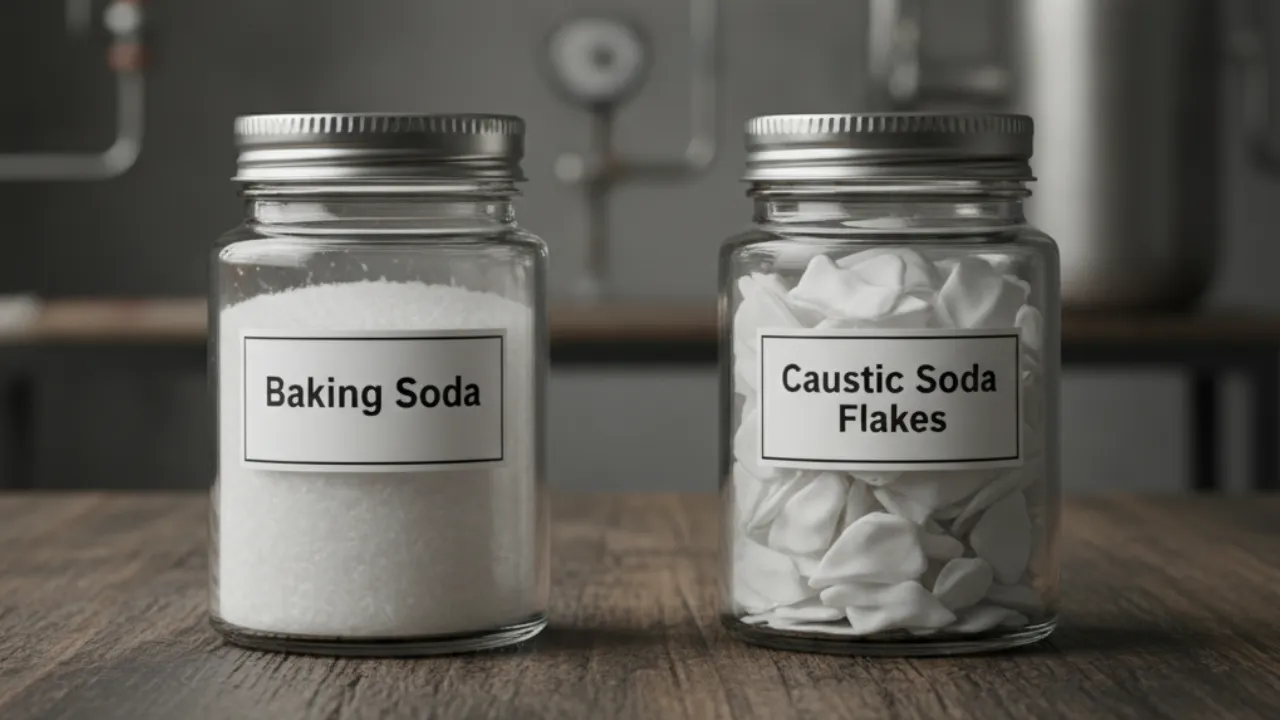
Caustic soda and baking soda look similar and share the word “soda,” but they are completely different chemicals with radically different strengths, uses, and safety requirements. Understanding the difference between caustic soda and baking soda is critical for both industrial facilities and households, because confusing them can lead to severe chemical burns, poisoning, or equipment damage.
- Caustic soda = sodium hydroxide (NaOH): a highly corrosive, strong base used mainly in heavy industry and specialized cleaning.
- Baking soda = sodium bicarbonate (NaHCO₃): a mild, food-safe compound used in baking, gentle cleaning, personal care, and medicine.
This guide explains their chemistry, production, applications, environmental profiles, and safety protocols so you can handle each substance correctly.
Key Differences at a Glance
| Feature | Caustic Soda (NaOH) | Baking Soda (NaHCO₃) |
|---|---|---|
| Chemical Name | Sodium hydroxide | Sodium bicarbonate |
| Strength | Very strong base | Weak base/buffer |
| pH (1% solution, ~25°C) | ~13.5 | ~8.3 |
| Toxicity | Highly corrosive; can be fatal if ingested | GRAS; low toxicity in normal use |
| Main Uses | Pulp & paper, refining, heavy-duty cleaning | Baking, light cleaning, antacid, odor control |
| Safety Classification | OSHA corrosive hazard | OSHA non-hazardous (typical use) |
| Household Suitability | Not for routine home use | Common, safe household product |
| Food Use | Process aid only (never eaten) | Direct food ingredient |
Why They Often Get Confused
These compounds are frequently mixed up because they:
- Are both white, powdery solids containing sodium
- Have overlapping common names (“caustic soda”, “bicarbonate of soda”)
- Both are involved, in different ways, with cleaning and food-related processes
Despite this, their chemical behavior and risk profiles are dramatically different. Treat them as unrelated substances, not variations of the same product.
What Is Caustic Soda (Sodium Hydroxide, NaOH)?
Caustic soda is an inorganic compound and one of the strongest alkaline bases used in modern industry.
Key Properties
- Chemical formula: NaOH
- Molecular weight: 40.00 g/mol
- pH: 13–14 in dilute solution
- Physical form: White, waxy flakes, pellets, or solid blocks
- Solubility in water (20°C): ~1110 g/L (very high)
- Dissolution: Strongly exothermic (solution heats up)
- Hygroscopic: Rapidly absorbs water and CO₂ from air
- Behavior: Fully dissociates in water; extremely corrosive to tissue and many materials
This extreme alkalinity allows caustic soda to dissolve organic matter and attack metals and some plastics, which is desirable in certain processes but very dangerous without proper control.
How Caustic Soda Is Produced
Most global production comes from the chlor-alkali process, in which brine (NaCl solution) is electrolyzed to form:
- Sodium hydroxide (NaOH)
- Chlorine gas (Cl₂)
- Hydrogen gas (H₂)
Main technologies:
- Membrane cells: Modern standard; high purity and better energy efficiency
- Diaphragm cells: Older technology still in service in some areas
- Mercury cells: Largely phased out because of mercury contamination concerns
What Is Baking Soda (Sodium Bicarbonate, NaHCO₃)?
Baking soda is a mild, amphoteric salt widely used in kitchens, homes, and medicine.
Key Properties
- Chemical formula: NaHCO₃
- Molecular weight: 84.0066 g/mol
- pH (1% solution, 25°C): ~8.3
- Physical form: Fine, white crystalline powder
- Solubility in water (20°C): ~96 g/L (moderate)
- Hygroscopicity: Essentially non-hygroscopic under normal conditions
- Thermal behavior: Starts decomposing near 50°C; around 200°C converts to sodium carbonate, water, and CO₂
- Behavior: Weak base and buffer; releases CO₂ when reacting with acids
Its mild alkalinity and buffering capacity make Sodium Bicarbonate safe for direct food use and many everyday applications.
How Baking Soda Is Produced
Common manufacturing routes include:
- Solvay process: Reacts sodium chloride, ammonia, and carbon dioxide in water to form sodium bicarbonate and other byproducts
- Trona ore processing: Refines naturally occurring sodium carbonate/bicarbonate minerals, especially in certain regions
- Carbonation of soda ash: Converts sodium carbonate (Na₂CO₃) to sodium bicarbonate using CO₂
Key Chemical and Physical Differences
The most important difference between caustic soda and baking soda comes from their pH and chemical strength.
pH and Alkalinity
The pH scale is logarithmic: each unit represents a 10× change in hydrogen ion concentration.
- Caustic soda (NaOH): pH ~13–14 (very high)
- Baking soda (NaHCO₃): pH ~8–9 (mildly basic)
This means NaOH solutions are tens of thousands of times more alkaline than NaHCO₃ solutions at similar concentrations. That gap explains why NaOH can cause instant chemical burns, while NaHCO₃ is safe enough to act as an antacid in small doses.
Molecular Structure and Reactivity
| Property | Caustic Soda (NaOH) | Baking Soda (NaHCO₃) |
|---|---|---|
| Cation | Na⁺ | Na⁺ |
| Anion | OH⁻ (hydroxide) | HCO₃⁻ (bicarbonate) |
| Dissociation in water | Complete, essentially irreversible | Partial; forms a buffer system |
| Reaction with acids | Strong neutralization; highly exothermic | Mild neutralization; CO₂ gas released |
| Corrosivity | Highly corrosive to tissues and some metals | Non-corrosive; mild abrasive on surfaces |
Thermal Behavior
- Caustic soda:
- Melting point: 318°C (604°F)
- Remains strongly alkaline at high temperatures
- Baking soda:
- Begins decomposing around 50°C
- At higher temperatures:
2 NaHCO₃ → Na₂CO₃ + H₂O + CO₂↑ - CO₂ release is what makes baked goods rise
Common Uses of Caustic Soda
Caustic soda is a critical raw material in many industries:
- Pulp & paper:
- Delignification in the kraft process
- Bleaching and fiber treatment
- Petroleum refining:
- Neutralizes acidic components
- Assists in desulfurization and purification
- Chemical manufacturing:
- Produces sodium salts, detergents, and intermediates
- Used in pharmaceutical synthesis and specialty chemicals
- Aluminum production:
- Dissolves bauxite ore to extract alumina in the Bayer process
- Water and wastewater treatment:
- pH adjustment
- Precipitation of metal ions and other contaminants
- Textiles:
- Mercerization of cotton to improve strength and luster
- Processing of certain synthetic fibers
- Food processing (strictly controlled):
- Peeling fruits and vegetables (e.g., according to FDA 21 CFR §173.315)
- Cocoa and caramel color processing
- Never used as a direct food ingredient
Common Uses of Baking Soda
Baking soda’s mild nature and GRAS status make it versatile in everyday life:
- Baking and cooking:
- Leavening agent in cakes, breads, cookies, and pancakes
- Reacts with acidic ingredients to generate CO₂ bubbles
- Household cleaning:
- Gentle abrasive for sinks, counters, ovens, and cookware
- Deodorizes refrigerators, carpets, and trash cans
- Slightly alkaline pH helps neutralize acidic residues and odors
- Personal care:
- An ingredient in some toothpastes and mouthwashes
- Occasionally used as a gentle scrub (with care for sensitive skin)
- Medical uses (under guidance):
- Over-the-counter antacid for occasional heartburn
- Prescription sodium bicarbonate solutions used in hospitals for metabolic acidosis and kidney-related conditions
- Fire suppression:
- Ingredient in certain dry chemical fire extinguishers (Class B/C)
- Releases CO₂ when heated, helping to smother flames
- Water care:
- Helps adjust and buffer pH in swimming pools and some aquariums
Safety Comparison: NaOH vs NaHCO₃
In safety terms, the difference between caustic soda and baking soda is literally life-or-death in many scenarios.
Caustic Soda (NaOH) Safety
- OSHA classification: Corrosive; “Danger”
- NFPA rating: Health 3, Flammability 0, Reactivity 1
Required PPE for handling NaOH:
- Chemical splash goggles and a face shield
- Nitrile or neoprene gloves (often double-gloving)
- Chemical-resistant apron, sleeves, and closed footwear
- Respiratory protection if dusts, aerosols, or mists can form
First Aid Overview:
- Skin contact:
- Flush with copious water for at least 30 minutes
- Remove contaminated clothing quickly
- Seek medical attention for any burns
- Eye contact:
- Continuous rinsing at an eyewash station for at least 30 minutes
- Immediate emergency medical care
- Inhalation:
- Move to fresh air
- Seek medical help if respiratory irritation or distress persists
- Ingestion:
- Do not induce vomiting
- If conscious, small sips of water or milk may be given while awaiting care
- Call poison control and seek emergency treatment immediately
Storage and Handling:
- Store in airtight, corrosion-resistant containers
- Protect from moisture and CO₂ in the air
- Segregate from acids, metals, and organic materials
- Use secondary containment in industrial settings
Baking Soda (NaHCO₃) Safety
- FDA status: GRAS (Generally Recognized as Safe), 21 CFR §184.1736
- OSHA classification: Typically non-hazardous in consumer use
Handling Guidelines:
- No special PPE needed for normal household handling
- Dust mask or local exhaust ventilation is recommended for large industrial use
- Large ingestions may cause temporary gastrointestinal discomfort
- Store in a dry, closed container away from strong acids
Environmental Impact
Caustic Soda
Production impacts:
- High electricity demand in the chlor-alkali process
- The co-production of chlorine gas requires careful market and safety management
- Greenhouse gas emissions are tied to electricity and the upstream supply chain
Environmental risks:
- Discharge of high-pH solutions can harm aquatic organisms and ecosystems
- Waste streams must be neutralized and adjusted to near-neutral pH (usually 6–9)
- Solid waste containing free NaOH often requires special handling or restrictions
Baking Soda
Production impacts:
- Solvay and related processes generate brine waste and consume energy
- Trona-based routes can have lower footprints, but are geographically limited
Environmental behavior:
- Non-toxic to aquatic life at typical levels
- Does not bioaccumulate or persist as a hazardous pollutant
- Sometimes used or studied in CO₂ capture and mineralization strategies
Overall, baking soda is significantly more benign environmentally than caustic soda, especially in terms of handling, spills, and disposal.
Practical Identification: Telling Them Apart Safely
Treat any unlabeled white powder as hazardous until identified. With proper precautions, these checks can help differentiate NaOH from NaHCO₃:
- Appearance:
- NaOH: Larger flakes, pearls, or pellets; slightly translucent or waxy
- NaHCO₃: Fine, powdery, opaque white crystals
- Dissolving in water (with caution):
- NaOH: Dissolves quickly and releases noticeable heat
- NaHCO₃: Dissolves more slowly; little or no temperature rise
- Reaction with vinegar (acetic acid):
- NaOH: Little visible bubbling; reaction mainly heats and neutralizes
- NaHCO₃: Vigorous bubbling from CO₂ gas
- pH test (paper or meter):
- NaOH solution: Very dark purple/blue (pH ~13–14)
- NaHCO₃ solution: Light blue/green (pH ~8–9)
Never taste or touch powders to identify them.
FAQ: Common Questions About NaOH and NaHCO₃
Q: Are caustic soda and baking soda just different grades of the same chemical?
A: No. Caustic soda is sodium hydroxide (NaOH), a very strong, corrosive base. Baking soda is sodium bicarbonate (NaHCO₃), a mild, food-safe compound. They are chemically distinct substances and must never be interchanged.
Q: What if someone eats caustic soda by mistake, thinking it’s baking soda?
A: This is a medical emergency. NaOH can cause immediate, deep burns to the mouth, throat, and digestive tract.
- Do not induce vomiting.
- Call poison control and seek emergency care immediately.
Q: Why do both contain the word “soda” in their names?
A: Historically, “soda” referred to sodium-containing compounds used for cleaning and medicine. As chemistry advanced, different sodium compounds (hydroxide, bicarbonate, carbonate) kept traditional “soda” names, even though their properties differ dramatically.
Q: Can baking soda be used to neutralize a caustic soda spill?
A: Baking soda is generally too weak and unpredictable for serious NaOH spills.
- Small, controlled spills: facilities often use a dilute acid (e.g., diluted vinegar) following a written procedure.
- Larger spills: isolate the area and contact trained hazmat responders in line with your emergency plan.
Q: Which chemical is safer for the environment?
A: Baking soda is usually far safer: non-toxic, non-persistent, and easy to manage. Caustic soda can severely harm ecosystems if released without proper neutralization and pH control.
Q: Is “food-grade” caustic soda safe to ingest like baking soda?
A: No. “Food-grade” NaOH refers only to impurity limits for industrial food processing (such as peeling fruits). It remains highly corrosive and is never used as a direct food ingredient or as a substitute for baking soda.
Conclusion: Keeping These Two Chemicals Clearly Separated
The difference between caustic soda and baking soda defines two completely separate categories of chemicals that must never be confused:
- Caustic soda (NaOH) is a powerful industrial base that requires strict safety controls, specialized PPE, and careful waste management.
- Baking soda (NaHCO₃) is a gentle, food-safe compound that’s appropriate for kitchens, households, and certain medical uses.
For industrial users, this means rigorous labeling, training, and emergency protocols. For households, it means never storing chemicals in food containers, keeping caustic products locked away from children, and reserving baking soda for appropriate, gentle tasks.
Always verify the chemical name and formula—NaOH versus NaHCO₃—and consult the Safety Data Sheet before use. By respecting the clear difference between caustic soda and baking soda, you protect both people and the environment.