
How to Use Caustic Soda to Unclog Drains: A Quick & Dirty Guide
How to Use Caustic Soda to Unclog Drains
Is there anything more annoying than a sink that won’t drain? You’re standing there, watching the dirty water rise, and you just know your day is about to get a whole lot messier. We’ve all been there. You’ve probably tried the plunger. You’ve maybe even dumped some baking soda down there. But nothing is moving.
Sometimes, you just need something stronger.
If you are ready to stop messing around and fix the problem, you need to know how to use caustic soda to unclog drains. It’s the heavy-duty solution for heavy-duty clogs.
In this guide, we’ll walk you through exactly what this stuff is, why it works, and how to use it without melting your pipes (or your eyebrows).
What is Caustic Soda Anyway?
Before we start pouring chemicals, let’s chat about what we are actually dealing with. Caustic soda, or Sodium Hydroxide, isn’t your run-of-the-mill supermarket cleaner. It is a potent chemical base.
So, why do plumbers and DIYers swear by it?
Because it doesn’t just push the clog; it dissolves it. When you pour it down the sink, it creates a chemical reaction that generates heat. This heat melts greasy build-up and turns it into a soap-like liquid that dissolves in water. It’s basically science fighting grime on your behalf.
Is Caustic Soda Safe for My Drains?
This is the big question. Generally, yes—it is safe for most standard plumbing. It works wonders on:
- Grease and Fat: The stuff that builds up from cooking.
- Hair: The number one enemy of shower drains.
- Soap Scum: That sticky residue that slows everything down.
However, a quick word of warning: Be careful with old aluminum pipes. Caustic soda can react aggressively with aluminum. If you aren’t sure what your pipes are made of, do a quick check first.
Step-by-Step: How to Use Caustic Soda to Unclog Drains
Ready to get that water flowing again? Let’s get into the actual process. Please don’t skip the safety gear—we want clear drains, not a trip to the emergency room!
1. Safety First (Seriously!)
This stuff burns. Treat it with respect.
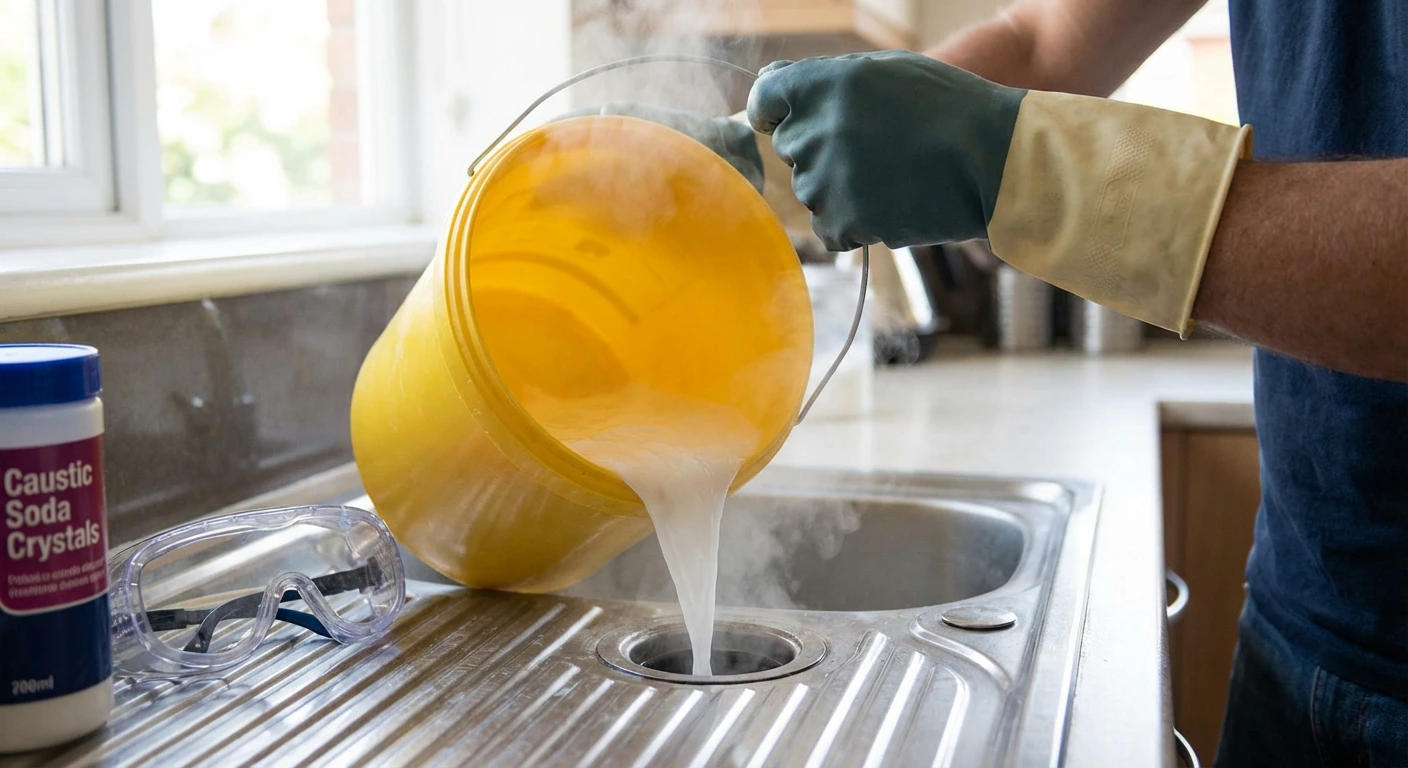
- Gloves: Wear thick, rubber gloves.
- Eyes: Put on safety goggles. One splash is all it takes to cause damage.
- Air: Open a window. You don’t want to breathe in any fumes.
2. Mix Your Solution
Grab a large bucket. Make sure it is hard plastic, not metal.
- Fill the bucket with about 3 liters of cold water.
- Add 3 cups (750g) of caustic soda crystals.
- Stir it gently with a wooden spoon. You’ll see it start to fizz and heat up. That means it’s ready to go.
3. The Pour
Now, carefully pour your mixture directly into the clogged drain. Try to aim right for the hole to avoid splashing your sink basin.
- Let it sit for 30 minutes. Go grab a coffee. Let the chemicals do the hard work for you.
4. The Flush
While you are waiting, boil a kettle of water. Once the time is up, pour that boiling water down the drain.
- Why? This flushes away the dissolved goo and leaves your pipes clean.
Troubleshooting: What If It Doesn’t Work?
So, you’ve learned how to use caustic soda to unclog drains, you’ve followed the steps, and… nothing?
Don’t panic. If the water still isn’t moving, you might be dealing with a solid blockage. Caustic soda is great for organic stuff (hair, grease, food), but it can’t dissolve a plastic toy or a tree root.
If that’s the case, put the chemicals away. It might be time to call in a pro to snake the drain physically.
Summary: Handle with Care
Using caustic soda is one of the most effective ways to clear a stubborn blockage, but it’s not a toy. As long as you respect the chemical and follow the steps, you can save yourself a hefty plumber’s bill.
Remember:
- Gear up.
- Mix carefully.
- Flush with hot water.
Now, go get that sink moving again!