
Sodium Hydroxide in Cosmetics: Is It Safe? 2025 Expert Guide
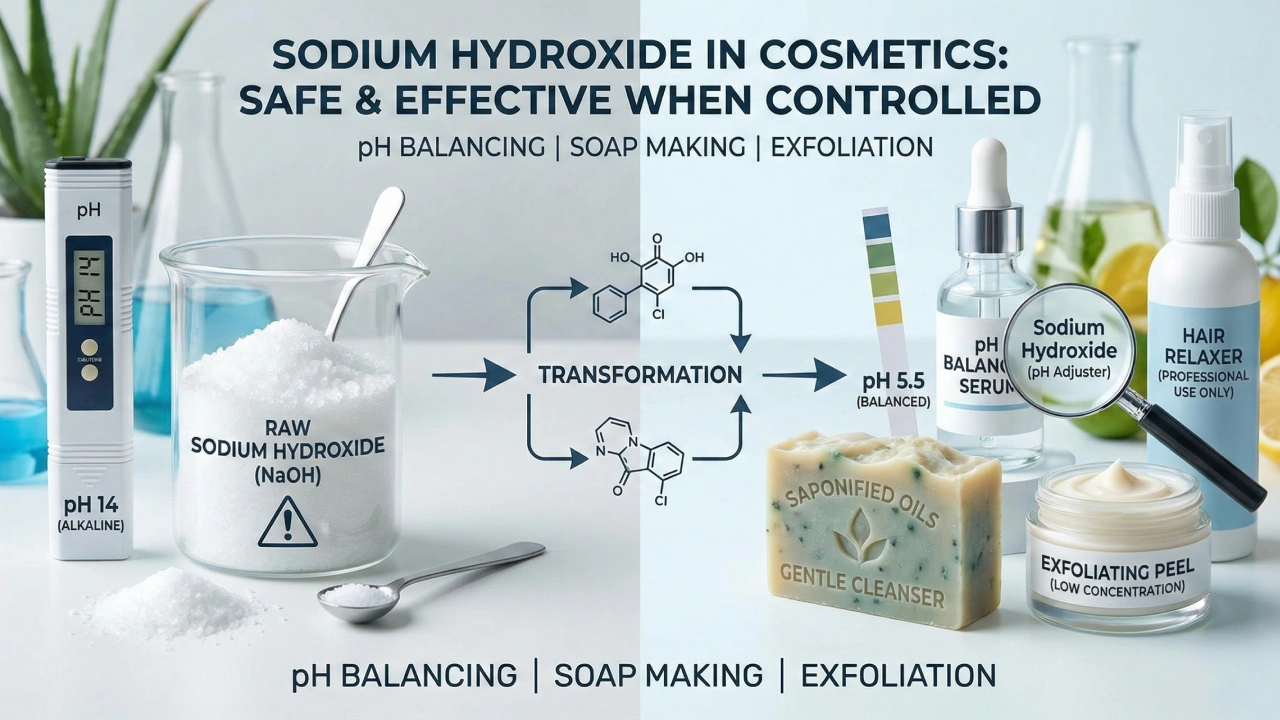
Sodium Hydroxide in Cosmetics: Overview
Sodium hydroxide—also called caustic soda or lye—might sound intimidating, but this simple compound drives innovation across modern beauty products. From balancing the pH of your favorite serum to transforming oils into gentle bar soap, it’s a workhorse ingredient that enhances both safety and performance. This guide breaks down exactly how it works, where you’ll find it, and what the regulations say about its use in your daily routine.
What Is Sodium Hydroxide?
Sodium hydroxide (NaOH) is a highly alkaline compound that acts as a pH adjuster and stabilizer in cosmetic formulations. While it’s a potent irritant in its raw form, it’s used in minuscule, carefully controlled amounts that undergo chemical transformation during manufacturing.
Common Names on Labels
-
Sodium hydroxide
-
Caustic soda
-
Lye
-
Soda lye
-
Ascorbyl palmitate (when used in specific reactions)
6 Main Uses of Sodium Hydroxide in Cosmetics and Beauty Products
pH Balancing in Skincare
Your skin’s acid mantle thrives at a pH of 4.5-6.5. Sodium hydroxide neutralizes overly acidic ingredients like glycolic acid or salicylic acid, ensuring the final product matches this natural range. Without it, many exfoliants and vitamin C serums would be too harsh, causing irritation instead of delivering benefits.
Key Takeaway: In pH adjusters, concentrations of 0.01-0.1% are typical—too little to remain active, just enough to perfect the formula.
Soap Saponification
Traditional soap making relies on sodium hydroxide’s reaction with oils and fats. During saponification, the compound is completely consumed, leaving behind pure soap and nourishing glycerin. The final bar contains zero free lye, just a mild cleanser that’s gentle enough for daily use.
Chemical Exfoliation in Peels
At low concentrations of 1-5%, sodium hydroxide works as a keratolytic agent in professional chemical peels. It breaks down the bonds between dead skin cells, revealing brighter, smoother skin underneath. This controlled action avoids the micro-tears physical scrubs can cause.
Concentration Guide:
-
0.01-0.1%: pH adjustment in daily skincare (safest)
-
1-5%: Professional chemical peels (controlled setting only)
-
10-30%: Soap making (fully neutralized in final product)
Hair Straightening and Relaxing
Sodium hydroxide alters the protein structure in hair shafts, enabling long-lasting straightening effects. Consumer products cap concentrations at 2%, while professional salon formulas may reach 4.5%. Strict pH limits ensure these treatments modify hair without damaging the scalp.
Cuticle Softening in Nail Care
Cuticle removers use up to 5% sodium hydroxide to gently dissolve excess tissue without cutting. This allows for precise, damage-free manicures and is rinsed off completely after a few minutes.
Emulsification and Stability
By helping oil and water phases blend smoothly, sodium hydroxide creates stable creams and lotions that won’t separate. It also maintains a product pH that discourages bacterial growth, extending shelf life naturally.
Is Sodium Hydroxide Safe in Cosmetics and Skincare?
Safety Data & Concentration Limits
The Cosmetic Ingredient Review (CIR) Expert Panel confirms sodium hydroxide is safe at concentrations up to 10% in rinse-off products and 2% in leave-on formulations when properly neutralized. For pH balancing—the most common use—manufacturers typically use 0.01-0.1%, far below these thresholds.
Important: The “dangerous” reputation comes from undiluted sodium hydroxide. In cosmetics, it’s either present in trace amounts or chemically transformed into harmless byproducts.
Regulatory Standards by Region
US FDA Guidelines
The FDA recognizes sodium hydroxide as GRAS (Generally Recognized As Safe) for indirect food contact and cosmetic use. Manufacturers must follow Good Manufacturing Practices (GMP) to ensure complete neutralization and accurate labeling.
EU Cosmetics Regulations
Under EU Regulation 1223/2009, sodium hydroxide is restricted in Annex III. Leave-on products cannot exceed 0.2% (for pH adjustment), and all products must include warnings like “Contains alkali. Avoid eye contact.” These strict rules make EU-compliant products some of the safest globally.
Benefits of Sodium Hydroxide in Cosmetics industry
-
Supports Skin Barrier Function: By matching your skin’s natural pH, it helps maintain the acid mantle that locks in moisture and blocks irritants
-
Enhances Active Ingredients: Makes vitamin C, retinoids, and acids more effective while reducing irritation
-
Minimal Usage, Maximum Impact: Economical for brands and eco-conscious—tiny amounts deliver results
-
Enables Clean Beauty: Allows simple, natural soap making without synthetic detergents
-
Improves Product Texture: Creates smooth, stable formulations that feel luxurious
Key Takeaway: Sodium hydroxide is a “behind-the-scenes” hero—most of its work happens during manufacturing to make the final product safer and more effective.
Potential Risks and Protection Measures
In its raw form, sodium hydroxide can cause chemical burns. However, cosmetic products pose minimal risk due to regulated concentrations and neutralization processes. Sensitive skin types might experience temporary redness.
How to Protect Yourself:
-
Always patch test: Apply a small amount to your inner arm, wait 24 hours
-
Follow instructions: Don’t leave products on longer than directed
-
Rinse thoroughly: Especially with hair relaxers or cuticle removers
-
Avoid broken skin: Don’t use on areas with cuts or active irritation
Manufacturing Safety: Professional labs use protective equipment, ventilation systems, and neutralize spills with mild acids like citric acid. Products are stored in corrosion-resistant containers away from heat and moisture.
How to Read Cosmetic Labels
Sodium hydroxide appears in the ingredient list based on concentration. In a typical moisturizer, you might see it near the end (lower concentration). In soap, it’s not listed in the final product because it’s fully reacted away—instead, you’ll see “saponified oils.”
Label Red Flags: If “sodium hydroxide” appears near the beginning of a leave-on product’s ingredient list, that’s unusual and worth questioning the brand about pH levels.
Professional vs. Consumer Product Concentrations
| Product Type | Consumer Grade | Professional Grade |
|---|---|---|
| Hair Relaxers | Up to 2% | Up to 4.5% |
| Chemical Peels | 1-2% (at-home kits) | 3-5% (salon) |
| Cuticle Removers | Up to 5% | 5-10% (nail salons) |
| pH Adjusters | 0.01-0.1% | Same |
Always choose the appropriate strength for your experience level. Professional products require trained application to avoid harm.
Common Myths vs. Facts About Sodium Hydroxide in Cosmetics
Myth: “Any amount of lye is dangerous and will burn skin.”
Fact: Concentration matters. At 0.01% in your moisturizer, it’s less irritating than lemon juice.
Myth: “Sodium hydroxide is a synthetic chemical that doesn’t belong in natural products.”
Fact: It’s a simple inorganic compound (NaOH) approved for use in USDA Organic soap production because it disappears during saponification.
Myth: “If it’s not listed on soap labels, brands are hiding something.”
Fact: INCI regulations require listing final ingredients only. Since lye transforms into soap, it legally doesn’t appear on the label.
The Bottom Line
Sodium hydroxide in cosmetics represents smart chemistry at its best—transforming from a potentially dangerous raw material into a safety-enhancing ingredient through careful formulation. Its ability to balance pH, create gentle soap, and enable effective exfoliation makes it irreplaceable in modern beauty.
By understanding how it works and recognizing regulatory safeguards, you can shop with confidence. The EU’s strict 0.2% limit for leave-on products and the FDA’s GRAS status provide clear safety benchmarks. As the industry moves toward transparency, sodium hydroxide remains a trusted, essential tool for creating effective, stable, and gentle beauty products.