
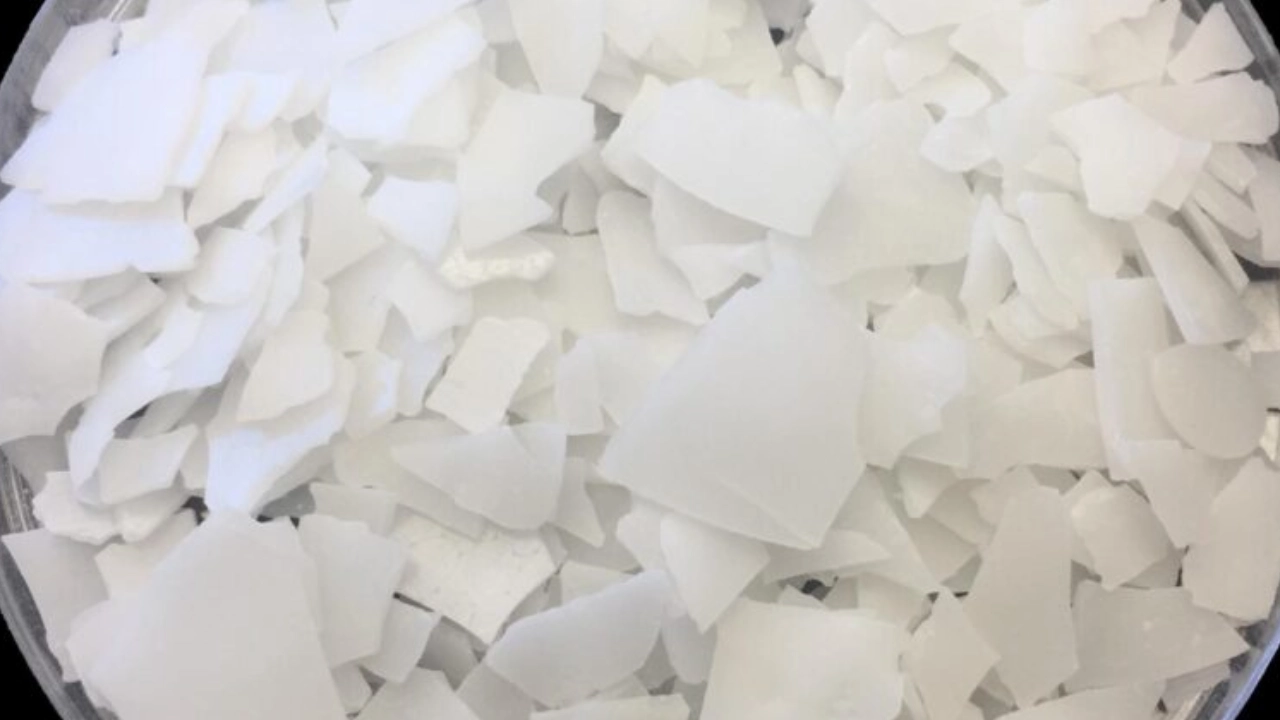
As a Polyethylene Wax Flakes Supplier, we deliver high-purity PE wax flakes to manufacturers in plastics, coatings, inks, adhesives, rubber, and specialty chemical formulations. Our ISO 9001:2015 quality system, batch-level testing, and application guidance support consistent processing and dependable product performance for customers across 30+ countries.
What Are Polyethylene Wax Flakes?
Polyethylene wax flakes are synthetic, low-molecular-weight polyethylene polymers used as processing aids and performance additives. The free-flowing flake form supports efficient handling, automated feeding, and fast melting for consistent dispersion.
Common functions of PE wax flakes include:
- improving melt flow and processing stability
- internal and external lubrication
- pigment and filler dispersion support
- surface slip, anti-blocking, and scratch/mar resistance
- gloss enhancement or controlled matting (grade dependent)
What to Expect from a Polyethylene Wax Flakes Supplier
A reliable Polyethylene Wax Flakes Supplier should do more than ship material. Industrial buyers typically require consistent specifications, documentation, and technical fit for the application.
Key supplier criteria include:
- stable and repeatable QC results between batches
- clear grade selection (chemistry, melting point range, molecular weight, hardness)
- complete documentation package (COA, SDS, TDS)
- packaging flexibility for bulk procurement and automated dosing
- export-ready logistics and documentation for international trade
Key Properties of PE Wax Flakes
Thermal Stability
Grades are selected by melting point and thermal behavior to maintain performance under typical processing conditions. Many industrial grades fall within a melting range of approximately 100–135°C, depending on chemistry and molecular weight.
Internal and External Lubrication
- Internal lubrication can help reduce melt viscosity and improve flow
- External lubrication can help reduce sticking on metal surfaces, supporting smoother extrusion and molding
Dispersibility and De-agglomeration
Supports more uniform distribution of pigments, fillers, and additives, helping improve surface uniformity and reduce visible defects.
Compatibility by Chemistry
PE wax can be matched to system polarity and formulation requirements through:
- homopolymer grades for strong lubrication and hardness in many polymer systems
- oxidized grades for improved wetting and compatibility in more polar systems (including many water-based formulations)
- copolymer grades for flexibility and solubility/viscosity tuning in targeted applications
Operational and Product Benefits
Outcomes depend on formulation, equipment design, and operating conditions, but buyers typically use PE wax flakes to target:
Production Benefits
- improved processing stability and smoother flow due to reduced friction
- reduced risk of die buildup and deposits with appropriate grade selection
- potential torque and energy reduction in compatible systems
- Improved mold release and cleaner part ejection in many applications
Finished Product Benefits
- improved surface finish (gloss improvement or matting control, grade dependent)
- enhanced scratch and mar resistance in coatings and plastics
- anti-blocking and better storage stability in selected formulations
- improved dispersion consistency for better appearance and fewer defects
Polyethylene Wax Flakes Supplier Product Portfolio
We supply multiple PE wax flake types to fit different industrial requirements:
Homopolymer PE Wax Flakes
Best known for: strong lubrication, hard finish, high crystallinity
Typical use: PVC extrusion, masterbatch processing, printing inks, powder coatings
Oxidized PE Wax Flakes
Best known for: increased polarity, improved wetting, dispersion, and emulsifiability options
Typical use: water-based coatings, textile finishing, polish and floor-care emulsions
Copolymer PE Wax Grades
Best known for: flexibility, viscosity control, compatibility tuning
Typical use: hot melt adhesives, rubber compounds, cable and wire formulations
Micronized PE Wax
Best known for: fine particle size and dispersion efficiency (commonly 5–50 μm depending on grade)
Typical use: powder coatings, matte paints, wood coatings, specialty finishes
Through our Polyethylene Wax Flakes Supplier portfolio, we can recommend grades based on your resin type, processing temperature, dispersion needs, and surface targets.
Molecular Weight Selection Guide
- low MW (approx. 1,000–3,000 g/mol): often used for PVC lubrication systems, candles, and masterbatch processing
- medium MW (approx. 3,000–6,000 g/mol): commonly selected for hot melt adhesives and rubber processing aids
- high MW (approx. 6,000–10,000 g/mol): often used in higher-performance surface and release applications, including industrial and automotive coatings
- specialty grades: FDA-compliant options where required, and modified PE wax grades (such as maleic anhydride modified) to support adhesion in specific systems
Industries We Serve
Plastics and Polymer Manufacturing
Supports lubrication, flow improvement, dispersion in masterbatch, and surface finish in molded and extruded products.
Paints, Coatings, and Inks
Used for gloss/matte control, scratch and mar resistance, anti-settling performance, and improved pigment orientation in suitable systems.
Adhesives and Sealants
Helps adjust viscosity and processing behavior in compatible hot melt and specialty adhesive formulations.
Rubber and Tire Manufacturing
Functions as a processing aid during mixing and calendering and can support mold release performance in selected compounds.
Textile and Leather Finishing
Used in finishing formulations to support softness, lubrication, and water repellency targets depending on chemistry and system design.
Quality and Compliance from Your Polyethylene Wax Flakes Supplier
Our quality approach is designed for industrial procurement and repeatable manufacturing performance:
- ISO 9001:2015 certified manufacturing
- batch-specific Certificate of Analysis (COA)
- Technical Data Sheet (TDS) and Safety Data Sheet (SDS) available
- REACH and RoHS documentation support (where applicable)
Typical parameters available by grade include melting point, viscosity, density, penetration/hardness, acid value (oxidized grades), and particle size distribution (micronized grades).
Global Shipping and Documentation from a Polyethylene Wax Flakes Supplier
We export to more than 30 countries, including India, Turkey, Vietnam, UAE, Brazil, and Germany. Our export support includes:
- shipment planning and container optimization (FCL)
- customs and documentation coordination
- packaging options aligned with bulk handling requirements
- supply continuity support through regional logistics planning (where available)
Packaging, MOQ, and Customization
Packaging Options
- 25 kg bags
- 500 kg jumbo bags
- private label and OEM options for qualified orders
MOQ and Bulk Supply
- MOQ: 20 MT to support freight efficiency and consistent batch supply
Technical Customization
Where applicable, we can align grades to your production needs by adjusting melting point, hardness, molecular weight range, and particle size.
Request a Quote or Free Sample
Contact our Polyethylene Wax Flakes Supplier team to secure consistent quality, documentation support, and export-ready logistics.
Phone/WhatsApp: +971 50 720 9246
Email: info@causticsodaco.com
Website: www.causticsodaco.com
For faster quoting, share: application (PVC/coatings/adhesives), preferred wax type (homopolymer/oxidized/copolymer/micronized), target melting point range, required particle size (if needed), monthly quantity, and destination country/port.
Polyethylene Wax Specification
| Typical Property | UNIT | Value | Test Method |
|---|---|---|---|
| Appearance | Flake | White, Black Spots Free | VRM-WI-079-00 |
| Softening Point | °C | 100-105 | ASTM – ED3418 |
| Penetration Index | d.mm | 5-8 | ASTM D1321 |
| Viscosity | Cps @140°C | 10-20 | ASTM – D3236 |
| Density | Gr/Cm3 @25°C | 0.9 ± 0.03 | ASTM – D1505 |
| Flash Point | °C | 140< | ASTM – D93 |