
Supplier of Oxidized Polyethylene Wax (OPE Wax) from Turkey and UAE
- What Is Oxidized Polyethylene Wax?
- Technical Specifications & Physical Properties
- Industrial Applications of OPE Wax
- Specialized OPE Wax Grades
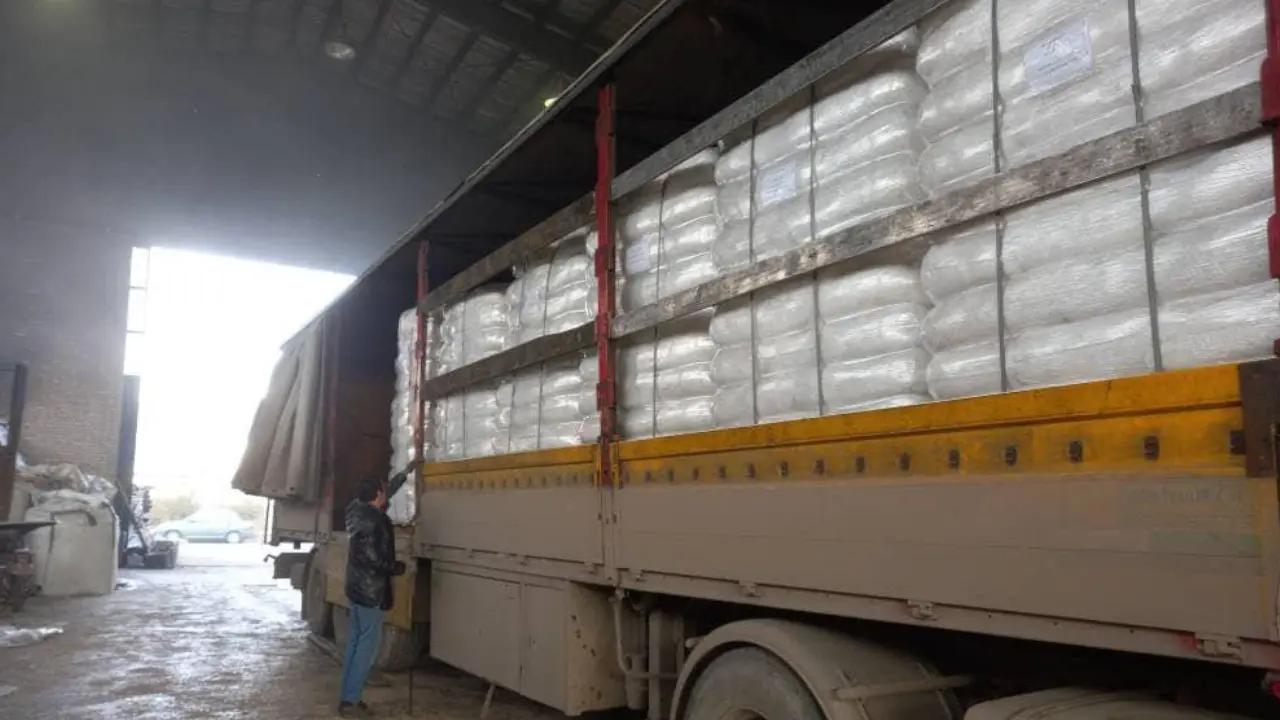
- Packaging & Logistics Solutions
- Quality, Safety & Compliance
- Why Partner With Our OPE Wax Manufacturing Team?
- Request a Custom Quote or Technical Sample
- Specifications of Oxidized Polyethylene Wax (OPE)
- Technical Data Sheet (TDS) of Oxidized Polyethylene Wax 261
For over two decades, we’ve manufactured precision-engineered oxidized polyethylene wax (OPE Wax) through controlled oxidation processes that introduce polar carboxyl and hydroxyl groups into polyethylene chains. This advanced molecular modification delivers exceptional hardness, thermal stability, and emulsifiability—properties that make OPE Wax essential across modern manufacturing operations.
Our global production network serves clients in 80+ countries with batch-to-batch consistency, custom specifications, and technical formulation support for PVC, coatings, inks, adhesives, rubber, textiles, and leather applications. (Contact Us)
What Is Oxidized Polyethylene Wax?
Unlike conventional polyethylene wax, OPE Wax undergoes targeted oxidation that transforms its molecular structure, creating a versatile additive that bridges non-polar polymers and polar systems. This unique chemistry enables compatibility with materials that standard PE wax cannot address.
Key Performance Advantages:
-
Enhanced Lubrication – Reduces processing friction by up to 40%
-
Superior Dispersion – Optimizes pigment and filler distribution
-
Surface Modification – Increases scratch resistance and enables gloss control
-
Thermal Stability – Maintains performance at processing temperatures up to 300°C
-
Chemical Resistance – Stable against acids, alkalis, and common solvents
Technical Specifications & Physical Properties
Our quality assurance system ensures batch consistency with full Certificates of Analysis (COA) provided for every shipment. All products meet ISO 9001:2015 standards.
| Property | Specification Range | Test Method |
|---|---|---|
| Appearance | White powder, flakes, or prills | Visual |
| Softening Point | 100–140°C | ASTM E28 |
| Acid Value | 10–30 mg KOH/g | ASTM D974 |
| Density | 0.92–0.99 g/cm³ | ASTM D1505 |
| Melt Viscosity | 200–10,000 cps @ 140°C | Brookfield |
| Hardness | 0–5 dmm (25°C penetration) | ASTM D5 |
| Particle Size | 10–20 µm (micronized grade) | Laser Diffraction |
| Compatibility | PVC, polar resins, EVA, acrylics | DSC Analysis |
Customization Available: We produce tailored grades with specific acid values, viscosities, and particle sizes to match your exact requirements.
Industrial Applications of OPE Wax
Plastics compounding and processing
PVC (rigid and flexible)
- External lubricant/processing lubricant: reduces melt friction against metal, improves flow, helps prevent sticking on rolls/calenders, improves demolding, and surface finish. (Oxidized PE’s polarity helps compatibility with polar PVC formulations.)
- Processing aid/fusion control: helps manage gelation/fusion balance in rigid PVC.
- Anti-block / slip for PVC films and sheets (often via micronized grades).
- Pigment/filler dispersion aids in PVC compounds (especially when supplied as fine powder or as a dispersible wax).
Polyolefins (PE, PP) and general masterbatch
- Dispersant/wetting aid for pigments (TiO₂, carbon black) and mineral fillers (CaCO₃, talc): improves dispersion, reduces agglomerates, and can improve color strength and surface appearance.
- Processing aid / internal lubricant: improves melt flow, reduces torque and energy consumption, helps throughput in extrusion/compounding.
- Carrier/compatibilizing wax in color and additive masterbatches (often blended with other waxes/polymers depending on polarity needs).
Engineering plastics and filled systems
- Lubricant/mold release aid in highly filled or reinforced compounds (glass fiber, mineral-filled): helps reduce die build-up, improves flow/packing, and can reduce surface defects.
- De-agglomeration / dispersion in high-loading concentrates (where a polar wax can help wet certain pigment surfaces).
Recycled plastics / mixed waste streams
- Rheology modifier + dispersion aid for dirty or highly filled recyclate: can improve processing stability and surface appearance (results depend strongly on contaminant chemistry). (General industry practice; performance is formulation-specific.)
Coatings, paints, and varnishes (solvent-based, water-based, powder coatings)
OPE wax is used as a wax additive (often micronized) or as an emulsion in water-based systems.
- Slip/lubricity: lowers coefficient of friction; improves “feel” and mar resistance.
- Scratch/scuff/abrasion resistance: wax particles migrate to or structure the surface, improving rub resistance.
- Anti-blocking: reduces sticking when coated surfaces contact each other (stacking, winding).
- Matting/sheen control (depending on particle size and loading): can reduce gloss and improve sanding properties in wood coatings.
- Rheology control / anti-settling assistance (secondary effect in some systems, especially with specific particle sizes).
- Water-based coatings: oxidized PE wax is commonly emulsified because its polarity helps stable dispersions compared with non-oxidized PE wax.
Printing inks and overprint varnishes
- Rub/scuff resistance for packaging inks and OPVs.
- Slip and anti-block on printed films/papers (helps winding/stacking).
- Improved abrasion resistance for labels and flexible packaging.
- Controlled gloss/matte effects (micronized powders).
- Pigment wetting/dispersion support in some ink systems (depends on resin system and ink chemistry).
Adhesives (especially hot-melt adhesives and pressure-sensitive adhesives)
- Viscosity control / flow modification in hot melts (processing behavior tuning).
- Block resistance (reduces tack-to-tack sticking in rolls/sheets where appropriate).
- Slip/anti-scuff for adhesive-coated surfaces (formulation-dependent).
- Release and open-time tuning in certain HMAs (usually as part of a wax package with other waxes).
Polishes, care products, and protective wax coatings
Typically as wax blends or emulsions:
- Floor polishes: gloss, wear resistance, slip tuning, and durability.
- Shoe polishes: film hardness, rub resistance, shine control.
- Automotive polishes/waxes: surface protection film, improved rub resistance (often in combination with other waxes and silicones).
- Furniture and general-purpose polishes: protective sheen and scuff resistance.
- Temporary protective coatings for various substrates (paper, metal, wood), when formulated appropriately (often via emulsions).
Paper, board, and packaging (including water-based wax emulsions)
- Water repellency / sizing-like effects (when used as a surface treatment or in coatings).
- Slip and anti-block for coated papers/boards and some packaging applications.
- Release and low-friction surfaces (specialty paper/board coatings; formulation-specific).
- Surface protection: scuff resistance for printed packaging when used in overprint varnishes (cross-over with inks/coatings).
Note: food-contact suitability depends on grade, additives, and local regulations—this is not automatic.
Textiles, nonwovens, leather
- Textile finishing/hand modification (waxy feel, abrasion resistance) via emulsions in some finishing systems.
- Sewing thread lubrication (specialty use; often wax blends).
- Leather finishing: rub resistance, feel, water repellency contributions in finishing coats (system-dependent).
Rubber and elastomers
- Processing aid / internal lubricant: improves mixing and flow, reduces sticking to metal surfaces.
- Mold release assistance in some molded rubber goods (often as part of a wider release/lube package).
- Dispersion aid for fillers/pigments in certain rubber compounds (formulation-dependent).
Construction and industrial surface treatment
Depending on form (especially emulsions) and local practice:
- Release/slip aids in certain composite/board manufacturing and some construction coatings.
- Protective coatings for industrial surfaces where a hard, scuff-resistant wax film is useful (often blended).
(Exact “construction” uses vary a lot by region and product type; most common is still as an additive inside coatings/sealants rather than as a stand-alone construction chemical.)
Typical “function-to-application” cheat sheet
- Lubricant (internal/external) → PVC processing, extrusion/injection molding, rubber mixing
- Dispersant/wetting → pigment & filler masterbatch, filled compounds, inks
- Slip / COF reduction → films, coatings, OPVs, packaging
- Anti-block → films, coated papers, inks/OPVs
- Abrasion/scratch resistance → wood/industrial coatings, printing inks, floor care
- Matting/texture → coatings, varnishes, some inks (micronized grades)
- Release aid → molding/processing, specialty coatings, and adhesive-coated products
Specialized OPE Wax Grades
| Grade | Best For | Key Specifications |
|---|---|---|
| Standard Grade | General-purpose plastics, coatings, inks | Acid Value: 15–20 mg KOH/g |
| High Softening Point | High-temperature rubber processing, engineering plastics | Softening Point: >135°C |
| Micronized Grade | Premium coatings, powder coatings, fine inks | Particle Size: D90 <15 µm |
| High Acid Value | Water-based emulsions, specialty adhesives | Acid Value: 25–30 mg KOH/g |
Minimum Order Quantity: 20 tons for custom specifications
Packaging & Logistics Solutions
Our packaging systems preserve product integrity from production to delivery.
| Packaging Type | Weight | Features | Applications |
|---|---|---|---|
| BOPP Bag | 50 kg | Moisture-proof, stackable | Standard bulk orders |
| Kraft Paper Bag with PE Liner | 25 kg | Eco-friendly, palletized | Smaller batch users |
| Jumbo Bag | 500 kg | FIBC certified, forklift-ready | High-volume manufacturers |
| Custom Packaging | Flexible | Private labeling, custom sizes | OEM/contract manufacturing |
Lead Times: 2 weeks standard production | Delivery Terms: DDP, FOB, CIF to 80+ countries
Quality, Safety & Compliance
Certifications: ISO 9001:2015 | REACH compliant | FDA 21 CFR approved for food-contact applications (select grades)
Safe Handling & Storage:
-
Store in climate-controlled environments (<30°C, <60% humidity)
-
Keep sealed to prevent moisture absorption (max 0.2% water content)
-
Use grounded equipment during pneumatic transfer
-
Shelf Life: 24 months from the manufacture date
Available Documentation: Batch COA, Safety Data Sheets (SDS), Technical Data Sheets (TDS), regulatory compliance letters
Why Partner With Our OPE Wax Manufacturing Team?
-
Precision Customization: On-site oxidation reactors with ±1 mg KOH/g tolerance
-
Technical Expertise: Complimentary formulation support from our R&D team
-
Quality Assurance: Every batch tested, COA included
-
Global Logistics: Proven delivery to 80+ countries
-
Scalability: 5,000 MT annual capacity
-
Sample Program: Free 1 kg samples available for qualified projects
Request a Custom Quote or Technical Sample
Ready to optimize your formulations? Our technical team provides grade recommendations, specification customization, and prompt global delivery.
Contact Our Specialists:
-
📱 Phone/WhatsApp: +971 50 720 9246
-
📧 Email: info@causticsodaco.com
-
🌐 Website: www.causticsodaco.com
We respond to technical inquiries within 24 hours and can arrange video consultations for complex formulation challenges. (Contact Us)
Specifications of Oxidized Polyethylene Wax (OPE)
| Product | Viscosity | Drop point | Penetration | Acid value |
|---|---|---|---|---|
| @ 140°C [mm²/s] | [°C] | [0.1 mm] | [mg KOH/g] | |
| Oxidized PE-Wax – 253 | 200 | 109 | ≤ 2 | 16 |
| Oxidized PE-Wax – 252 | 200 | 106 | ≤ 3 | 16 |
| Oxidized PE-Wax – 272 | 170 | 108 | ≤ 3 | 22 |
| Oxidized PE-Wax – 271 | 170 | 104 | ≤ 4 | 22 |
| Oxidized PE-Wax – 262 | 150 | 107 | ≤ 4 | 27 |
| Oxidized PE-Wax – 261 | 150 | 103 | ≤ 5 | 27 |
| Oxidized PE-Wax – 2628 | 50 | 105 | ≤ 6 | 27 |

Specifications of Oxidized Polyethylene Wax (OPE WAX)
Technical Data Sheet (TDS) of Oxidized Polyethylene Wax 261
| Characteristics | Reference Value | Units | Test Method |
| Acid Value | 25-29 | mg KOH/g | DGF M-IV 2 |
| Viscosity @ 140°C | 100-200 | mm2/s | DGF M-III 8 |
| Drop Point | 100-105 | °C | DGF M-III 3 |
| Solidification Point | 90-95 | °C | DGF M-III 4a |
| Needle Penetration | ≤ 5 | 10-1 mm | DGF M-III 9b |
| Density | 0.94-0.96 | g/cm3 | DIN EN ISO 1183, C |
| Molecular weight (Mn) | 1400 | g/mol | GPC |
| Saponification value | > 45 | mg KOH/g | DGF M-IV 2 |
| Type of delivery | Fine grain | – | Visual |
| Appearance | White-yellowish | – | Visual |