
Supplier of Petroleum Jelly Industrial Grade From Turkey and UAE
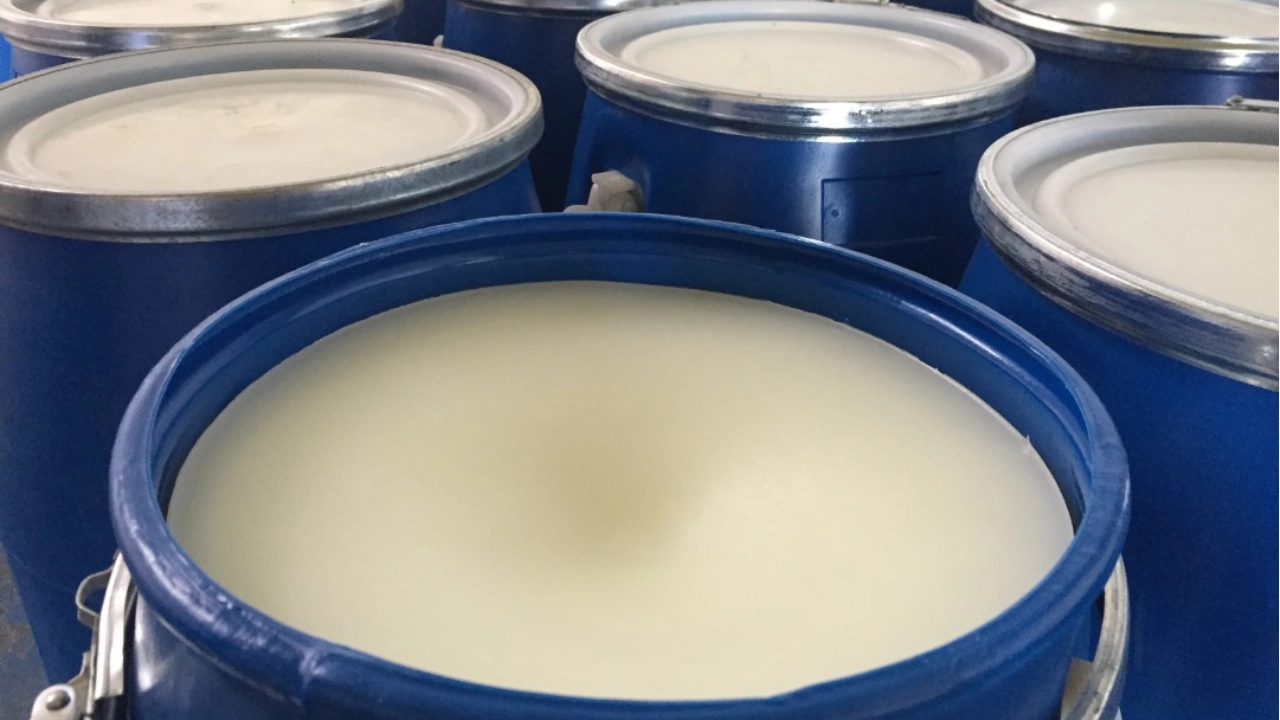
- Industrial Petroleum Jelly Overview
- Defining Industrial Petroleum Jelly: Composition & Chemistry
- Critical Applications of Industrial Petroleum Jelly Across Industries
- Industrial Petroleum Jelly vs. Refined Grades
- Packaging, Logistics, and Container Loading
- Handling and Storage Best Practices
- Safety Tips for Industrial Use
- Technical Specifications & ASTM Standards
Industrial Petroleum Jelly Overview
Industrial Petroleum Jelly is the manufacturing sector’s versatile workhorse—a semi-solid hydrocarbon mixture essential for lubrication, corrosion protection, and moisture sealing. Often referred to in the trade as technical-grade petrolatum, yellow petrolatum, or mineral jelly, this material offers a high-performance, cost-effective alternative to highly refined sanitary grades.
For production managers and procurement specialists, understanding the technical nuances of this material is critical. This guide covers the chemical composition, industrial applications, safe handling, and essential criteria for vetting a reliable manufacturer or bulk distributor to ensure your supply chain remains efficient.
Defining Industrial Petroleum Jelly: Composition & Chemistry
Chemically, Industrial Petroleum jelly (CAS 8009-03-8) is a colloidal system of non-straight-chain solid hydrocarbons and high-boiling liquid hydrocarbons. It is derived from the “slack wax” fraction of crude oil refining.
Unlike cosmetic variants, the industrial grade retains a higher concentration of oils and natural resins. These naturally occurring impurities act as tackifiers, enhancing the product’s adhesive properties and lubricity on metal surfaces.
Key Technical Characteristics:
-
Structure: Long-chain carbon structure (typically C25+) ensures thermal stability.
-
Appearance: Ranges from amber to dark yellow, indicating a selective refining process that prioritizes mechanical performance over aesthetics.
-
Hydrophobicity: Exhibits exceptional water-repelling capabilities, making it an ideal barrier against oxidation and rust.
Critical Applications of Industrial Petroleum Jelly Across Industries
The utility of industrial petroleum jelly spans virtually every sector that requires lubrication or environmental protection. Its chemical inertness makes it compatible with plastics, rubber, and metals.
Manufacturing & Machinery Maintenance
As a general-purpose lubricant, it excels where high-speed synthetic oils are unnecessary. It serves as a cost-effective assembly grease for O-rings, seals, and gaskets, preventing drying and cracking without degrading the rubber compounds. It is also widely used as a mold release agent in plaster and concrete casting, ensuring clean separation without staining the finished product.
Cable Manufacturing & Telecommunications
In the wire and cable industry, technical petrolatum is used as a flooding compound. It is injected into the interstitial spaces of fiber optic and copper cables to block water ingress. Its dielectric strength also makes it a staple for coating battery terminals to prevent arcing and corrosion.
Automotive & Marine Protection
Due to its resistance to salt water, it is the primary ingredient in rust-preventive compounds for vehicle undercarriages and marine deck equipment. It forms a “self-healing” barrier; if the coating is scratched, the jelly flows back to cover the exposed metal, providing active corrosion resistance.
MDF & Wood Production
This is a high-volume application where the jelly acts as a hydrophobic agent. When emulsified into the wood fibers during Medium Density Fiberboard (MDF) manufacturing, it prevents the absorption of atmospheric moisture, reducing swelling and warping in the final timber product.
Industrial Petroleum Jelly vs. Refined Grades
Procurement teams often ask if grades are interchangeable. While Petroleum Jelly industrial-grade offers superior adhesion for machinery, it lacks the purity required for other sectors.
For applications involving skin contact or pharmaceutical formulations, you must utilize Pharmaceutical Grade Petroleum Jelly (USP/BP). The pharmaceutical and cosmetic grades undergo high-pressure hydrogenation to remove all polycyclic aromatic hydrocarbons (PAHs) and odor, a costly process that makes them 40% to 60% more expensive than the industrial variant.
Bottom Line: If your application is mechanical (lubrication, rust proofing, impregnating), choosing Industrial Grade significantly reduces operational costs without sacrificing performance.
Packaging, Logistics, and Container Loading
Securing a consistent stream of raw materials is vital. When evaluating a petroleum jelly distributor, you must consider how the product is packed and loaded to maximize freight efficiency.
Standard Packaging Options
-
New Steel Drums (175kg – 190kg): The industry standard for long-term storage. Ensure drums are epoxy-lined if rust contamination is a concern.
-
Reconditioned Drums: A sustainable, lower-cost option perfect for construction or rust-proofing applications where the exterior container aesthetics do not matter.
-
Flexitanks: A bladder system inside a shipping container, ideal for high-volume liquid transport.
Container Loading Configurations
To optimize shipping costs, your supplier should adhere to these standard loading capacities:
-
20ft Container (Drums): Typically holds 80 to 98 drums, depending on whether they are palletized or loose-loaded.
-
Loose Loaded: ~110 drums (approx. 19-20 MT) – maximizes product weight but requires manual unloading.
-
Palletized: ~80 drums (approx. 14-15 MT) – allows for rapid forklift unloading.
-
-
20ft Container (Flexitank): Holds 20 to 22 Metric Tons. This is the most cost-efficient method for transport, but requires heating equipment at the receiving facility to pump the product out.
Handling and Storage Best Practices
While Industrial Petroleum Jelly is chemically stable, improper storage can affect its consistency and application properties.
-
Temperature Control: Store between 15°C and 25°C. Excessive heat can cause oil separation (syneresis), where a liquid layer forms on top of the jelly. While this does not ruin the product, it requires remixing before use.
-
UV Protection: Keep drums stored indoors or under shelter. Prolonged exposure to direct sunlight can degrade the hydrocarbon chains, potentially altering the color and drop point over time.
-
Inventory Management: Employ a First-In-First-Out (FIFO) system. Although the shelf life is typically 3 years, using older stock first ensures consistent viscosity for your production line.
Safety Tips for Industrial Use
Even though this is a non-toxic material, industrial environments require specific safety protocols.
-
Fire Safety: The flash point is generally >200°C, but it is a hydrocarbon. Keep it away from open flames, welding sparks, or high-temperature ignition sources.
-
Personal Protective Equipment (PPE): Wear oil-resistant gloves and safety goggles. While not chemically harmful, hot liquid jelly can cause thermal burns, and the substance can be difficult to wash off skin without degreasers.
-
Spill Management: Petroleum jelly is extremely slippery. Spills should be cleaned immediately using an absorbent material (sand or sawdust), followed by a degreasing agent to prevent slip-and-fall accidents on the factory floor.
Technical Specifications & ASTM Standards
When sourcing from a global supplier, vague descriptions are insufficient. High-quality technical petrolatum is defined by rigorous testing. Below are the standard parameters you should expect on a Certificate of Analysis (COA).
| NO | CHARACTERISTIC | ACCEPTED LIMIT | METHOD |
| 1 | Kinematic viscosity at 100 ˚C | 4.5-6 cSt | ASTM D-445 |
| 2 | Congealing Point | 54-58 ˚C | ASTM D-938 |
| 3 | Penetration Consistency | 110-150 (0.1 mm) | ASTM D-937 |
| 4 | Color (Lovibond) | Max 1.7 Y | IP-17 Method A 33 cell |
| 5 | Acidity or Alkalinity | According to the test Method | B.P. 2007 |