
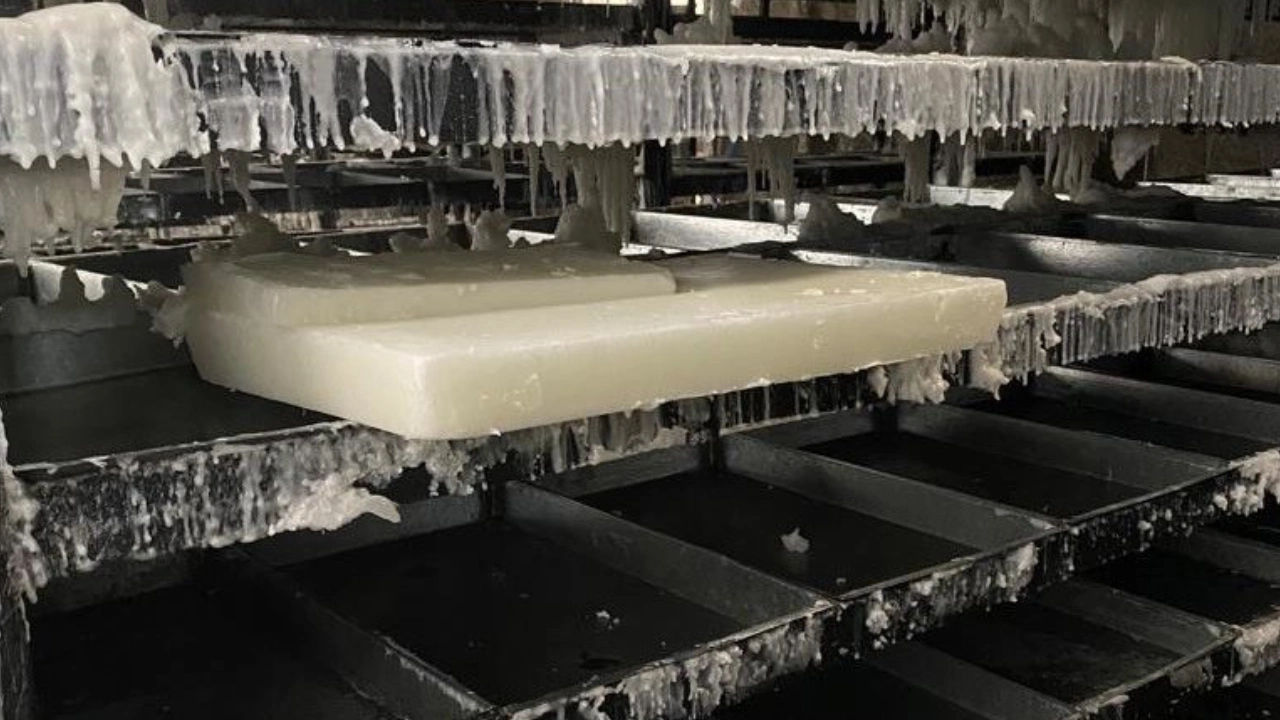
Sourcing high-quality petroleum wax from a dependable semi-refined paraffin wax supplier is critical for businesses that rely on consistent raw material performance. Whether you operate in candle manufacturing, flexible packaging, cosmetics, rubber compounding, or adhesive production, the grade and purity of your paraffin wax directly affect your finished product quality and production efficiency.
We are a globally trusted semi-refined paraffin wax supplier with years of experience delivering premium hydrocarbon wax products to clients across the Middle East, Asia, Africa, Europe, and the Americas. Our ISO 9001:2015–certified operations, competitive pricing structure, and flexible logistics solutions make us the preferred sourcing partner for industrial buyers worldwide.
What Is Semi Refined Paraffin Wax?
Semi-refined paraffin wax is a solid hydrocarbon wax derived from petroleum crude oil through a controlled refining and de-oiling process. During production, slack wax — the raw waxy byproduct of lubricating oil manufacturing — undergoes sweating, solvent de-oiling, or a combination of both methods to reduce its oil content to a specific target range.
Unlike fully refined paraffin wax, which contains less than 0.5% oil and undergoes additional hydrotreating and clay treatment, semi-refined grades retain a slightly higher oil content — typically between 0.5% and 10% — depending on the intended application. This controlled oil retention gives the wax enhanced flexibility, improved adhesion properties, and a lower price point, making it one of the most cost-effective industrial wax solutions available on the global market.
Key Characteristics
- Chemical Classification: Saturated straight-chain hydrocarbons (n-alkanes, C20–C40)
- CAS Number: 8002-74-2
- Appearance: White to pale yellow solid slabs, granules, or pellets
- Odor: Mild to virtually odorless
- Solubility: Insoluble in water; soluble in ether, benzene, and certain organic solvents
- Crystalline Structure: Macrocrystalline (large, well-defined crystal formation)
These properties distinguish semi-refined paraffin from microcrystalline wax, which has a finer crystal structure and higher molecular weight, and from slack wax, which is the unrefined precursor material with significantly higher oil content.
Semi Refined Paraffin Wax vs. Fully Refined Paraffin Wax
One of the most common questions buyers ask when contacting a semi-refined paraffin wax supplier is how this product compares to the fully refined alternative. Understanding the differences helps you select the most appropriate and economical grade for your specific process requirements.
| Property | Semi Refined Paraffin Wax | Fully Refined Paraffin Wax |
|---|---|---|
| Oil Content | 0.5% – 10% | Less than 0.5% |
| Color | White to pale yellow | Bright white |
| Melting Point Range | 48°C – 66°C | 50°C – 70°C |
| Flexibility | Higher (due to residual oil) | Lower |
| Price | More affordable | Premium pricing |
| Best Applications | Candles, packaging, rubber, adhesives, textiles | Food-grade coatings, pharmaceuticals, high-end cosmetics |
| FDA/Food Contact | Generally not recommended | Available in food-grade options |
| Refining Steps | De-oiling + basic treatment | De-oiling + hydrotreating + clay percolation |
Bottom line: Semi-refined paraffin wax delivers excellent performance at a lower cost for the majority of industrial applications. Fully refined grades are only necessary when strict purity standards — such as FDA food-contact compliance or pharmacopoeia-grade requirements — are mandated.
Need help selecting the right grade? Contact our technical team or call +971 50 720 9246 for personalized recommendations based on your application.
Types and Grades of Semi-Refined Paraffin Wax
As an experienced semi-refined paraffin wax supplier, we offer multiple grades classified by oil content percentage. Each grade is engineered and quality-tested to serve specific industrial applications, ensuring optimal compatibility with your production process.
Semi-refined Paraffin Wax 1–2% Oil Content
Available in Light and Heavy variants
This is the most popular grade globally due to its balance between purity and affordability.
- Light Grade (1–2% oil, melting point 58–62°C): Preferred for candle production, cosmetic formulations, and personal care products. It offers clean color, low odor, excellent fragrance retention, and smooth surface finish.
- Heavy Grade (1–2% oil, melting point 60–66°C): Suited for rubber processing, protective coatings, and industrial adhesives where greater structural integrity and higher melting resistance are required.
Typical Buyers: Candle manufacturers, cosmetic formulators, rubber compounders
Semi-refined Paraffin Wax 3–5% Oil Content
This mid-range grade offers enhanced moisture barrier properties and improved flexibility compared to lower oil content options.
- Melting Point: 52°C – 60°C
- Applications: Widely used in the packaging industry for coating paper, corrugated cardboard, and carton liners. Also employed in textile finishing as a softening and water-repellent agent.
- Advantages: Superior moisture resistance, good processability, and reliable coating adhesion.
Typical Buyers: Paper mills, packaging converters, textile finishing plants
Semi-refined Paraffin Wax 5–7% Oil Content
With moderately higher oil retention, this grade delivers excellent workability and is a preferred choice for heavy industrial processes.
- Melting Point: 48°C – 56°C
- Applications: Commonly specified for tire manufacturing, hot-melt adhesive formulation, and industrial lubricant blending. Its lower melting point simplifies processing and reduces energy consumption during production.
- Advantages: Excellent flow properties, reduced production costs, and strong compatibility with polymer additives.
Typical Buyers: Tire manufacturers, adhesive producers, industrial lubricant blenders
Semi-refined Paraffin Wax 7–10% Oil Content
The highest oil content grade, designed for demanding heavy-duty applications where maximum flexibility, tackiness, and protective properties are essential.
- Melting Point: 48°C – 54°C
- Applications: Used in rust-preventive coatings, mechanical part protection, heavy-duty lubricants, and as a plasticizer in certain polymer systems. Also serves as a feedstock for further wax refining operations.
- Advantages: Maximum flexibility, strong anti-corrosion properties, and the most competitive price point among all grades.
Typical Buyers: Metalworking facilities, corrosion protection specialists, wax refineries
📋 Request our complete Technical Data Sheet (TDS) with detailed ASTM test results for any grade. Email us at info@causticsodaco.com
Technical Specifications
All grades of semi-refined paraffin wax we supply are tested according to ASTM D87 (melting point), ASTM D721 (oil content), and ASTM D1500 (color) standards. Below are general specification ranges across our product line.
| Parameter | Specification Range | Test Method |
|---|---|---|
| Melting Point | 48°C – 66°C | ASTM D87 |
| Oil Content | 0.5% – 10% | ASTM D721 |
| Color (Saybolt) | +18 to +30 | ASTM D1500 |
| Penetration @25°C | 12 – 25 (0.1mm) | ASTM D1321 |
| Viscosity @100°C | 3.5 – 7.0 cSt | ASTM D445 |
| Flash Point | ≥200°C | ASTM D92 |
| Specific Gravity @70°C | 0.78 – 0.82 | ASTM D1298 |
| Appearance | White to pale yellow solid | Visual |
Exact specifications vary by grade. Certificate of Analysis (COA) provided with every shipment.
Industrial Applications of Semi-Refined Paraffin Wax
The versatility of semi-refined paraffin wax makes it an essential raw material across numerous manufacturing sectors. Below are the primary industries we serve with our products.
Candle Manufacturing
Semi refined paraffin wax with 1–2% oil content is the backbone of the global candle industry. It provides:
- Consistent and clean burn performance
- Excellent fragrance oil retention (up to 8–10% fragrance load)
- Smooth surface finish and vibrant color acceptance
- Reliable mold release properties for pillar and container candles
Whether you produce decorative candles, religious candles, emergency candles, or aromatherapy products, our petroleum-based candle wax delivers predictable results batch after batch.
Packaging and Paper Coating
Mid-range grades with 3–5% oil content serve the packaging sector by providing:
- Effective moisture barrier coatings for corrugated boxes and food cartons
- Wax-saturated wrapping for perishable goods
- Improved water resistance for paper and cardboard products
- Enhanced shelf life for packaged consumer products
Cosmetics and Personal Care
Lower oil content grades are widely used as:
- Emollients in lip balms, hand creams, and body lotions
- Thickening agents in ointments and petroleum jelly formulations
- Base ingredients in hair removal (depilatory) waxes
- Stabilizers in emulsion-based skincare products
Rubber and Tire Production
In rubber compounding, semi-refined paraffin wax acts as:
- An anti-ozonant wax that migrates to the rubber surface and forms a protective film against ozone cracking
- A processing aid that improves compound flow during mixing and extrusion
- A mold release agent that prevents sticking during vulcanization
Hot-Melt Adhesives and Sealants
Higher oil content grades contribute to adhesive formulations by:
- Lowering melt viscosity for easier application
- Improving open time and wetting characteristics
- Enhancing flexibility and peel strength in bonded joints
- Reducing raw material costs compared to synthetic wax alternatives
Textile Industry
Applied as a finishing agent, paraffin wax helps textiles achieve:
- Improved water repellency and stain resistance
- Softer hand feel and smoother fabric surface
- Enhanced durability against environmental wear
- Better sewing and cutting performance through reduced friction
Additional Applications
- Electrical insulation for cables and transformer components
- Wood treatment and furniture polishing compounds
- Investment casting patterns in precision metalworking
- Agriculture — protective coatings for fruits and cheese
- Crayons and modeling compounds for art supplies
Benefits of Choosing Semi-Refined Paraffin Wax
| Benefit | Details |
|---|---|
| Cost-Effective | 15–30% more affordable than fully refined alternatives |
| Flexible Formulation | Easily blends with dyes, fragrances, polymers, and additives |
| Easy Processing | Lower melting points reduce energy costs during production |
| Consistent Quality | Uniform melting behavior and predictable performance |
| Wide Availability | Multiple grades in stock for immediate dispatch |
| Versatile | Suitable for candles, packaging, rubber, adhesives, cosmetics, and more |
Why Choose Us as Your Semi-Refined Paraffin Wax Supplier?
Not all paraffin wax suppliers offer the same level of quality, reliability, and service. Here is what sets us apart in the global petroleum wax market.
✅ ISO 9001:2015 Certified Quality Management
Every batch of wax undergoes rigorous laboratory testing before shipment. We provide full Certificates of Analysis (COA) and Safety Data Sheets (SDS) with every order, ensuring complete traceability and compliance with international quality standards.
✅ Comprehensive Grade Portfolio
We supply all major oil content grades — 1–2%, 3–5%, 5–7%, and 7–10% — with customizable melting point ranges to match your exact process requirements.
✅ Competitive Global Pricing
Our direct relationships with refineries and efficient supply chain management allow us to offer highly competitive FOB and CIF pricing without compromising product quality.
✅ Reliable Export Logistics
We ship to 50+ countries with efficient port operations, proper export documentation, and flexible Incoterms (FOB, CFR, CIF, DAP). Our logistics team ensures on-time delivery to any international destination.
✅ Technical Expertise
Our experienced technical sales team provides personalized guidance on grade selection, melting point optimization, and formulation compatibility — helping you achieve the best results from your wax purchase.
✅ Sustainable Sourcing Practices
We are committed to environmentally responsible operations, including energy-efficient refining processes, recyclable packaging materials, and REACH-compliant product formulations for European market access.
Packaging and Shipping Options
We offer flexible packaging configurations to suit different order volumes and handling requirements.
| Packaging Type | Weight | Best For |
|---|---|---|
| Plastic-lined cardboard cartons | 25 kg | Small to medium orders, easy warehouse handling |
| Polypropylene (PP) woven bags | 25 kg or 50 kg | Cost-effective bulk packaging |
| Jumbo bags (FIBC) | 500 kg – 1,000 kg | Large industrial orders, direct-to-production use |
| Bulk (liquid tanker) | Custom | High-volume buyers with heated storage facilities |
Wax Forms Available: Solid slabs, granules, pellets, or liquid (molten) — depending on grade and buyer preference.
All shipments include:
- Certificate of Analysis (COA)
- Safety Data Sheet (SDS)
- Packing list and commercial invoice
- Certificate of Origin (upon request)
- Fumigation certificate (for containerized shipments)
How the Paraffin Wax Refining Process Works
Understanding how semi-refined paraffin wax is produced helps buyers appreciate the quality differences between grades. Here is a simplified overview of the petroleum wax refining process.
Step 1 — Crude Oil Distillation
Crude oil is distilled into various fractions. The heavier lube oil fraction contains dissolved wax.
Step 2 — Solvent De-waxing
The lube oil fraction is chilled and treated with a solvent (typically MEK/toluene) to crystallize and separate the wax, producing slack wax — the raw feedstock.
Step 3 — De-oiling (Sweating or Solvent De-oiling)
Slack wax is further processed to reduce oil content. The degree of de-oiling determines whether the final product is classified as semi refined (0.5–10% oil) or fully refined (<0.5% oil).
Step 4 — Finishing and Quality Control
The de-oiled wax may undergo clay treatment or light hydrofinishing to improve color and stability. Each batch is tested against ASTM standards before packaging.
This controlled process ensures that every grade we supply meets precise oil content, melting point, and purity specifications.
Global Markets We Serve
As a leading semi-refined paraffin wax supplier, we proudly serve customers across all major importing regions.
- Middle East & North Africa: UAE, Saudi Arabia, Egypt, Turkey, Iran, Iraq
- Sub-Saharan Africa: Nigeria, Kenya, Tanzania, Ghana, South Africa, Ethiopia
- South & Southeast Asia: India, Pakistan, Bangladesh, Vietnam, Indonesia, Thailand
- East Asia: China, South Korea, Japan
- Europe: Germany, Italy, Spain, the Netherlands, Poland, the United Kingdom
- Americas: Brazil, Mexico, Colombia, United States, Canada
Our understanding of regional quality preferences, import regulations, and shipping logistics ensures a smooth purchasing experience regardless of your location.
Request a Quotation
Ready to source premium semi-refined paraffin wax from a supplier you can trust? Whether you need a single container or ongoing annual supply contracts, our team is ready to assist.
📞 Phone / WhatsApp: +971 50 720 9246
📧 Email: info@causticsodaco.com
Tell us:
- What grade do you need (oil content percentage)
- Your required melting point range
- Estimated order quantity in metric tons
- Destination port or delivery address
- Preferred packaging format
We respond to all inquiries within 24 hours with a detailed quotation including pricing, specifications, and estimated delivery timeline.
We are your trusted semi-refined paraffin wax supplier for consistent quality, competitive pricing, and reliable global delivery.