
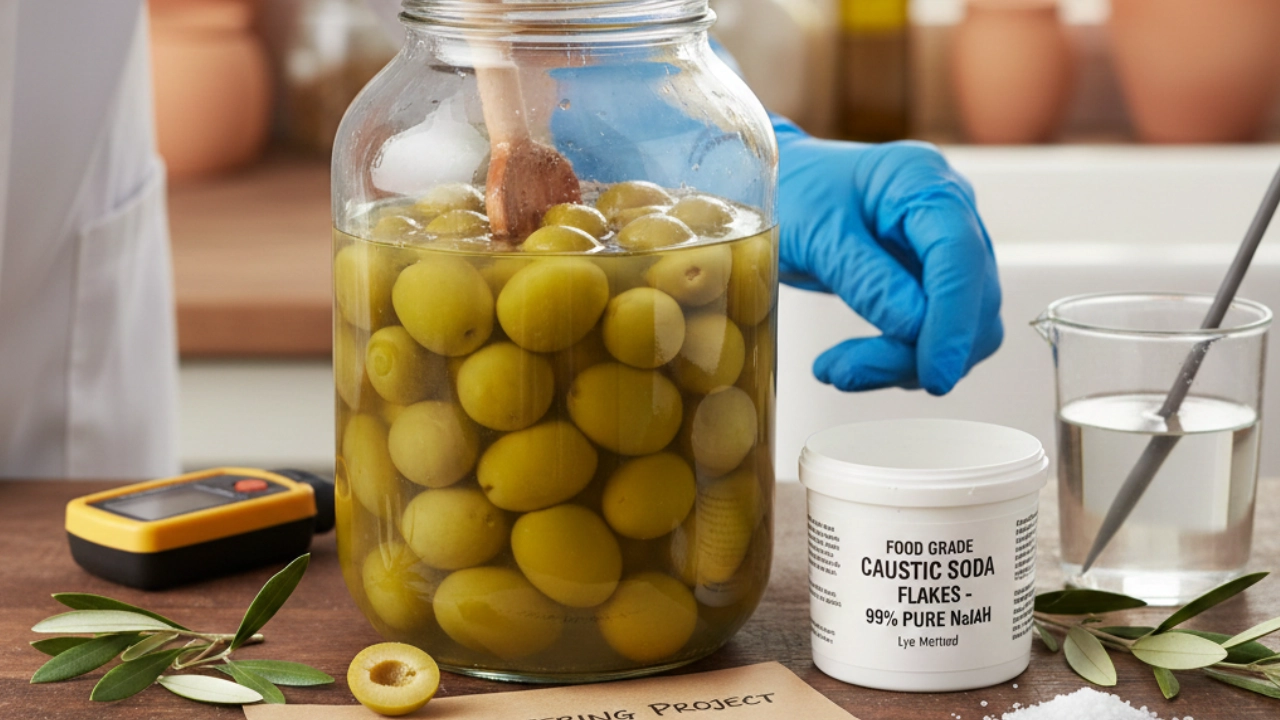
Descriptions of Caustic Soda in Olive Curing
You’ve just harvested a bucket of vibrant green olives from your tree, their skins taut and promising. But one bite reveals the truth—they’re bitterly unpalatable, thanks to natural compounds like oleuropein that nature packed in for protection. Enter caustic soda in olive curing, the time-tested alkaline powerhouse that swiftly neutralizes that bite, transforming raw fruits into the tender, briny gems we crave in salads, martinis, and mezze platters. Also known as sodium hydroxide Flakes or lye, this essential ingredient powers the curing of olives with the lye method, a staple in Mediterranean traditions from Spain’s Sevillana olives to Italy’s classic green cures. In this comprehensive guide, we’ll explore the science of olive debittering, hands-on steps for home or commercial use, safety essentials, and even tips on sourcing from a reliable supplier of caustic soda for olive curing. Whether you’re a backyard enthusiast or a small-scale producer, mastering caustic soda in olive curing unlocks flavors that rival artisanal imports—efficiently, safely, and sustainably.
The Fundamentals: What Role Does Caustic Soda Play in Olive Curing?
At its core, caustic soda in olive curing revolves around food-grade Caustic Soda (Sodium Hydroxide), a pure, odorless alkali that excels in food-processing applications like pretzel boiling, hominy nixtamalization, and, crucially, olive debittering. Fresh olives contain high levels of oleuropein, a phenolic glucoside that imparts that signature throat-clenching bitterness. When dissolved in water to form a 1-3% NaOH solution, caustic soda creates an alkaline environment (pH 12-13) that triggers hydrolysis—the chemical breakdown of oleuropein into glucose and milder aglycones, effectively sweetening the fruit without stripping its nutritional essence.
This process, central to curing olives with lye, dates back to ancient Roman techniques but gained prominence in 19th-century Spain for scaling production. Today, it’s used in over 70% of commercial green olive processing worldwide, allowing for rapid turnaround—hours instead of months—while preserving antioxidants, healthy monounsaturated fats, and that coveted firm-yet-yielding texture. Unlike slower brine or dry-salt methods, caustic soda ensures uniform olive processing, minimizing waste and maximizing yield. Key to success? Opting for 100% pure, food-grade flakes or pellets, which dissolve evenly for precise control in your lye solution.
The Science of Success: Hydrolysis and Alkaline Treatment in Olive Debitting
Diving deeper into caustic soda in olive curing, the magic lies in controlled chemistry. Submerging olives in the NaOH bath penetrates their semi-permeable skins, where hydroxide ions sever glycosidic bonds in oleuropein molecules. This olive debittering reaction releases bound sugars, softens pectin for better brine absorption, and shifts chlorophyll for a golden-green hue—hallmarks of lye-cured perfection.
Research from the University of California highlights how this alkaline treatment retains up to 85% of olives’ polyphenols compared to oxidative blackening, which can form harmful compounds like acrylamide. Timing matters: Green olives (harvested at 50-80% maturity) need 6-12 hours in a 2% solution, while semi-ripe varieties take 18-24 hours to reach full penetration (test by slicing to the pit for a uniform olive-drab color). Post-soak, thorough rinsing drops the pH to 7-8, preventing any soapy residues. For pros, enzymatic boosters or pH meters fine-tune the process, ensuring compliance with FDA standards for food-grade lye in olive curing.
Varietal nuances add flair—thinner-skinned Picholine olives cure faster than robust Kalamatas, yielding nuanced notes from herbal greens to fruity blacks. This precision in caustic soda application not only speeds curing olives with lye but also elevates flavor profiles, making your batch a standout.
Step-by-Step: Mastering Curing Olives with Lye at Home or Scale
Ready to dive in? Curing olives with lye is accessible yet demands respect—think of it as a rewarding ritual blending heritage and science. This protocol, adapted for 5 lbs of fresh olives, yields brined beauties in 10-14 days. Scale up with HDPE tanks for commercial olive processing.
Essential Tools and Ingredients
| Item | Quantity | Pro Tip |
|---|---|---|
| Fresh Green Olives | 5 lbs (e.g., Manzanilla or Arbequina) | Harvest firm; rinse to remove debris for clean debittering. |
| Food-Grade Caustic Soda Flakes | 4-6 tbsp (≈60-90g) | 99% pure NaOH; flakes for easy measuring in your lye solution. |
| Cold Distilled Water | 4-6 quarts | Non-chlorinated to avoid reactions during alkaline treatment. |
| Kosher Salt | 1-2 cups | For 8% brine, non-iodized preserves natural fermentation. |
| Gear | pH Strips, Gloves, Goggles | Non-reactive containers (glass/plastic); wooden spoon for stirring. |
The Process: From Lye Bath to Brined Bliss
- Prep Your Harvest: Sort and rinse olives under cool water. Lightly score larger ones for even caustic soda penetration, preserving skins to lock in moisture.
- Craft the Lye Solution: In a ventilated outdoor space, slowly add caustic soda flakes to cold water (never reverse—exothermic heat spikes to 140°F). Stir to a clear 2% NaOH solution; cool fully before use.
- Immerse and Monitor: Submerge olives, weighted down. Check hourly via pit-slice test—aim for full color change in 8-10 hours for greens. This is the heart of caustic soda in olive curing.
- Rinse Rigorously: Drain and flush under running water, then soak in fresh changes 3-4 times daily for 5-7 days. Taste for neutrality (no bitterness or soap); use citric acid rinse to accelerate if needed.
- Brine and Ferment: Mix 8% salt brine, infuse with garlic, lemon zest, or chili for Italian-style flair. Ferment at 65°F for 2-3 weeks, burping jars to release gases from lactic bacteria.
- Store and Savor: Pasteurize at 180°F for shelf life or refrigerate. Enjoy in tapenades or straight from the jar—each olive packs 15-20 calories of pure delight.
Yields 4-4.5 lbs cured; adjust for batch size in professional olive debittering setups.
Why Choose Caustic Soda in Olive Curing? Key Benefits for Flavor and Efficiency
Opting for caustic soda in olive curing isn’t just tradition—it’s a smart strategy. This method slashes curing time by 90% versus water leaching, ideal for seasonal harvests. It delivers consistent texture (tender-firm, not mushy) and color, retaining 90% of volatile aroma compounds for that fresh, buttery profile. In commercial olive processing, it boosts scalability, with low waste and reusable rinse water (pH-adjusted). Plus, lye-cured olives ferment naturally, enhancing probiotics and shelf life without heavy preservatives. Environmentally, modern facilities recycle NaOH solutions, aligning with sustainable debittering practices.
Safety First: Handling Caustic Soda Responsibly in Olive Curing
Caustic soda demands diligence—it’s a strong base that can irritate skin or eyes. For safe curing of olives with lye:
- PPE Essentials: Double nitrile gloves, goggles, apron; work ventilated area.
- Mixing Rule: Flakes to water only; neutralize spills with vinegar.
- Residue Check: Triple-rinse and test pH <9; residues risk digestive upset.
- Storage: Airtight HDPE away from acids/moisture.
Follow FDA guidelines for food-grade lye, and you’re golden—incidents plummet with protocols.
Choosing a Supplier of Caustic Soda for Olive Curing: Quality Matters
Sourcing the right supplier of caustic soda for olive curing ensures purity and reliability—settle for nothing less than FCC/USDA-certified food-grade NaOH. Top picks include:
- Certified Lye: Premium flakes for olives, pretzels; ships nationwide with curing guides.
- The Beverage People: Kits bundling lye with buckets—perfect for home debittering starters.
- DudaDiesel Supplies: 99% pure beads, USA-made for consistent alkaline treatment.
- CausticsodaCo.com: Bulk flakes for pros, FDA-approved for olive processing.
- Amazon (Miilex Brand): Affordable 2-lb food-grade lye, kosher-certified for quick orders.
Vet for ≥99% purity and olive-specific uses; bulk buys save on large-scale caustic soda in olive curing.
Alternatives to Lye: Exploring Other Paths in Olive Debitting
While curing olives with lye shines for speed, consider these for variety:
- Water Leaching: Chemical-free soaks over 4-6 weeks; crisp but slow.
- Brine Fermentation: 10% salt for 3-6 months; deep, probiotic tang.
- Dry Salting: Layered cure yields wrinkled, intense bites like Kalamatas.
| Method | Time | Pros | Cons |
|---|---|---|---|
| Caustic Soda/Lye | 1-2 Weeks | Fast, Uniform | Requires Safety Gear |
| Water Cure | 4-6 Weeks | Natural | Labor-Intensive |
| Brine | 3-6 Months | Flavorful | Long Wait |
Tailor to your vibe—lye for efficiency, others for purity.
Wrapping Up: Elevate Your Harvest with Caustic Soda in Olive Curing
Caustic soda in olive curing isn’t a shortcut—it’s the elegant bridge from bitter harvest to briny bliss, empowering curing olives with lye like a pro. With its hydrolysis prowess, safety smarts, and supplier savvy, you’re set for batches that wow. As global olive demand climbs (projected 3.2 million tons by 2030), embrace this method for home joy or market edge. Grab food-grade flakes, rally your olives, and taste the transformation—your table (and search rankings) will thank you.