
- The Role of Caustic Soda for Textile Processing
- Caustic Soda for Textile Processing — Scouring, Mercerizing, Bleaching & Dyeing
- What does caustic soda do in textile processing?
- Why textile mills use caustic soda rather than a milder alkali
- Where caustic soda enters textile processing
- Caustic soda for textile scouring: preparing cotton
- Caustic soda for textile mercerization: the highest-value use
- Caustic soda in textile bleaching: the activator, not the bleach
- Caustic soda for textile dyeing: where it helps and where it hurts
- Fibre compatibility: where caustic soda must not be used
- How much caustic soda a textile mill actually consumes
- Caustic soda flakes for the textile industry: grades and specification
- Choosing a caustic soda supplier for the textile industry
- Caustic recovery and effluent: where the money is
- Safe handling of caustic soda in a textile plant
- Caustic soda grades, prices and other industries
- Caustic soda for textiles — frequently asked questions
- References and further reading
- Your caustic soda supplier for the textile industry
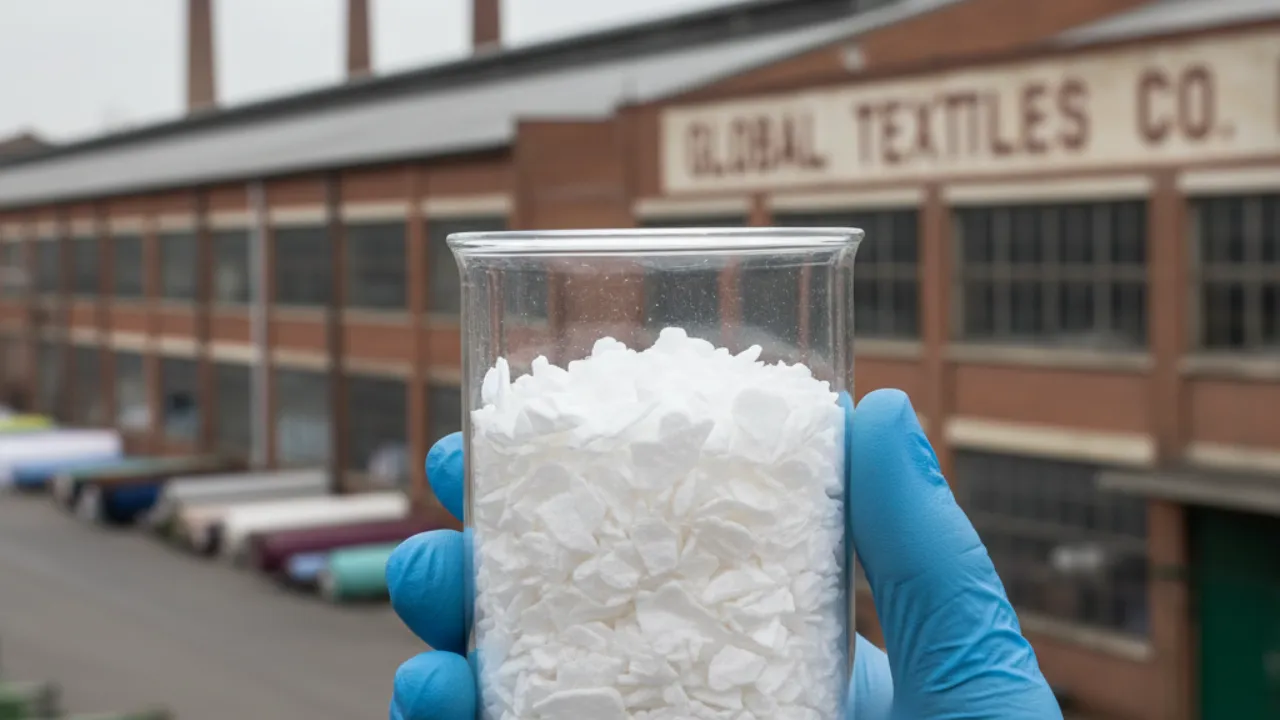
Caustic soda for textile processing stands as one of the most critical chemicals in modern fabric manufacturing. Also known as sodium hydroxide (NaOH), this powerful alkaline compound transforms raw fibers into premium-quality textiles through a series of carefully controlled chemical treatments. Supplied primarily as white flakes with 98-99% purity, caustic soda enables textile manufacturers to achieve superior fabric strength, vibrant colorfastness, and exceptional durability across cotton, wool, silk, and synthetic blends.
The global textile industry consumes approximately 8-10 million metric tons of caustic soda annually, according to the World Chlor-Alkali Industry Report 2024. As sustainability pressures intensify and consumer demands for high-performance fabrics grow, understanding how to optimize caustic soda for textile processing has become essential for mill operators, fabric engineers, and supply chain professionals worldwide.
This comprehensive guide explores every aspect of caustic soda usage in textile manufacturing—from core chemical properties to advanced applications, safety protocols, and emerging green chemistry innovations shaping the industry’s future.
What Is Caustic Soda and Why Does Textile Processing Depend on It?
Caustic soda, or sodium hydroxide (NaOH), is a strong inorganic alkali produced through the electrolysis of sodium chloride (salt) brine in chlor-alkali plants. Available in flake, pearl, and liquid forms, caustic soda flakes remain the preferred choice for textile wet processing due to their ease of storage, precise dosing capability, and rapid dissolution in water.
Chemical Properties That Make It Indispensable
| Property | Value | Textile Relevance |
|---|---|---|
| Molecular Weight | 40 g/mol | Enables precise concentration calculations |
| Melting Point | 318°C | Stable under processing temperatures |
| pH (1% solution) | 13-14 | Powerful alkalinity for fiber modification |
| Solubility in Water | 111 g/100 mL at 20°C | Rapid bath preparation |
| Purity (Industrial Grade) | 98-99% | Minimizes contamination risks |
Why the Textile Industry Relies on Caustic Soda
The textile sector depends on caustic soda for textile processing for several fundamental reasons:
- Superior pH Control: It rapidly raises processing bath pH to 10-14, enabling controlled chemical reactions essential for fiber treatment, dye fixation, and impurity removal.
- Powerful Saponification: As a strong alkali, it hydrolyzes natural waxes, pectins, fats, and oils present on raw fibers, creating cleaner substrates for subsequent processing steps.
- Cellulose Modification: It penetrates and swells cellulose fiber structures, permanently improving strength, luster, and dye affinity through molecular realignment.
- Cost-Effectiveness: Compared to alternative alkalis like potassium hydroxide (KOH) or sodium carbonate (soda ash), caustic soda delivers superior reactivity at 30-40% lower cost per unit of alkalinity, making it economically viable for both small-scale workshops and large industrial mills.
- Versatility Across Fiber Types: From natural cellulosic fibers (cotton, linen, hemp) to protein fibers (wool, silk) and regenerated cellulose (viscose, lyocell), caustic soda adapts to diverse processing requirements.
According to industry data from ITMF (International Textile Manufacturers Federation), caustic soda accounts for 10-15% of total chemical inputs in cotton-based textile processing, making it the single most consumed alkali in the sector.
Key Applications of Caustic Soda in Textile Manufacturing
The versatility of caustic soda for textile processing extends across the entire production chain—from raw fiber preparation to final finishing. Below, we detail each critical application with process parameters, technical insights, and practical optimization tips.
1. Scouring: Building the Foundation for Quality Fabrics
Scouring is the essential first wet-processing step that removes non-cellulosic impurities from raw natural fibers. Without thorough scouring, fabrics suffer from uneven dyeing, poor absorbency, and reduced tensile strength.
How Caustic Soda Works in Scouring:
Caustic soda flakes are dissolved in hot water to create an alkaline scouring bath that breaks down and removes:
- Natural waxes and fats
- Pectin and hemicellulose
- Seed fragments and plant debris
- Sizing agents (starch, PVA)
- Mineral salts and dust
Optimized Process Parameters:
| Parameter | Cotton Scouring | Polyester-Cotton Blend |
|---|---|---|
| NaOH Concentration | 2-5% (owf) | 1-2% (owf) |
| Temperature | 95-100°C | 80-90°C |
| Duration | 60-120 minutes | 45-60 minutes |
| Liquor Ratio | 1:20 to 1:30 | 1:15 to 1:20 |
| pH Range | 12-13.5 | 11-12.5 |
| Surfactant Addition | 0.5-1% | 0.5-1% |
Technical Tips:
- Always add a wetting agent (0.5-1%) to improve caustic soda penetration into tightly woven fabrics
- Maintain consistent temperature throughout the cycle to prevent incomplete impurity removal
- Follow scouring with thorough hot and cold washing (minimum 3 rinse cycles) to remove residual alkali
- For synthetic blends, use lower NaOH concentrations to prevent fiber degradation and strength loss
Results: Effective caustic soda scouring reduces raw cotton fiber weight by 5-10%, improves the whiteness index by 15-25 points, and increases moisture absorbency by up to 300%, creating an ideal substrate for uniform dye uptake.
2. Mercerization: The Premium Treatment for Cotton Excellence
Mercerization represents one of the most valuable applications of caustic soda for textile processing. Named after John Mercer who discovered the process in 1844, this treatment permanently transforms cotton fiber properties through controlled cellulose swelling.
The Mercerization Process:
Cotton yarn or fabric is immersed in a concentrated caustic soda solution (18-25% NaOH, equivalent to 20-30° Baumé) at room temperature (15-25°C) while maintained under mechanical tension. The high-concentration alkali causes cellulose fibers to swell, converting the crystalline structure from Cellulose I to Cellulose II—a permanent, irreversible transformation.
Key Outcomes:
| Property | Before Mercerization | After Mercerization | Improvement |
|---|---|---|---|
| Tensile Strength | Baseline | +20-30% | Significant |
| Dye Uptake | Baseline | +25-40% | Major |
| Luster/Sheen | Matte | Silky sheen | Dramatic |
| Dimensional Stability | Moderate | High | Notable |
| Moisture Absorption | Baseline | +15-25% | Significant |
| Shrinkage Resistance | Low-Moderate | High | Major |
Critical Process Variables:
- NaOH Concentration: 18-25% is the optimal window. Below 15%, swelling is insufficient; above 28%, fiber damage increases
- Temperature: Room temperature (15-25°C) is critical. Higher temperatures reduce swelling efficiency
- Tension Control: Consistent tension during treatment and washing prevents uneven shrinkage and yarn breakage
- Dwell Time: 30-60 seconds of immersion followed by immediate washing under tension
- Neutralization: Post-mercerization acid wash (1-2% acetic or citric acid) ensures complete pH neutralization
Commercial Impact: Mercerized cotton fabrics command 15-30% premium pricing in global markets. Applications include luxury dress shirts, high-end denim, embroidery threads, and performance knits where superior hand-feel, luster, and colorfastness justify the investment.
Pro Tip: Implement a caustic recovery system after mercerization to reclaim 85-95% of the NaOH solution, dramatically reducing chemical costs and environmental impact.
3. Bleaching: Achieving Consistent Whiteness
In textile bleaching operations, caustic soda serves as an essential activator and stabilizer for oxidative bleaching agents, primarily hydrogen peroxide (H₂O₂).
Role of Caustic Soda in Bleaching:
- Activates hydrogen peroxide by raising bath pH to 10.5-11.5
- Stabilizes the bleaching reaction rate for uniform whiteness
- Enhances peroxide decomposition control when combined with sodium silicate stabilizers
- Removes residual natural color bodies (flavonoids, tannins) from scoured fabrics
Recommended Bleaching Parameters:
| Parameter | Value |
|---|---|
| NaOH Concentration | 1-3% (owf) |
| H₂O₂ Concentration (50%) | 2-6% (owf) |
| Temperature | 80-95°C |
| Duration | 30-60 minutes |
| pH Target | 10.5-11.5 |
| Stabilizer (Na₂SiO₃) | 1-3% (owf) |
Key Advantage: Using caustic soda for bleach activation shortens bleaching cycles by 20-25% compared to weaker alkalis like soda ash, reducing energy consumption and increasing throughput.
4. Dyeing: Ensuring Vibrant and Durable Colors
Caustic soda plays a critical auxiliary role in textile dyeing, particularly with reactive dyes and vat dyes on cellulosic fibers.
Reactive Dyeing:
- NaOH (2-4% owf) creates the alkaline conditions necessary for covalent bond formation between reactive dye molecules and cellulose hydroxyl groups
- This chemical bonding produces exceptional wash-fastness ratings (Grade 4-5 on ISO 105-C06)
- pH must be carefully controlled at 10.5-12.0 for optimal dye fixation
Vat Dyeing:
- Caustic soda (5-10 g/L) combined with sodium hydrosulfite reduces insoluble vat dye pigments to their soluble leuco form
- After fiber absorption, oxidation converts dyes back to their insoluble state, locking color within the fiber structure
- This process delivers outstanding light-fastness and wash-fastness for workwear and denim applications
Process Optimization Tips:
- Use graduated alkali addition in reactive dyeing to prevent dye hydrolysis and improve fixation rates by 10-15%
- Monitor bath pH in real-time using inline pH sensors for consistent results
- Maintain temperature ramps according to dye manufacturer specifications
5. Specialized Textile Applications
Beyond the core processes above, caustic soda for textile processing supports several specialized operations:
Wool Carbonization:
- Treatment with a 5-8% NaOH solution degrades the vegetable matter (burrs, seeds, grass) embedded in raw wool
- Followed by baking at 100-110°C to carbonize weakened plant material
- Mechanical crushing and dusting remove carbonized residue
Silk Degumming:
- Gentle treatment with 1-2% NaOH at 90-95°C dissolves sericin protein (the gummy coating on raw silk filaments)
- Reveals the lustrous, soft fibroin core
- Requires precise concentration control to prevent fiber damage
Textile Printing pH Adjustment:
- Ensures alkaline paste stability for reactive print pastes
- Controls color yield and sharpness in screen and digital printing applications
Cellulose Fiber Production (Viscose/Rayon):
- Dissolves wood pulp cellulose in the viscose manufacturing process
- Converts cellulose to sodium cellulose xanthate for fiber spinning
- Concentration: 17-20% NaOH in the steeping process
Choosing the Right Grade of Caustic Soda for Textile Processing
Selecting appropriate quality caustic soda for textile processing directly impacts fabric quality, process efficiency, and equipment longevity. Not all caustic soda is created equal.
Quality Parameters to Evaluate
| Parameter | Recommended Specification | Why It Matters |
|---|---|---|
| NaOH Purity | ≥98.5% (preferably 99%) | Higher purity = fewer impurities affecting fabric |
| Iron (Fe) Content | <15 ppm | Prevents rust staining and catalytic dye degradation |
| Sodium Chloride (NaCl) | <1.0% | Excess salt affects dye uptake uniformity |
| Sodium Carbonate (Na₂CO₃) | <1.5% | Reduces effective alkalinity |
| Moisture Content | <2.0% | Ensures accurate dosing calculations |
| Insolubles | <0.05% | Prevents nozzle blockage and fabric spotting |
Form Factor Comparison
| Form | Advantages | Disadvantages | Best For |
|---|---|---|---|
| Flakes | Easy handling, precise dosing, long shelf life | Slower dissolution than liquid | Most textile mills |
| Pearls/Prills | Low dust, good flowability | Slightly higher cost | Automated dosing systems |
| Liquid (50%) | Instant dissolution, easy pumping | Heavy, higher shipping cost, freezing risk | Large-scale continuous operations |
| Solid (Blocks) | Economical for bulk purchase | Difficult to handle and dose accurately | Rarely used in textiles |
Supplier Selection Criteria
When sourcing caustic soda for textile processing, evaluate suppliers based on:
- Consistent purity levels with batch-wise certificates of analysis (COA)
- Reliable supply chain with adequate inventory and backup logistics
- Technical support for dosing optimization and troubleshooting
- Competitive pricing with transparent terms
- Compliance with REACH regulations and local chemical safety standards
- Sustainable manufacturing practices and carbon footprint transparency
Benefits of Using Caustic Soda in Fabric Production
Quality Enhancement
- Superior Fabric Hand-Feel: Mercerized and properly scoured fabrics exhibit smoother texture, better drape, and premium tactile quality
- Enhanced Color Vibrancy: Improved dye uptake produces deeper, more saturated colors with higher fastness ratings
- Increased Durability: Fiber strengthening through mercerization extends garment lifespan by 30-50%
- Better Moisture Management: Treated fabrics demonstrate superior wicking and absorbency for performance apparel
Operational Efficiency
- Faster Processing Cycles: High reactivity of NaOH reduces treatment times by 20-30% compared to weaker alkalis
- Lower Chemical Consumption: Superior alkalinity per unit weight means less chemical is required per batch
- Batch Consistency: Predictable reactions enable reproducible quality across production runs
- Energy Savings: Shorter cycle times translate directly to reduced steam and electricity consumption
Economic Advantages
- Cost-Effective Alkalinity: Caustic soda delivers the lowest cost per unit of effective alkalinity among industrial alkalis
- Premium Product Positioning: Mercerized and well-processed fabrics command higher market prices
- Reduced Rework: Consistent processing minimizes defective batches and costly reprocessing
- Chemical Recovery ROI: Caustic recovery systems typically achieve payback within 12-18 months
Sustainability Benefits
- Recyclability: Up to 90-95% of caustic soda can be recovered and reused through evaporation and membrane technologies
- Reduced Water Consumption: Optimized caustic processing reduces total water usage per meter of fabric
- Compliance Support: Proper usage aligns with GOTS (Global Organic Textile Standard), OEKO-TEX, and Bluesign certifications
- Lower Carbon Footprint: Efficient processing with recovered chemicals significantly reduces per-unit emissions
Safety, Handling, and Environmental Considerations
Worker Safety Protocols
Caustic soda is classified as a severe skin and eye irritant (GHS Category 1A). Proper safety measures are non-negotiable:
Required Personal Protective Equipment (PPE):
- Chemical-resistant gloves (nitrile or neoprene)
- Safety goggles or a full-face shield
- Chemical-resistant apron and boots
- Respiratory protection when handling dry flakes (dust mask minimum)
Emergency Procedures:
- Skin Contact: Immediately flush with large volumes of water for a minimum of 20 minutes
- Eye Contact: Continuous water irrigation for 30 minutes; seek immediate medical attention
- Spill Response: Neutralize with dilute acid (vinegar or citric acid solution), then absorb and dispose of per local regulations
Storage Best Practices
| Requirement | Specification |
|---|---|
| Container Type | HDPE drums, steel drums with PE lining, or bulk IBC tanks |
| Storage Temperature | Ambient (avoid extreme heat) |
| Humidity Control | Keep sealed; NaOH is highly hygroscopic |
| Segregation | Store away from acids, aluminum, zinc, and tin |
| Shelf Life | 12-24 months in sealed original packaging |
| Labeling | GHS-compliant labels with hazard pictograms |
Environmental Compliance
Textile mills using caustic soda must manage alkaline effluents responsibly:
- Effluent Neutralization: Treat wastewater to pH 6-9 before discharge, complying with EPA guidelines or equivalent local regulations
- Caustic Recovery Systems: Implement evaporative or membrane-based recovery to reclaim 85-95% of spent caustic, reducing both chemical costs and effluent load
- Monitoring: Regular testing of BOD, COD, pH, and TDS in discharge streams
- Zero Liquid Discharge (ZLD): Advanced mills are adopting ZLD systems that eliminate liquid waste through multi-stage evaporation and crystallization
Future Trends: Sustainable Caustic Soda Usage in Textiles
The textile industry is undergoing a fundamental transformation toward sustainability, and caustic soda for textile processing is evolving alongside these shifts.
1. Enzymatic-Caustic Hybrid Processing
Combining caustic soda with bio-based enzymes (pectinases, cellulases, lipases) enables effective scouring at 50-60°C instead of 95-100°C, reducing energy consumption by up to 40%. This hybrid approach maintains processing quality while significantly lowering carbon emissions per meter of fabric produced.
2. Smart Chemical Management
IoT-enabled dosing and monitoring systems are revolutionizing how mills manage caustic soda:
- Real-time pH and concentration sensors in processing baths
- Automated dosing pumps that adjust NaOH addition based on live readings
- Digital dashboards tracking chemical consumption, costs, and environmental metrics
- Predictive maintenance alerts for caustic handling equipment
3. Advanced Caustic Recovery Technologies
Next-generation membrane electrolysis and nanofiltration systems achieve caustic recovery rates of 92-97%, compared to 80-85% with conventional evaporation. These technologies are becoming increasingly cost-effective, with ROI timelines shrinking to under 12 months for medium-to-large mills.
4. Green Chemistry Certifications
Major brands and retailers now require suppliers to demonstrate responsible chemical management. Caustic soda usage documentation is integral to achieving:
- ZDHC (Zero Discharge of Hazardous Chemicals) compliance
- Bluesign system certification
- OEKO-TEX STeP facility certification
- GOTS organic textile processing standards
5. Circular Economy Integration
Forward-thinking mills are integrating caustic soda for textile processing into circular economy models where recovered chemicals, recycled water, and reclaimed energy create closed-loop manufacturing systems with near-zero waste generation.
The global textile chemicals market is projected to reach $32 billion by 2028 (Grand View Research), with sustainable chemical management practices driving significant competitive advantages for early adopters.
Conclusion
Caustic soda for textile processing remains the undisputed backbone of modern fabric manufacturing. From the foundational scouring of raw cotton to the premium value-addition of mercerization, from bleach activation to reactive dye fixation, this versatile alkali touches virtually every stage of the textile production chain.
The evidence is clear: mills that master the science and practice of caustic soda for textile processing gain measurable advantages in fabric quality, operational efficiency, cost management, and sustainability performance. As the industry evolves toward greener chemistry, digital process control, and circular economy models, caustic soda continues to adapt—proving its enduring relevance in a rapidly changing manufacturing landscape.
Ready to optimize your textile processing with high-purity caustic soda flakes? Contact our technical team for customized recommendations, competitive pricing, and reliable supply solutions tailored to your production needs.