
Caustic Soda Flakes Supplier — Sodium Hydroxide (NaOH) from Turkey & UAE
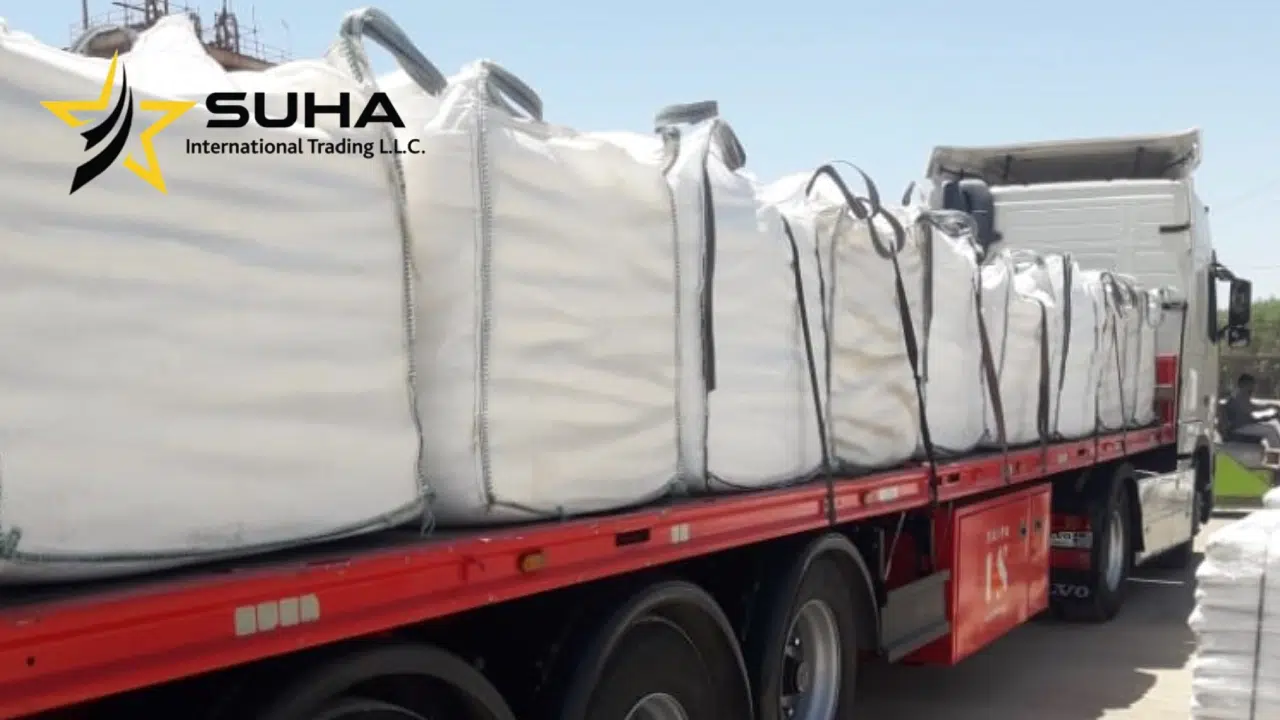
Caustic Soda Flakes Supplier
PREVIEW ONLY — this H1 stands in for the one Avada generates from the page title. It is not part of the code you paste.
Caustic Soda Flakes Supplier — 98% Sodium Hydroxide, Shipped by the Container
SUHA International Trading is a bulk caustic soda flakes supplier and sodium hydroxide exporter. We ship 98% NaOH flakes, 99% pearls and 32–50% liquid soda lye in full-container loads from Jebel Ali (UAE) and Mersin (Türkiye), with a batch Certificate of Analysis and complete Class 8 export documentation on every consignment.
Specifications, logistics and market coverage last reviewed by the SUHA International export desk.
Caustic Soda Flakes Supply — the Short Version
In short — caustic soda flakes are solid sodium hydroxide (NaOH, CAS 1310-73-2) cast into thin white flakes at a nominal 98% assay. SUHA International supplies them in 25 kg PP bags with a PE liner or 1,000–1,250 kg lined FIBC, loading FOB Jebel Ali (UAE) and FOB Mersin (Türkiye), minimum one 20-foot container of roughly 25 metric tons.
We also supply 99% pearls and 32–50% liquid soda lye. Every shipment travels with a batch-numbered Certificate of Analysis, Technical Data Sheet, Safety Data Sheet, Certificate of Origin and IMDG Dangerous Goods Declaration; SONCAP, PVoC and other destination conformity certificates are arranged at origin.
- Chemical name
- Sodium hydroxide (NaOH)
- CAS number
- 1310-73-2
- EC / EINECS number
- 215-185-5
- HS code
- 2815.11 solid · 2815.12 solution
- UN number
- 1823 solid · 1824 solution
- Transport class
- IMDG Class 8, Packing Group II
- Standard assay
- 98% NaOH ±1 (flakes)
- Minimum order
- 25 MT (1 × 20′ FCL)
- Loading ports
- Jebel Ali (UAE), Mersin (Türkiye)
- Standard packing
- 25 kg PP bag + PE liner; 1,000–1,250 kg FIBC
- Shelf life
- 12 months, unopened moisture-barrier packaging
- Also known as
- Lye, soda lye, sodium hydrate, white caustic
Physical and Chemical Properties of NaOH Flakes
Caustic soda flakes and caustic soda pearls are the same compound in different physical forms, so every property below applies to both. The figures are the accepted reference values for pure sodium hydroxide and are the ones your process engineers, HSE team and freight forwarder will each need.
| Property | Value | Note |
|---|---|---|
| Chemical formula | NaOH | Sodium hydroxide, a strong inorganic base |
| Molar mass | 39.997 g/mol | Used for molarity and neutralisation calculations |
| Appearance | White to off-white flakes | Opaque, brittle, roughly 0.3–1 cm³ per flake |
| Odour | Odourless | Odour gives no warning of exposure |
| Bulk density (solid) | ≈ 2.13 g/cm³ | True density; bagged bulk density is far lower |
| Melting point | 318 °C (604 °F) | Molten NaOH attacks glass and most light metals |
| Boiling point | 1,388 °C (2,530 °F) | Not relevant to normal industrial handling |
| Solubility in water | ≈ 111 g / 100 mL at 20 °C | Dissolution is strongly exothermic — add flakes to water, never water to flakes |
| pH (1% solution) | ≈ 13–14 | Fully dissociated; corrosive to skin and eyes |
| Hygroscopicity | Hygroscopic and deliquescent | Absorbs atmospheric moisture and CO₂; drives the packaging spec |
| Incompatible with | Acids, aluminium, zinc, tin, magnesium, brass | Reaction with amphoteric metals releases hydrogen gas |
← Scroll the table sideways →
Two of these properties decide most commercial questions on this page. Deliquescence is why the material has to travel in a moisture-barrier bag and why a supplier who ships in a plain woven PP sack will deliver a caked container. The exothermic heat of solution is why dilution procedure, not purity, is the usual cause of incidents on site — the practical rules are set out in our guide to storing caustic soda safely.
Caustic Soda Grades and Typical Analysis
We supply every commercial form of membrane-grade sodium hydroxide produced by the chlor-alkali process. Caustic soda flakes at 98% remain the most cost-effective option for international buyers because they carry the highest NaOH payload per container — a point worked through in the comparison further down this page.
Industrial-grade flakes
98% NaOH ±1 · white flakes · the best balance of purity and landed cost for soap, water treatment, pulp and general chemical use.
98% NaOH Compare all caustic soda gradesCaustic soda pearls
99% minimum · free-flowing prilled beads · low dust and precise dosing, preferred for automated feeders and cleaner working environments.
99% NaOH Caustic soda pearls 99% specificationMicro-pearls
99% minimum · finer bead size · faster dissolution than standard pearls while keeping the low-dust handling profile.
99% NaOH Micro-pearl grade detailsLiquid caustic soda
32% / 45% / 50% soda lye · ready to dose with no dissolution step · for plants with bulk tankage close to a discharge port.
32–50% Liquid caustic soda specificationFood-grade NaOH
≥99% to Food Chemicals Codex parameters · for olive curing, fruit and vegetable peeling, pretzel and bakery work and CIP sanitation.
Food grade Food-grade caustic soda usesLow-iron / high-purity
≥99% with tightened iron, chloride and carbonate limits · for rayon, viscose, electronics cleaning and pharmaceutical intermediates.
99%+ NaOH How to verify caustic soda qualityTypical batch analysis — caustic soda flakes 98%
| Component | Typical result | Unit | Test method |
|---|---|---|---|
| NaOH (assay) | 98 ± 1 | %W | Titrimetric (ASTM E291) |
| Na₂CO₃ (carbonate) | 0.43 | %W | Titrimetric |
| NaCl (chloride) | 0.0085 | %W | Argentometric titration |
| Na₂SO₄ (sulphate) | 0.0047 | %W | Gravimetric |
| SiO₂ (silica) | 0.0019 | %W | Spectrophotometric |
| Insoluble in water | 0 | %W | Gravimetric |
| Fe (iron) | 10 | ppm | ICP-OES / AAS |
| Al₂O₃ (alumina) | max 3 | ppm | ICP-OES |
| Heavy metals (as Pb) | max 2 | ppm | ICP-OES / AAS |
| Flake size | 0.3–1 | cm³ | Visual / sieve |
← Scroll the table sideways →
How Caustic Soda Flakes Are Made
Every tonne of caustic soda in world trade starts as brine. Knowing which cell technology produced it tells you more about the impurity profile than any marketing claim, so it is worth understanding the four steps between salt water and the flake in the bag.
- Brine purificationSaturated sodium chloride brine is treated to strip calcium, magnesium and sulphate, which would otherwise foul the cell membrane. The quality of this step sets the ceiling on final product purity.
- Membrane-cell electrolysisDirect current splits the brine into chlorine at the anode, hydrogen at the cathode and a caustic soda solution of roughly 32%. Membrane cells are now the dominant technology because they yield low-salt caustic without the mercury of older cells or the asbestos diaphragms being phased out in the United States.
- Multi-effect evaporationThe 32% liquor is concentrated to 50% soda lye — the form sold as liquid caustic — and then driven to roughly 99% anhydrous molten NaOH in a final concentrator.
- Flaking and packingMolten caustic is poured onto a chilled rotating drum, solidifies in a thin film and is scraped off as flakes, then screened and packed immediately into moisture-barrier bags. Pearls are made instead by prilling — dropping molten NaOH through a cooling tower — which is why pearls typically carry the higher 99% assay.
The practical consequence for a buyer is that the carbonate figure on a COA is a freshness indicator. Sodium hydroxide reacts with atmospheric CO₂ to form sodium carbonate, so material that has been sitting in poor packaging shows a rising Na₂CO₃ value and a falling assay. A full walkthrough of the chemistry is on our page covering how caustic soda is made.
Flakes vs Pearls vs Liquid — How to Choose
All three forms are chemically identical sodium hydroxide. They differ in freight efficiency, handling, dust and shelf stability — and for an importer the freight column usually decides the question on its own.
| Criterion | Flakes (98%) | Pearls (99%) | Liquid (50%) |
|---|---|---|---|
| Product per 20′ FCL | ≈ 25 MT | ≈ 25 MT | ≈ 14 MT |
| Active NaOH per FCL | ≈ 24.5 MT | ≈ 24.8 MT | ≈ 7 MT |
| Freight per tonne of NaOH | Lowest | Lowest | Roughly 3× higher |
| Dissolution speed | Fast | Moderate | Immediate — no dissolution step |
| Dust generation | Moderate | Low | None |
| Caking risk in transit | Moderate | Low | None |
| Freezes below | — | — | ≈ 12 °C for 50% lye |
| Typical buyer | Most importers and distributors | Automated dosing, food and fine chemicals | Large plants with tankage near a port |
← Scroll the table sideways →
The practical rule. If the material has to cross an ocean, buy solid. A container of 50% soda lye is half water by weight, so you pay full ocean freight, port charges and dangerous-goods handling on roughly seven tonnes of usable NaOH instead of twenty-four. Liquid only wins where the plant sits close to the discharge port, has bulk tankage and values skipping the dissolution step — and even then the arithmetic is worth running, which we set out on caustic soda flakes vs liquid caustic soda.
Between flakes and pearls the difference is operational, not chemical. Pearls cost slightly more and are worth it where dust control matters, where a screw feeder needs free-flowing material, or where the process is genuinely sensitive to iron, chloride or carbonate — rayon and viscose, food contact, pharmaceutical intermediates. Soap lines, municipal water treatment, kraft pulping and general chemical manufacture run correctly on 98% flakes.
Export Packaging and Container Loading
Caustic soda is deliquescent — it pulls moisture out of the air and cakes. Our bags are specified for long sea voyages through humid transit ports such as Jebel Ali, Singapore and Djibouti, where a single-layer woven sack will not survive the journey intact.
| Format | Net unit | Per 20′ FCL | Best for |
|---|---|---|---|
| 25 kg PP bag + PE liner, palletised | 25 kg | 24–25 MT | Distributors, manual handling, fast forklift discharge |
| 25 kg PP bag + PE liner, loose-loaded | 25 kg | 26–27 MT | Lowest cost per MT where labour for hand-stripping is available |
| 50 kg PP bag + PE liner | 50 kg | 26–27 MT | High-throughput plants tipping straight into a hopper |
| 1,000–1,250 kg lined FIBC (jumbo bag) | 1.0–1.25 MT | 22–25 MT | Plants with forklifts, hoists and bulk hoppers |
| 200 kg HDPE drum (liquid soda lye) | 200 kg | ≈ 14 MT net | Liquid caustic where no tank facility exists |
← Scroll the table sideways →
Why the liner matters. The specification we ship is a woven polypropylene outer with a separate low-density polyethylene inner liner, heat-sealed. The outer takes the mechanical abuse of stuffing and stripping; the inner is the actual moisture barrier. A bag described only as "PP bag" with no liner is a different, cheaper product, and it is the most common reason a buyer receives a caked container and a rejected batch.
Storage and shelf life. Keep flakes in a dry, covered, well-ventilated warehouse, off the floor on pallets, bags closed, and well away from acids, aluminium, zinc and any water source. In unopened moisture-barrier packaging the shelf life is 12 months from the production date printed on the bag. Caked material is still chemically sound — the assay has barely moved — but it becomes difficult to weigh and dose, which is a production problem rather than a quality one.
Private label. Custom bag printing with your brand, neutral unbranded packing, and market-specific labelling in English, French, Arabic, Turkish or Portuguese are available with a 2–3 week lead time added to the production schedule.
What Caustic Soda Flakes Are Used For
Twelve industries that buy our caustic soda flakes, pearls and liquid soda lye. Each links to a detailed page covering dosing, grade selection and the specific quality parameters that matter in that process.
Soap & detergent
Saponification of fats and oils into soap and glycerin — historically the largest single use of solid caustic soda.
98% flakesCaustic soda in soap makingPulp & paper
Kraft pulping and white liquor make-up, oxygen delignification, bleaching stages and deinking of recovered fibre.
98% flakes / liquidCaustic soda in pulp and paperWater treatment
pH correction, alkalinity and corrosion-index control, and precipitation of dissolved heavy metals.
98% flakes / liquidCaustic soda in water treatmentMining & hydrometallurgy
Alumina digestion in the Bayer process and pH control in gold cyanidation, where protective alkalinity prevents HCN evolution.
98% flakesCaustic soda in miningTextile processing
Mercerisation of cotton, scouring, desizing and dye-bath pH control.
98% flakes / 99% pearlsCaustic soda in textile processingOil refining
Caustic washing to strip hydrogen sulphide, mercaptans and naphthenic acids from crude fractions.
98% flakes / 50% liquidCaustic soda in oil refiningFood processing
Fruit and vegetable peeling, olive curing and clean-in-place sanitation, using food-grade material only.
Food-gradeCaustic soda in olive curingSugar industry
Evaporator and pan CIP, pH control in juice clarification and removal of organic scale.
98–99% flakesCaustic soda for the sugar industryBiodiesel
Catalyst for the transesterification of vegetable oils and animal fats into methyl esters.
99% pearlsCaustic soda in biodiesel productionCeramics & glass
Deflocculant for clay slurries, glaze pH control and slip viscosity management.
98% flakesCaustic soda in ceramicsMetal processing
Degreasing, etching of aluminium, paint stripping and pickling-line neutralisation.
98% flakesCaustic soda in metal processingChemical manufacturing
Feedstock for sodium hypochlorite, sodium phenolate, sodium silicate and a long list of downstream sodium salts.
98% flakes / liquidCaustic soda in chemical manufacturingHandling, PPE and Exposure Limits
Sodium hydroxide is classified as skin corrosive category 1A under GHS and CLP. It causes deep, painless-at-first burns and serious eye damage, and unlike an acid burn the tissue destruction continues until the material is completely removed. The following is orientation for a procurement or HSE team — it does not replace the Safety Data Sheet, which we issue with every shipment.
Dilution rule — always add caustic soda flakes slowly to cold water while stirring. Never add water to flakes. The heat of solution is large enough to boil the liquid and eject a corrosive spray; adding water to a mass of solid caustic concentrates that heat at the point of contact and can cause a violent eruption.
Occupational exposure limits
| Body | Limit | Basis |
|---|---|---|
| OSHA PEL (United States) | 2 mg/m³ | 8-hour time-weighted average |
| NIOSH REL | 2 mg/m³ | Ceiling value — not to be exceeded at any time |
| ACGIH TLV | 2 mg/m³ | Ceiling value |
| NIOSH IDLH | 10 mg/m³ | Immediately dangerous to life or health |
← Scroll the table sideways →
First response
Eyes — flush immediately with running water for at least 20 to 30 minutes, holding the eyelids open, and obtain medical attention urgently. Skin — remove contaminated clothing while flushing with copious water for at least 15 minutes; do not attempt to neutralise a caustic burn with an acid. Ingestion — do not induce vomiting, rinse the mouth, give water only if the person is fully conscious, and seek emergency medical help. Spill — keep dry, sweep or vacuum the solid without raising dust, collect into a sealed labelled container, and only then wash the residue with plenty of water to a permitted drain. Detailed storage layout, segregation distances and warehouse practice are covered in our caustic soda storage guide.
Transport and regulatory classification
| Framework | Classification |
|---|---|
| IMDG / ADR / IATA (solid) | UN 1823, Sodium hydroxide solid, Class 8, Packing Group II |
| IMDG / ADR / IATA (solution) | UN 1824, Sodium hydroxide solution, Class 8, Packing Group II or III by concentration |
| GHS / EU CLP | Skin Corr. 1A (H314), Eye Dam. 1 (H318), Met. Corr. 1 (H290) |
| EU REACH | Registered substance; EC 215-185-5. Not on the Candidate List of SVHC |
| US TSCA | Listed on the TSCA Inventory |
| Food contact | Food-grade material supplied against Food Chemicals Codex parameters; in the EU sodium hydroxide is the food additive E524 |
| Drinking water | NSF/ANSI 60 certified material available on request for potable-water treatment |
| Customs | HS 2815.11 solid · HS 2815.12 aqueous solution; national schedules add further digits |
← Scroll the table sideways →
Certified food-grade, low-iron and NSF/ANSI 60 material is sourced against the relevant standard for the individual order and the certification is issued per shipment. Confirm the exact requirement at enquiry stage so the correct production source is nominated before booking.
Quality Control, Inspection and Export Documents
The documentation pack is where a real exporter separates itself from a broker forwarding an offer. Every consignment ships with the following as standard, at no additional cost.
Independent pre-shipment inspection by SGS, Bureau Veritas or Intertek is available on request, at buyer's cost or shared cost depending on the contract terms. Where a letter of credit calls for a specific inspection certificate, name the requirement in the enquiry so it is priced into the quotation rather than discovered at the negotiation stage.
If you are evaluating an unfamiliar supplier — ours included — our guide to checking caustic soda quality sets out which COA parameters actually indicate a problem and which are cosmetic.
Markets Served: Six Regions from Two Origins
Two loading origins give buyers a genuine freight choice rather than a single fixed route. Mersin serves Europe, the Black Sea and Central Asia efficiently; Jebel Ali serves East Asia, the Middle East, East Africa and the west coast of South America.
| Region | Key markets | Primary industries | Preferred origin |
|---|---|---|---|
| Europe | Germany, United Kingdom, France, Italy, Spain, Poland, Romania | Chemicals, water treatment, pulp & paper | Mersin |
| Russia & Central Asia | Kazakhstan, Uzbekistan, Turkmenistan, Ukraine, Georgia | Petrochemicals, fertilisers, textiles, mining | Mersin |
| East & South-East Asia | China, Vietnam, Malaysia, Indonesia, Philippines | Textiles, electronics, biodiesel, alumina | Jebel Ali |
| South America | Brazil, Argentina, Colombia, Chile, Peru, Ecuador | Mining, pulp & paper, water treatment | Jebel Ali / Mersin |
| Middle East | UAE, Saudi Arabia, Kuwait, Qatar, Oman, Iraq | Refining, desalination, enhanced oil recovery | Jebel Ali |
| Africa | Nigeria, Kenya, Tanzania, South Africa, Egypt, Morocco, Zambia | Mining, soap, water treatment, textiles | Jebel Ali / Mersin |
← Scroll the table sideways →
Africa — SONCAP (Nigeria) and PVoC (Kenya, Tanzania, Uganda) conformity certificates arranged at origin, before shipment, so the container is not held at destination. See our Africa supply page.
Europe and the Black Sea — short transit from Mersin, with country pages for Ukraine, Romania and the Balkans.
Türkiye and the Gulf — domestic and regional supply from our Türkiye and UAE desks.
What Determines the Caustic Soda Flakes Price
There is no fixed published price for caustic soda. It re-prices with the global chlor-alkali market, so we quote per metric ton against a specific enquiry, with a stated validity of 3–7 days. Anyone quoting you an open-ended price without a validity date is quoting an indication, not a position they will honour.
| Driver | Effect on your landed cost |
|---|---|
| Chlor-alkali supply balance | Sets the underlying FOB level. Caustic soda is a co-product of chlorine, so its price is driven as much by chlorine demand as by caustic demand — weak PVC and chlorine markets tighten caustic supply and lift the price |
| Electricity cost at the producing plant | Electrolysis is power-intensive, so regional tariffs and energy policy move producer economics directly |
| Grade and physical form | 99% pearls and low-iron grades carry a premium over 98% flakes; liquid looks cheaper per tonne of product and is far more expensive per tonne of NaOH once freight is included |
| Order volume | Multi-container and annual contract pricing beats single-container spot |
| Origin and freight route | Jebel Ali versus Mersin can change the landed cost materially for the same product; Red Sea and Strait of Hormuz risk premiums have moved ocean freight sharply during 2026 |
| Incoterm and payment terms | FOB, CFR, CIF and DAP shift cost and risk between the parties; L/C at sight, D/P and advance terms each carry a different price |
| Destination compliance | SONCAP, PVoC, halal or food-grade certification adds a per-shipment cost that belongs in the quotation, not in a surprise later |
← Scroll the table sideways →
Current indicative levels by grade and loading origin, refreshed on a published review cycle, are maintained on our caustic soda flakes price page, alongside the wider caustic soda price board and CIF indications for individual destination countries. For a firm, dated figure against your own volume, port and Incoterm, send the enquiry below and you will have a quotation within 24 business hours.
How to Order — From Enquiry to Bill of Lading
A complete first enquiry gets a firm quotation in one round trip instead of four. These are the eight lines we need in order to price your container accurately.
| Line | Example |
|---|---|
| Product and grade | Caustic soda flakes, 98% NaOH, industrial grade |
| Quantity | 1 × 20′ FCL (25 MT), or annual volume for contract pricing |
| Packaging | 25 kg PP bag with PE liner, palletised or loose-loaded |
| Destination | Named seaport, or inland point for DAP |
| Incoterm | FOB Jebel Ali, CIF Mombasa, DAP Kyiv — Incoterms 2020 |
| Payment terms | L/C at sight, T/T advance, or D/P against documents |
| Certification required | SONCAP, PVoC, food grade, halal, third-party inspection |
| Delivery window | Required laycan or arrival date at destination |
← Scroll the table sideways →
- Enquiry and quotationSend the eight lines above by WhatsApp or email. You receive a dated quotation, valid 3–7 days, showing FOB and CIF side by side so the freight component is visible rather than buried.
- Sample and documentsA current batch COA, TDS and SDS at no cost. Physical samples are dispatched by courier on request.
- Proforma invoice and contractProforma issued against the accepted quotation, setting out specification, tolerance, packaging, Incoterm, payment terms and delivery window in writing.
- Production, inspection and loadingBatch produced or allocated, COA issued, optional third-party inspection carried out, container stuffed and sealed at the load port.
- Documents and sailingFull document set — invoice, packing list, B/L, Certificate of Origin, COA, TDS, SDS, DG declaration and any conformity certificate — released per the agreed payment terms.
Typical lead time is 7–14 working days from confirmed order to loading, depending on grade, packaging and whether a destination conformity certificate has to be arranged before shipment. Multi-container and annual contracts run to an agreed shipment schedule.
Working with a Reliable Caustic Soda Flakes Supplier
Request a firm, dated quotation with FOB and CIF priced side by side. We answer caustic soda enquiries within 24 business hours, and a COA, TDS or SDS costs nothing.
Caustic Soda Flakes FAQ
What are caustic soda flakes used for?
Is caustic soda the same as sodium hydroxide?
What is the difference between caustic soda flakes and pearls?
Should I buy 98% or 99% caustic soda flakes?
What is the price of caustic soda flakes per ton?
What is the minimum order quantity for caustic soda flakes?
How many tonnes of caustic soda flakes fit in a 20ft container?
How should caustic soda flakes be stored, and what is the shelf life?
Why do caustic soda flakes cake, and can caked material still be used?
How do you dissolve caustic soda flakes safely?
What is the CAS number and HS code for caustic soda?
What is the UN number and hazard class of caustic soda?
Which documents come with each caustic soda shipment?
What is the lead time for a caustic soda flakes order?
Can you supply food-grade or NSF-certified caustic soda?
How do I choose a reliable caustic soda flakes supplier?
Speak With Our Export Desk
We answer caustic soda enquiries within 24 business hours. A COA, TDS or SDS is supplied free of charge on request.
WhatsApp — fastest response+971 50 720 9246 ☎ Phone+971 50 720 9246 ✉ Emailinfo@causticsodaco.com 📄 Enquiry formSend a full RFQ with specification and destination