
Supplier of Caustic Soda Pearls From Turkey & UAE
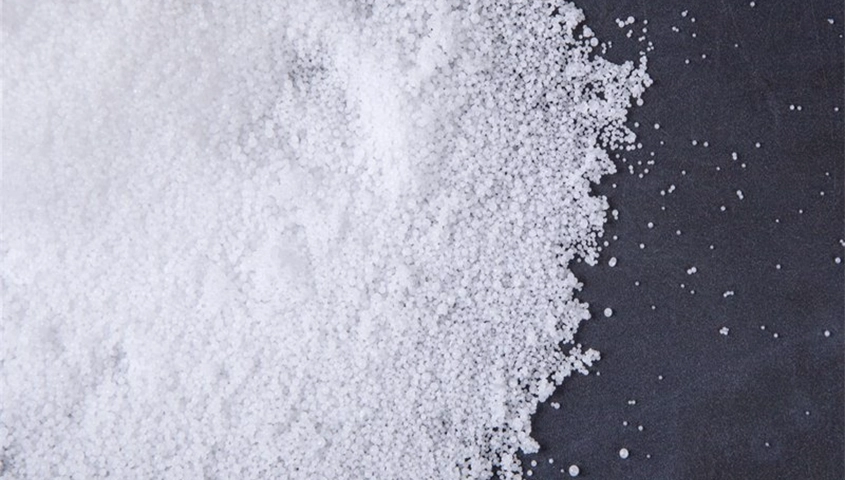
- Physical and Chemical Properties of Caustic Soda Pearls
- Product Specifications and Grades
- Available Grades of Caustic Soda Pearls
- Caustic Soda Pearls vs. Flakes vs. Liquid: Which Form Is Right for Your Application?
- Production Process of Caustic Soda Pearls
- Applications of Caustic Soda Pearls
- Safe Handling, Storage, and Transportation of Caustic Soda Pearls
- Caustic Soda Pearls Packaging
- Technical Data Sheet (TDS) of Caustic Soda Pearls
Caustic Soda Pearls rank among the most essential industrial chemicals in global manufacturing, with worldwide demand exceeding 70 million metric tons annually. These high-purity Sodium Hydroxide granules (NaOH ≥99%) serve as the backbone of industries ranging from soap manufacturing and water treatment to petroleum refining and aluminum extraction.
Unlike caustic soda flakes or liquid caustic soda, caustic soda pearls feature a uniform spherical shape that ensures minimal dusting, superior flowability, precise dosing, and safer handling across demanding industrial environments. Their rapid dissolution rate and strong alkaline reactivity (pH 12–14) make them the preferred solid form of sodium hydroxide for both chemical processing and commercial manufacturing worldwide.
Whether you operate in petrochemicals, textiles, food processing, or water treatment, understanding the specifications, production methods, handling requirements, and industrial applications of caustic soda pearls is critical for optimizing your operations and ensuring workplace safety.
Physical and Chemical Properties of Caustic Soda Pearls
A thorough understanding of the physical and chemical properties of caustic soda pearls is essential for safe handling, accurate formulation, and effective industrial application. The following properties define NaOH pearls as one of the most powerful and versatile alkaline chemicals available:
- Chemical Formula: NaOH
- CAS Number: 1310-73-2
- EINECS Number: 215-185-5
- HS Code: 2815.11.00
- Molar Mass: 40.00 g/mol
- Appearance: White, round, free-flowing spherical pearls
- Odor: Odorless
- Density: 2.13 g/cm³ (solid state)
- Melting Point: 318°C (604°F)
- Boiling Point: 1,388°C (decomposes before boiling under standard conditions)
- Solubility in Water: Highly soluble — up to 1,110 g/L at 20°C; dissolution is strongly exothermic
- Alkalinity (pH): 12–14 (in aqueous solution)
- Hygroscopicity: Readily absorbs moisture and CO₂ from air
- Reactivity: Reacts vigorously with acids, amphoteric metals (aluminum, zinc, tin), organic materials, and water — producing significant heat
- Corrosiveness: Highly corrosive to skin, eyes, mucous membranes, metals, and organic tissues
These combined properties make sodium hydroxide pearls a powerful alkali essential for neutralization reactions, pH regulation, chemical synthesis, and saponification across virtually every major industrial sector.
Product Specifications and Grades
Industrial buyers require precise chemical specifications to ensure caustic soda pearls meet their process requirements. The table below outlines standard specifications for industrial-grade and food-grade NaOH pearls:
| Parameter | Industrial Grade | Food Grade (E524) |
|---|---|---|
| NaOH Content | ≥ 99.0% | ≥ 99.0% |
| Na₂CO₃ (Sodium Carbonate) | ≤ 0.5% | ≤ 0.3% |
| NaCl (Sodium Chloride) | ≤ 0.03% | ≤ 0.02% |
| Fe₂O₃ (Iron Oxide) | ≤ 0.005% | ≤ 0.002% |
| Heavy Metals (as Pb) | ≤ 0.001% | ≤ 0.001% |
| Appearance | White Pearls | White Pearls |
| Pearl Size | 0.8–1.2 mm | 0.8–1.2 mm |
Available Grades of Caustic Soda Pearls
Different industries demand different purity standards. Caustic soda pearls are commercially available in three primary grades:
- Industrial Grade (99%): The most widely used grade for chemical manufacturing, water treatment, oil refining, textile processing, and pulp production. Suitable for heavy-duty alkaline applications where ultra-high purity is not required.
- Food Grade (E524): Manufactured under stricter purity controls with lower impurity thresholds. Used in food processing applications such as fruit and vegetable peeling, cocoa and chocolate processing, pretzel glazing, and olive curing. Must comply with FDA 21 CFR, EU Regulation 231/2012, and relevant national food safety standards.
- Pharmaceutical Grade (Ph.Eur / USP-NF): The highest purity grade, produced under GMP-certified conditions for use in drug formulation, laboratory reagents, and medical device sterilization. Meets pharmacopoeia standards including United States Pharmacopeia (USP) and European Pharmacopoeia (Ph.Eur) requirements.
Selecting the correct grade ensures regulatory compliance, process efficiency, and end-product safety for your specific application.
Caustic Soda Pearls vs. Flakes vs. Liquid: Which Form Is Right for Your Application?
Sodium hydroxide is commercially available in three primary forms. Understanding the differences helps industrial buyers select the most suitable product for their operational needs:
| Feature | Caustic Soda Pearls | Caustic Soda Flakes | Liquid Caustic Soda (50%) |
|---|---|---|---|
| Physical Form | Uniform spherical granules | Irregular flat flakes | Aqueous solution |
| NaOH Purity | ≥ 99% | 98–99% | ~50% (diluted) |
| Dissolution Rate | Fast and uniform | Moderate (can clump) | Immediate (pre-dissolved) |
| Dust Generation | Very low | Moderate to high | None |
| Handling Safety | Easier (free-flowing) | Moderate (sticky/clumping) | Requires pumps and tanks |
| Storage Requirements | Moisture-proof bags | Moisture-proof bags | Corrosion-resistant tanks |
| Dosing Precision | High (uniform particle size) | Moderate | High (volumetric) |
| Shipping Efficiency | High (solid, compact) | High (solid) | Lower (water weight adds cost) |
| Best For | Precise dosing, export, clean operations | Cost-sensitive bulk use | Continuous-feed systems |
Why Choose Caustic Soda Pearls Over Other Forms?
Caustic soda pearls offer several distinct advantages that make them the preferred choice for many industrial operations:
- Superior flowability eliminates caking and bridging problems common with flakes
- Minimal dust generation reduces inhalation hazards and improves workplace safety
- Uniform particle size (0.8–1.2 mm) enables accurate, repeatable dosing in automated systems
- Higher purity (≥99%) compared to standard flakes ensures cleaner reactions and fewer byproducts
- Compact solid form reduces shipping costs compared to liquid caustic soda, which carries 50% water weight
- Longer shelf life when stored properly in moisture-proof packaging
- Cleaner dissolution without the clumping and localized overheating that flakes can cause
For operations requiring precision, safety, and export-grade quality, caustic soda pearls consistently outperform alternative NaOH forms.
Production Process of Caustic Soda Pearls
Caustic soda pearls are manufactured through the chlor-alkali electrolysis process, a well-established industrial method that ensures high chemical purity, consistent particle quality, and reliable product performance. The production involves five key stages:
Step 1: Electrolysis of Brine (Chlor-Alkali Process)
Saturated sodium chloride (NaCl) brine solution is fed into electrolytic cells — typically membrane cells, which represent the most advanced and energy-efficient technology available today. During electrolysis, the brine decomposes into three co-products:
- Sodium hydroxide (NaOH) — at the cathode
- Chlorine gas (Cl₂) — at the anode
- Hydrogen gas (H₂) — at the cathode
Membrane cell technology produces the highest purity NaOH (typically 32–35% concentration) with minimal salt contamination, making it the preferred method for manufacturing premium-grade caustic soda pearls.
Step 2: Purification and Filtration
The raw sodium hydroxide solution undergoes multi-stage purification to remove residual sodium chloride, sodium chlorate, iron compounds, and other trace impurities. Advanced filtration systems ensure the final product meets stringent industrial, food-grade, or pharmaceutical-grade specifications.
Step 3: Evaporative Concentration
The purified NaOH solution is concentrated in multi-effect evaporators or falling-film evaporators under controlled temperature and vacuum conditions. This stage increases the NaOH concentration from approximately 33% to 50%, then to anhydrous (99%+) levels, preparing it for solidification.
Step 4: Pearl Formation (Prilling / Granulation)
The concentrated molten NaOH is processed through specialized prilling towers or rotary granulators. In prilling, the molten caustic soda is sprayed from the top of a cooling tower, where droplets solidify into uniform spherical pearls as they fall through a controlled counter-current of cooled, dehumidified air.
This granulation process determines the final pearl size (0.8–1.2 mm), density, uniformity, and free-flowing characteristics that distinguish high-quality caustic soda pearls from inferior products.
Step 5: Cooling, Screening, and Packaging
The formed pearls are cooled to ambient temperature, passed through vibrating screens to remove oversized or undersized particles, and then conveyed to automated packaging lines. The finished caustic soda pearls are packed in moisture-resistant, multi-layered bags and sealed immediately to prevent atmospheric moisture absorption and carbonation.
This advanced manufacturing process ensures every batch of NaOH pearls delivers consistent purity (≥99%), uniform particle size, minimal moisture content, and reliable chemical performance for demanding industrial applications worldwide. Check How Caustic Soda is Made (Click Here)
Applications of Caustic Soda Pearls
Caustic soda pearls serve as one of the most versatile and widely consumed alkaline chemicals in modern industry. Their high purity, rapid dissolution, strong reactivity, and precise dosing capability make them indispensable across the following sectors:
Soap, Detergent, and Cleaning Product Manufacturing
Caustic soda pearls are the primary alkali used in saponification — the chemical reaction between NaOH and fats or oils that produces soap. In liquid detergent production, NaOH serves as the base for formulating surfactant systems. The high purity of pearls ensures clean, consistent soap quality with minimal impurities that could affect color, fragrance, or skin compatibility.
Textile Processing and Finishing
The textile industry relies heavily on sodium hydroxide pearls for several critical processes. In mercerization, cotton fibers are treated with concentrated NaOH solution to improve luster, tensile strength, and dye affinity. Caustic soda pearls are also used for scouring (removing natural waxes and oils from raw fibers), bleaching preparation, and pH adjustment in dyeing baths.
Pulp and Paper Manufacturing
In the kraft pulping process, caustic soda pearls dissolve lignin — the natural binding agent in wood — to separate cellulose fibers for paper production. NaOH is also used in paper recycling to de-ink and break down waste paper, and in bleaching sequences to produce brighter, higher-quality paper products.
Petroleum Refining and Petrochemical Processing
Caustic soda pearls play a critical role in oil refining operations, including acid neutralization, desulfurization (sweetening), and mercaptan removal from crude oil fractions, natural gas, and LPG. In petrochemical plants, NaOH is used for pH control, catalyst preparation, and effluent treatment.
Water and Wastewater Treatment
Municipal and industrial water treatment facilities use caustic soda pearls extensively for pH adjustment, heavy metal precipitation, hardness removal, and acid neutralization. In wastewater treatment, NaOH helps neutralize acidic effluents, precipitate dissolved metals (such as chromium, lead, and cadmium), and condition sludge before disposal. The precise dosing capability of pearls ensures accurate pH control critical for regulatory compliance.
Food Processing (Food-Grade NaOH — E524)
Food-grade caustic soda pearls are approved for use in food processing under FDA and EU food additive regulations (E524). Common food industry applications include:
- Peeling of fruits and vegetables (tomatoes, potatoes, peaches)
- Curing of table olives
- Processing of cocoa and chocolate (Dutching process to modify color, flavor, and solubility)
- Pretzel and bagel glazing for characteristic brown crust
- Sugar refining and pH adjustment in beverage production
Aluminum Production and Metallurgy
In the Bayer process, caustic soda pearls dissolve bauxite ore to extract alumina (Al₂O₃), which is subsequently smelted into aluminum metal. This single application accounts for a significant share of global NaOH consumption. In other metallurgical processes, caustic soda is used for ore processing, metal surface treatment, etching, and cleaning.
Pharmaceutical and Healthcare Industries
Pharmaceutical-grade caustic soda pearls are used in drug synthesis, pH adjustment of formulations, and manufacturing of medicinal intermediates. In healthcare facilities, NaOH solutions serve for sterilization and cleaning of surgical instruments, endoscopes, and laboratory glassware. Strict purity requirements make pharmaceutical-grade pearls essential for GMP-compliant manufacturing.
Biodiesel and Renewable Energy Production
Caustic soda pearls function as a catalyst in the transesterification process, converting vegetable oils and animal fats into biodiesel (fatty acid methyl esters) and glycerin. The high purity and rapid dissolution of NaOH pearls ensure efficient catalytic performance, higher biodiesel yields, and cleaner glycerin byproduct.
Chemical Synthesis and Manufacturing
As a fundamental industrial alkali, caustic soda pearls are raw materials for manufacturing a vast range of downstream chemicals, including:
- Sodium hypochlorite (bleach)
- Sodium phenolate (for resin production)
- Sodium aluminate (for water treatment)
- Sodium phosphates (for detergents and food additives)
- Organic and inorganic sodium salts across multiple chemical families
Additional Applications
Beyond the major industries listed above, caustic soda pearls find applications in:
- Mining and mineral processing — ore digestion and pH control
- Glass manufacturing — as a flux component
- Ceramics production — glaze formulation
- Rubber and plastics — vulcanization and polymer processing
- Electronics — silicon wafer etching and circuit board cleaning
- Construction — cement additive and concrete surface treatment
The extraordinary versatility of sodium hydroxide pearls across this broad spectrum of industries confirms their position as one of the most fundamentally important chemicals in the global industrial economy.
Safe Handling, Storage, and Transportation of Caustic Soda Pearls
Due to their highly corrosive, hygroscopic, and exothermic nature, caustic soda pearls demand strict adherence to safety protocols during handling, storage, and transport. Failure to follow proper procedures can result in severe chemical burns, equipment damage, hazardous reactions, and regulatory violations.
Handling Safety Requirements
- Always wear full personal protective equipment (PPE) before handling caustic soda pearls, including:
- Chemical-resistant gloves (neoprene or nitrile)
- Splash-proof chemical safety goggles
- Full-face shield (when pouring or transferring)
- Chemical-resistant apron or full protective suit
- Closed-toe chemical-resistant boots
- Respiratory protection if dust is generated
- Avoid direct skin and eye contact — NaOH causes severe burns and irreversible eye damage upon contact
- Use dedicated tools and equipment made of NaOH-compatible materials (stainless steel, HDPE, or FRP)
- Never add water to concentrated NaOH — always add NaOH slowly to water to control the exothermic reaction
- Ensure adequate ventilation in enclosed handling areas
- Keep emergency eyewash stations and safety showers accessible within the immediate work area
Storage Guidelines
- Store caustic soda pearls in original sealed, airtight, moisture-proof containers in a cool, dry, and well-ventilated warehouse
- Maintain storage temperature between 15–35°C and keep relative humidity below 60%
- Elevate bags on pallets to prevent ground moisture absorption
- Segregate from incompatible materials, including:
- Acids (hydrochloric, sulfuric, nitric)
- Amphoteric metals (aluminum, zinc, tin, galvanized materials)
- Organic solvents and flammable materials
- Oxidizing agents
- Do not store in aluminum, copper, brass, or galvanized containers — NaOH corrodes these metals and can generate flammable hydrogen gas
- Inspect packaging regularly for damage, moisture ingress, or clumping — compromised bags should be resealed or repackaged immediately
- Label all containers clearly with GHS hazard pictograms and safety information
Emergency First Aid Procedures
- Skin Contact: Immediately remove contaminated clothing and flush affected skin with copious amounts of lukewarm water for a minimum of 20 minutes. Seek immediate medical attention.
- Eye Contact: Flush eyes immediately with clean water or saline for at least 30 minutes, holding eyelids open. This is a medical emergency — seek specialist ophthalmological treatment immediately.
- Ingestion: Do not induce vomiting. Rinse mouth with water and give small sips of water or milk if the person is conscious and able to swallow. Seek emergency medical treatment immediately.
- Inhalation: Move the person to fresh air immediately. If breathing is difficult, administer oxygen. Seek medical attention.
Transportation Regulations
Caustic soda pearls are classified as a dangerous good under international transport regulations:
| Classification | Details |
|---|---|
| UN Number | UN 1823 |
| Proper Shipping Name | Sodium Hydroxide, Solid |
| Hazard Class | Class 8 — Corrosive Substance |
| Packing Group | II |
| IMDG Code | Class 8, IMDG Compliant |
| ADR/RID (Road/Rail) | Class 8 |
| IATA (Air Freight) | Class 8 (restricted quantities) |
| GHS Pictograms | Corrosion, Exclamation Mark |
| GHS Signal Word | DANGER |
- All shipments must include proper hazard labels, UN markings, and Safety Data Sheets (SDS)
- Transport vehicles must carry emergency response information and spill containment equipment
- Follow all applicable local, national, and international regulations for corrosive substance transportation
Strict compliance with these handling, storage, and transportation protocols is essential to protect personnel safety, maintain product integrity, and meet regulatory requirements at every stage of the supply chain.
Caustic Soda Pearls Packaging
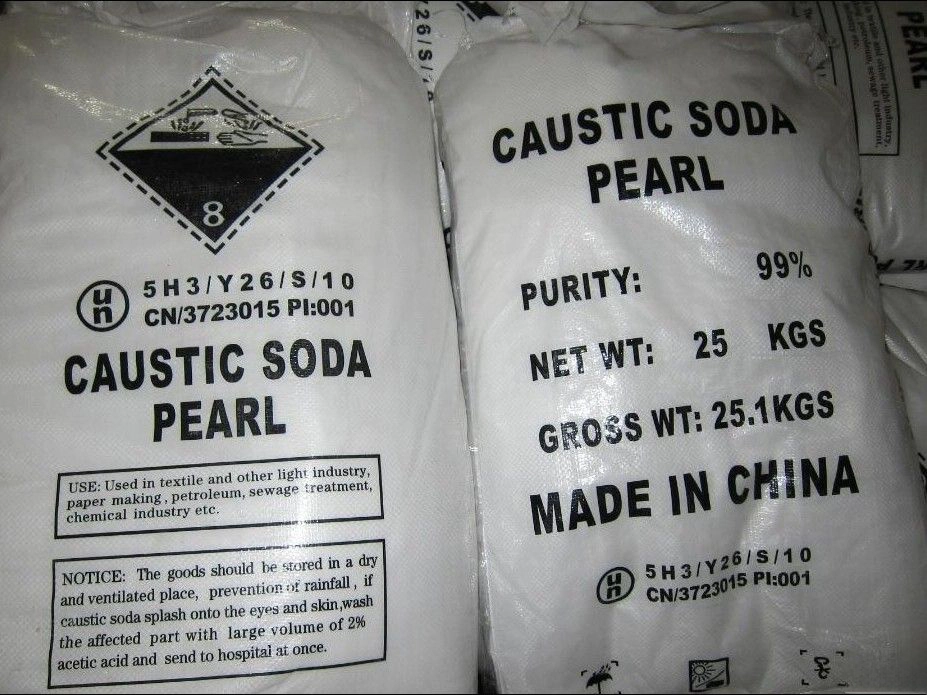
Caustic soda pearls are commonly packed in 25 kg laminated polypropylene (PP) bags lined with polyethylene to protect against moisture. For bulk deliveries, they are available in 1,250 kg jumbo bags or palletized packaging, ensuring stability and ease of transport.
Container Loading Capacity
A standard 20 ft. container holds approximately 25 metric tons of NaOH pearls, providing cost-effective and secure shipping for international distribution.
Technical Data Sheet (TDS) of Caustic Soda Pearls
| Property | Value | Unit |
|---|---|---|
| Melting Point: | 320-325 | ºC |
| Boiling Point: | 1385-1390 | ºC |
| Densityat20ºC: | 2.13 | g/cm3 |
| SolutionRate:(100g in 100ml water at25ºC): | 22 | s |
| Heat Capacity at 25ºC: | 2.01 | J/g.K |
| Heat of Fusion at 15ºC: | 167.5 | J/g |
| Standard Heat of Formation at 25ºC: | 10.67 | kJ/g |
| Specifications | ||
| Item | Value | Unit |
| Purity: | 99.0 Min | % |
| Sodium Carbonate (Na2CO3): | 0.8 Max | % |
| Sodium Chloride (NaCl): | 0.05 Max | % |
| Fe2O3: | 50 Max | PPM |