
Diethylene Glycol in Antifreeze: What DEG Does, Its Limits and Safer Choices
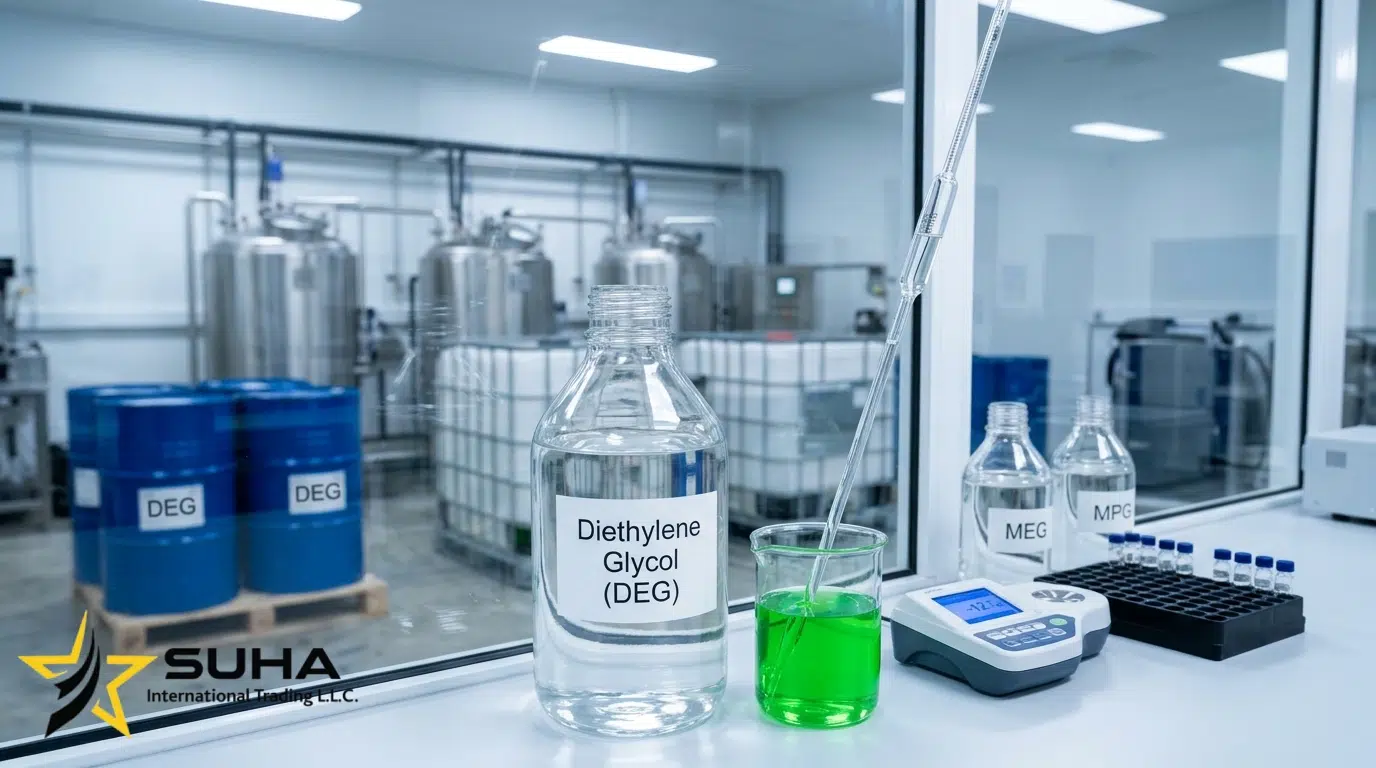
Diethylene Glycol in Antifreeze: What DEG Does and Where It Fits
Diethylene glycol in antifreeze is a minor blend component, not the main base. DEG lowers the freezing point of water and boils higher than ethylene glycol, so some industrial antifreeze and heat-transfer blends use it. But it gives less freeze protection per kilogram and is almost twice as viscous, so most engine coolants are made from monoethylene glycol (MEG). Producer specifications for antifreeze grade ethylene glycol allow up to 5% DEG.
This guide is for antifreeze and coolant producers, heat-transfer fluid blenders and glycol buyers. It explains how diethylene glycol (DEG) behaves in antifreeze, why the share of diethylene glycol in antifreeze is kept low, how it compares with MEG and propylene glycol, how much DEG antifreeze glycol may contain, and the safety rules that apply.
- FormulaC₄H₁₀O₃
- CAS No.111-46-6
- Boiling point245 °C
- Freezing point≈ −10 °C
- Viscosity 20 °C35.7 mPa·s
- RoleMinor blend part
Diethylene Glycol in Antifreeze: How DEG Lowers the Freezing Point
Every glycol antifreeze works the same way: dissolved glycol molecules get in the way of water forming ice, which lowers the freezing point, and they also raise the boiling point. How well a glycol does this depends mainly on how many molecules it puts into the water.
- Freeze protection per kilogram: DEG molecules (106.12 g/mol) are heavier than MEG molecules (62.07 g/mol). One kilogram of MEG gives about 16 moles of glycol; one kilogram of DEG gives only about 9.4 moles. At the same weight in water, DEG therefore protects less.
- Boiling point and volatility: DEG boils at about 245 °C, against 197 °C for MEG, so it evaporates less from hot or open systems. This is the main reason DEG is added to some heat-transfer blends.
- Viscosity: at 20 °C, DEG has a viscosity of 35.7 mPa·s, against 19.83 mPa·s for MEG. A DEG-rich coolant is thicker in cold weather, pumps less easily and transfers heat less efficiently.
- Corrosion: DEG, like MEG, does not protect metals. Corrosion and cavitation protection comes from the inhibitor package added by the coolant maker.
For the freezing and boiling points of standard ethylene glycol and water mixes, see the mix-ratio table and calculator on our antifreeze grade MEG page.
Diethylene Glycol vs Ethylene Glycol vs Propylene Glycol in Antifreeze
| Property | MEG (ethylene glycol) | DEG (diethylene glycol) | MPG (propylene glycol) |
|---|---|---|---|
| Molar mass | 62.07 g/mol | 106.12 g/mol | 76.09 g/mol |
| Boiling point | 197 °C | 245 °C | 188 °C |
| Viscosity at 20 °C | 19.8 mPa·s | 35.7 mPa·s | Higher than MEG |
| Freeze protection per kg | Best | Lowest | Between the two |
| Toxicity | Harmful if swallowed | Harmful if swallowed | Low toxicity |
| Role in antifreeze | Standard base for engine coolant | Minor blend component | Low-tox and food-safe coolants |
Sources: MEGlobal MEG and DEG technical brochures; PubChem. Values are for the pure glycols.
In short: choose MEG for engine coolant, MPG where low toxicity is required, and use DEG only as a controlled blend component where its higher boiling point helps.
DEG Limits: How Much Diethylene Glycol in Antifreeze Glycol Is Allowed
DEG is formed together with MEG when ethylene oxide reacts with water, so every glycol stream contains some DEG. Antifreeze specifications therefore set a limit rather than a ban:
| Glycol | Purity | DEG limit | Note |
|---|---|---|---|
| Producer antifreeze grade EG specification | 95.0% min | 5.0% max | Typical lowest grade sold for antifreeze |
| ASTM E1177 engine coolant grade glycol | Set per type | Set for EG-1 and EG-2 | EG-1 is the tighter type for OEM coolants |
| Our MEG for coolant | 99.5% min | 0.10% max | Low DEG for consistent blending |
| Our MEG (technical data sheet) | 99.8% min | 0.08% max | Also low chloride and iron |
Lower DEG means more predictable freeze points and viscosity in the finished coolant. If you deliberately blend DEG into a heat-transfer fluid, buy it as a separate product with its own specification, such as our DEG 99.8%, so you control the ratio.
Uses of Diethylene Glycol in Antifreeze and Heat-Transfer Fluids
Industrial heat-transfer blends
Some formulators add DEG to MEG-based fluids for systems that run hot or are partly open, where lower volatility reduces glycol loss.
Lower-grade antifreeze glycol
Glycol streams with a few per cent DEG are sold as antifreeze grade within producer limits; always check the DEG figure on the certificate of analysis.
Recycled glycol
Glycol recovered from used coolant or industrial sources can carry DEG and other glycols, which is why ASTM E1177 covers recycled material too.
Not for gas dehydration antifreeze
Gas plants that inject glycol to prevent hydrates usually use MEG, while glycol dehydration units use triethylene glycol (TEG).
The largest uses of DEG are outside antifreeze altogether: unsaturated polyester resins, polyols, plasticisers and solvents. See also DEG in paints and coatings.
Diethylene Glycol in Antifreeze: Toxicity and Safety
Diethylene glycol is harmful if swallowed (H302). Swallowing it can cause severe kidney damage and death, and contamination of medicines with DEG has caused fatal poisonings. DEG must never be used in medicines, food, beverages or products for oral use.
- Not a safer alternative: DEG antifreeze is no safer than ethylene glycol antifreeze. For low-toxicity coolant, use propylene glycol.
- Drinking water: glycol producers do not support DEG in heat-transfer fluids that could leak into potable water systems.
- Labelling: keep antifreeze in labelled, closed containers away from children and animals; some markets require a bittering agent in consumer antifreeze.
- Handling: wear gloves and goggles, and follow the SDS supplied with each shipment.
Formulation Best Practice for Diethylene Glycol in Antifreeze
- Start from a specified glycol. Use monoethylene glycol with a known, low DEG content, and add DEG only as a measured component.
- Check the COA. Confirm purity, DEG (by gas chromatography), water, acidity, chloride and iron for every batch.
- Use deionised water. Hard water forms scale and chloride increases corrosion.
- Add a proven inhibitor package. Glycol alone does not protect metals; choose IAT, OAT or HOAT technology to suit the engines or system.
- Measure the real freeze point. Refractometers calibrated for MEG or MPG misread DEG-rich blends, so confirm freeze points in the laboratory (for example by ASTM D1177).
- Test against the target standard. Engine coolants are usually tested to ASTM D3306 or D6210 and OEM specifications.
Buy Diethylene Glycol for Antifreeze and Heat-Transfer Blending
SUHA International Trading supplies both glycols antifreeze and heat-transfer fluid producers need, from one desk and with one document set:
Monoethylene glycol (MEG)
Monoethylene glycol with low DEG, chloride and iron for engine coolant and HVAC fluids.
Diethylene glycol (DEG) 99.8%
Industrial DEG with a published ASTM specification for controlled blending.
- Packing: PE or steel drums, IBC totes and ISO tanks; flexitanks for MEG
- MOQ: one full container load (1 FCL, 20ft or 40ft)
- Loading: FOB Jebel Ali (UAE) or Mersin (Türkiye), CFR or CIF on request
- Documents: certificate of analysis per batch, SDS, invoice, packing list, bill of lading and certificate of origin
Also from the same supplier: monopropylene glycol for low-toxicity coolants, triethylene glycol, and liquid caustic soda for neutralising OAT inhibitor acids.
Sources Used in This Guide
- MEGlobal: diethylene glycol and monoethylene glycol technical brochures (physical properties, viscosity, product stewardship)
- MEGlobal: antifreeze grade ethylene glycol specification (purity 95.0% min, DEG 5.0% max)
- ASTM E1177: engine coolant grade glycol; ASTM D3306, D6210 and D1177 for engine coolants
- PubChem: diethylene glycol (CID 8117) and ethylene glycol (CID 174)
- Swedish Chemicals Agency (KEMI): consumer guidance on glycol antifreeze toxicity
Diethylene glycol in other languages: dietilen glikol (Turkish), ثنائي إيثيلين جلايكول (Arabic), диэтиленгликоль (Russian), dietilenglicol (Spanish).
Glycol Supplier with Offices in Dubai and Ankara
Dubai, UAE · Head office
Office 2305, Burlington Tower, Business Bay, Dubai, United Arab EmiratesAnkara, Türkiye
Karşıyaka District, 749 Street, No 30, Gölbaşı, Ankara 06830, TürkiyeMore about SUHA International · MEG in HVAC systems · All products
Diethylene Glycol in Antifreeze: FAQ
Is diethylene glycol used in antifreeze?
Yes, but only as a minor component. Most antifreeze and engine coolant is based on monoethylene glycol (MEG). Diethylene glycol (DEG) appears in some industrial antifreeze and heat-transfer blends and as a by-product in lower-grade glycol, and producer specifications for antifreeze grade ethylene glycol allow up to 5% DEG.
Can diethylene glycol be used as antifreeze on its own?
It can lower the freezing point of water, but it is a poor choice as the only glycol. Because a DEG molecule is heavier than MEG, the same weight of DEG gives less freeze protection, and DEG is almost twice as viscous, so the coolant pumps and transfers heat less efficiently.
What is the difference between diethylene glycol and ethylene glycol in antifreeze?
Ethylene glycol (MEG, 62.07 g/mol) is the standard antifreeze base: it gives more freeze protection per kilogram and has lower viscosity. Diethylene glycol (DEG, 106.12 g/mol) boils higher, at 245 °C versus 197 °C, and is less volatile, but it protects less per kilogram and is used only as a blend component.
Why does DEG give less freeze protection than MEG?
Freezing point depression depends on the number of dissolved molecules. One kilogram of MEG contains about 16 moles of glycol, while one kilogram of DEG contains only about 9.4 moles, so at the same weight in water MEG lowers the freezing point considerably more.
How much DEG is allowed in antifreeze grade glycol?
It depends on the specification. A producer specification for antifreeze grade ethylene glycol allows up to 5.0% DEG with 95% minimum purity, and ASTM E1177 sets DEG limits for engine coolant grade glycol types EG-1 and EG-2. Our MEG for coolant production contains no more than 0.10% DEG.
Is diethylene glycol toxic?
Yes. Diethylene glycol is harmful if swallowed (H302) and can cause severe kidney damage and death. It must never be used in medicines, food or products for oral use, and glycol producers do not support DEG in heat-transfer fluids that could leak into drinking water systems.
Is DEG antifreeze safer than ethylene glycol antifreeze?
No. Both diethylene glycol and ethylene glycol are harmful if swallowed. Where low toxicity matters, for example in food plants or systems near drinking water, the usual choice is propylene glycol (MPG) based antifreeze.
Does diethylene glycol protect against corrosion?
No. Like MEG, DEG does not protect metals by itself. Corrosion and cavitation protection in antifreeze comes from the inhibitor package (IAT, OAT or HOAT technology) that the coolant manufacturer adds.
What is the boiling point and freezing point of diethylene glycol?
Pure diethylene glycol boils at about 245 °C and freezes at about −10 °C. Its high boiling point and low volatility are the main reasons it is used in some heat-transfer and industrial antifreeze blends.
How do I check the DEG content of glycol for antifreeze?
Ask for a certificate of analysis that reports DEG by gas chromatography (for example ASTM E2409) together with purity, water, acidity and colour. Refractometers calibrated for ethylene glycol or propylene glycol give wrong freeze points for blends with a lot of DEG, so check such blends in the laboratory.
Where can I buy diethylene glycol and MEG for antifreeze production?
SUHA International Trading supplies industrial diethylene glycol (99.8% minimum) and antifreeze grade monoethylene glycol from offices in Dubai and Ankara, in PE or steel drums, IBCs and ISO tanks, loaded at Jebel Ali or Mersin, with a certificate of analysis for every batch.
Request a Quote for Diethylene Glycol
Tell us the glycol (MEG, DEG or MPG), quantity, packing, destination port and shipment month. We reply with a dated FOB, CFR or CIF quotation and the technical data sheet.